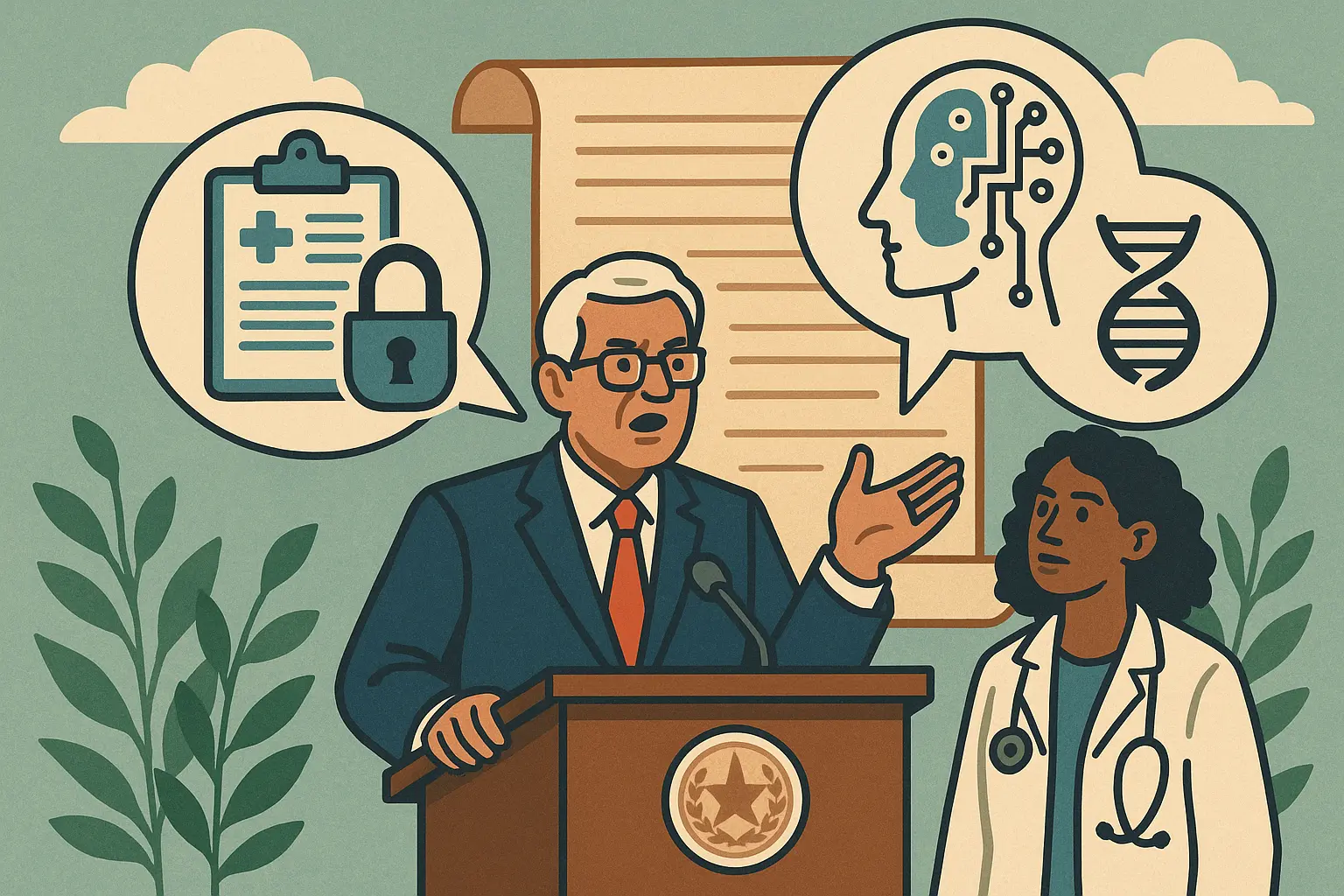
On April 15, OpenAI’s policy, research, and science team released a report arguing for expanding AI applications in the life sciences field, and sharing it exclusively in advance with Axios before its official public release. The report puts forward three core policy demands: granting access to open medical and scientific data, classifying advanced AI as a “national-level research resource,” and increasing investment in physical infrastructure such as computing power, laboratories, and energy.
The Report’s Three Core Policy Demands and AI Capability Claims
According to the OpenAI report, the three core policy demands are:
· Open access to medical and scientific data: argues that governments should expand the ways to publicly obtain relevant data
· National-level resource status for AI: advocates listing advanced AI systems as national research resources
· Infrastructure investment: calls for increased funding for computing power, laboratory, and energy infrastructure
The report cites analysis indicating that AI tools can shorten the timeline of clinical trials across all stages by more than 20%, and states that AI can compress laboratory workflows from months to days. The report specifically mentions that GPT-5 Pro has been used to find new uses for existing FDA-approved drugs for diseases that currently have no effective treatments.
Nature Medicine Clinical Data Records and Amazon Bio Discovery Launch
According to a paper published in mid-2025 in Nature Medicine, among drugs discovered with AI assistance, the number that enter clinical trials is extremely small, and none has completed a Phase 3 clinical trial. The paper also records that the failure rate of AI-discovered drugs in Phase 2 clinical trials is comparable to that of drugs discovered through traditional methods. In the paper, the researchers state: “Whether AI can create a meaningful, enduring disruption to drug development is still a question that has not yet been answered.”
In the same week, Amazon announced the launch of Bio Discovery, an AI-driven drug molecule generation tool, aimed at helping researchers design drug molecules.
Frequently Asked Questions
What are the three core policy demands of OpenAI’s life sciences AI report?
According to the report released by OpenAI and exclusively shared in advance with Axios, the three demands are: open access to medical and scientific data, classifying advanced AI as a national-level research resource, and increasing investment in computing power, laboratory, and energy infrastructure.
What data does the Nature Medicine paper record about AI drug development?
According to a paper published in mid-2025 in Nature Medicine, no AI-assisted discovered drug has completed a Phase 3 clinical trial, and the Phase 2 clinical failure rate of AI-discovered drugs is comparable to that of drugs discovered through traditional methods; the paper’s researchers say that AI’s “ongoing impact” on drug development “has not yet been answered.”
How is the Amazon Bio Discovery tool positioned in terms of its function?
According to the announcement released by Amazon, Bio Discovery is an AI-driven drug molecule generation tool, intended to help researchers design drug molecules. Its launch timing is the same as the release time of OpenAI’s life sciences report.
Disclaimer: The information on this page may come from third parties and does not represent the views or opinions of Gate. The content displayed on this page is for reference only and does not constitute any financial, investment, or legal advice. Gate does not guarantee the accuracy or completeness of the information and shall not be liable for any losses arising from the use of this information. Virtual asset investments carry high risks and are subject to significant price volatility. You may lose all of your invested principal. Please fully understand the relevant risks and make prudent decisions based on your own financial situation and risk tolerance. For details, please refer to
Disclaimer.
Related Articles
Anthropic Plans to Provide Mythos Access to UK Banks Next Week
Anthropic will offer its AI tool, Mythos, to UK banks next week, marking its entry into the UK's financial services sector.
GateNews1h ago
Global Robotaxi Market Projected to Reach $168B by 2035, Driven by US and China
The global robotaxi market could hit $168 billion by 2035, driven by advances in AI and increased investment. The US and China will lead, with key players like Waymo and Baidu. Cost reductions in hardware are boosting profitability, with operators likely to break even by 2028.
GateNews1h ago
OpenAI Launches GPT-4.5 with Enhanced Reasoning Capabilities, Pricing at $75 per Million Input Tokens
OpenAI launched GPT-4.5, improving performance and capabilities, but it still lags in advanced reasoning compared to competitors. Access varies by subscription, and future models like GPT-5 are anticipated.
GateNews2h ago
US House Proposes Bill to Penalize Chinese AI Firms for Model Copying
House Republicans proposed the Deterring American AI Model Theft Act to target Chinese and Russian entities misusing U.S. AI models. The bill, under review, may lead to sanctions or blacklisting, potentially accelerating China's tech self-reliance despite the U.S.'s ongoing chip advantage.
GateNews2h ago


