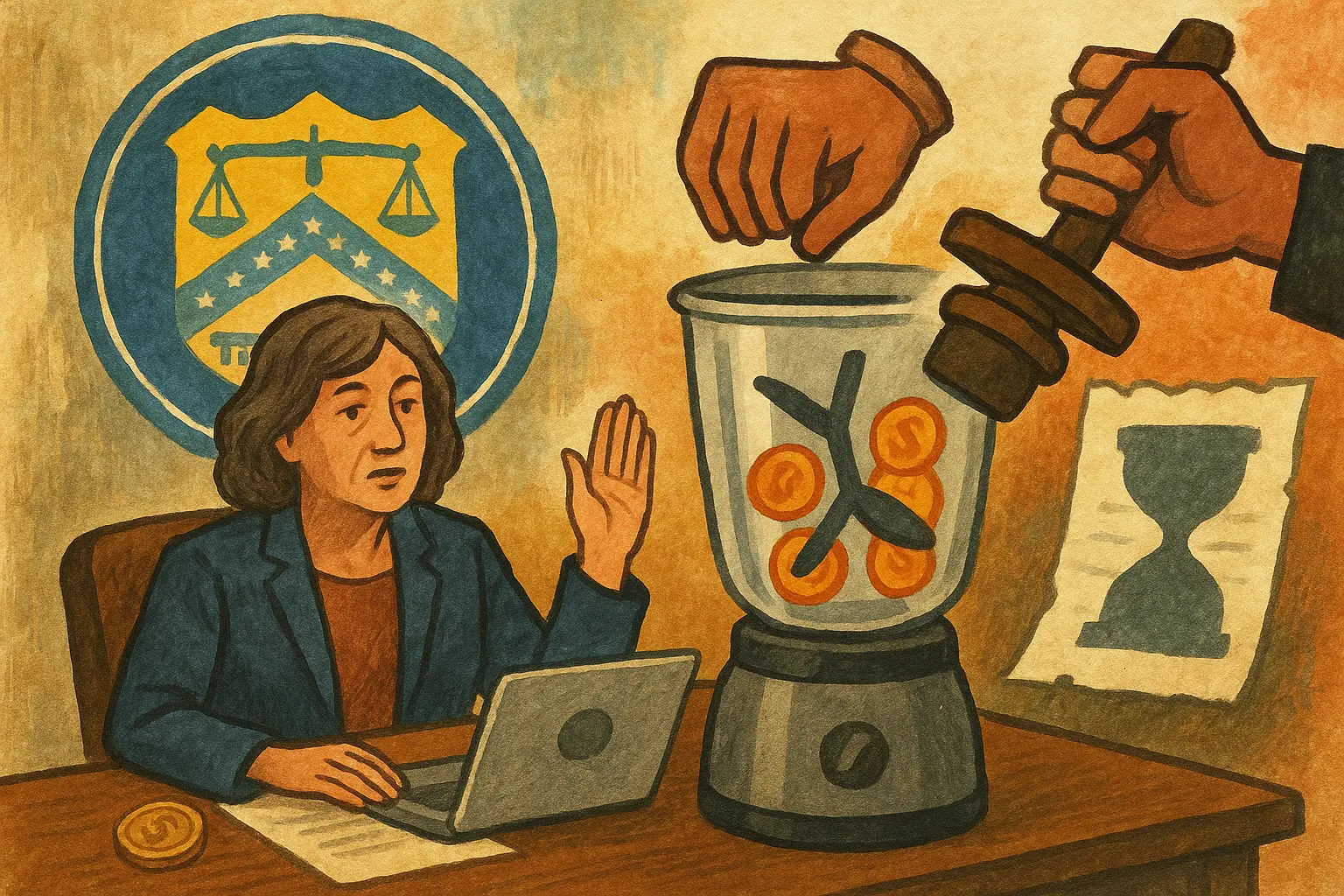
This month, the U.S. Department of the Treasury submitted a 32-page report to Congress, officially recognizing that cryptocurrency mixers can be used for legitimate financial privacy purposes, and recommending that Congress establish a Freeze Law to provide safe harbor for financial institutions to temporarily freeze suspicious digital assets.
Treasury’s Shift in Position: Official Recognition of Mixer Privacy Uses
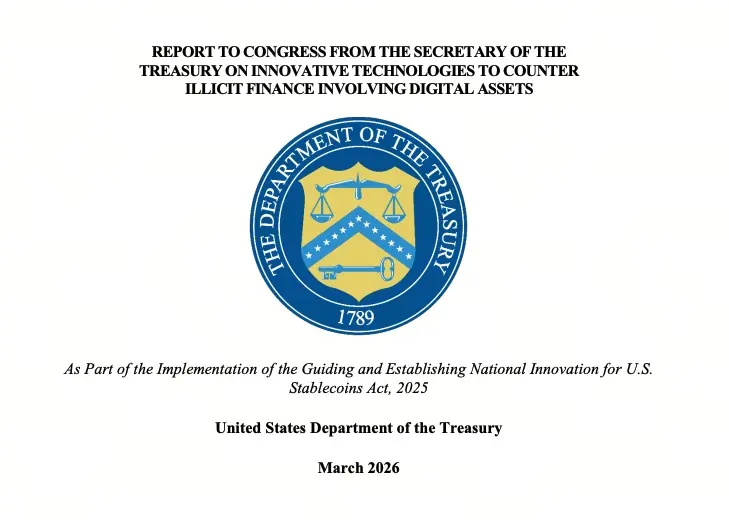 (Source: U.S. Department of the Treasury)
The report explicitly states: “Legal digital asset users can utilize mixers to protect financial privacy when transacting on public blockchains.” The Treasury notes that legitimate reasons for individuals to use mixers include protecting personal financial information, maintaining confidentiality in business payments, and handling sensitive charitable donations anonymously.
The report differentiates between custodial and non-custodial mixers. It states that custodial mixer providers are required to register as Money Services Businesses (MSBs) with FinCEN and, when compliant, can provide customer identification information and off-chain transaction data. The report does not recommend imposing new restrictions on non-custodial mixers nor does it support the draft record-keeping rules proposed by FinCEN in 2023.
This stance has a legal background: in March 2025, a federal appeals court ruled that the Office of Foreign Assets Control (OFAC) exceeded its statutory authority when sanctioning Tornado Cash, leading the Treasury to lift those sanctions. Meanwhile, senior DOJ officials have stated that coding without criminal intent should not be prosecuted under remittance laws, further softening law enforcement’s approach toward crypto developers.
Stablecoin Money Laundering Data Disclosure: North Korea’s Cross-Chain Bridge Laundering Roadmap
Despite the policy easing, the report also reveals for the first time extensive raw data on mixers and cross-chain bridge intersections, exposing the harsh reality of illegal financing:
North Korea’s Theft Scale: From January 2024 to September 2025, North Korean cybercriminals stole at least $2.8 billion in digital assets, including $1.5 billion from CEX cases, extensively using mixing techniques in multi-step money laundering chains.
Cross-Chain Bridge Traffic: Since May 2020, over 50 cross-chain bridges have seen withdrawal totals exceeding $37.4 billion, mostly denominated in the two largest stablecoins by market cap.
Mixer-Bridge Channels: About $1.6 billion in deposits flowed into bridge accounts via mixers, with over $900 million concentrated in a single bridge account that was “subjected to scrutiny for failing to prevent exchange transactions related to North Korean entities.”
Direct Stablecoin Mixing is Rare: Cases of directly depositing stablecoins into mixers for illegal purposes “seem to be rare.” Malicious actors typically process other digital assets through mixers first, then exchange for stablecoins to cut traceability.
Three Legislative Recommendations: Freeze Law, Clarification of DeFi Obligations, and Expansion of Section 311
The report proposes three specific legislative measures to Congress:
Freeze Law: The Treasury recommends establishing a dedicated freeze law for digital assets, providing safe harbor for financial institutions to temporarily freeze suspicious assets during short-term investigations, “especially useful for combating illegal financial activities involving legitimate stablecoin payments.”
Clarification of DeFi Obligations: It suggests that Congress clearly define which decentralized finance (DeFi) participants should bear AML/CFT obligations based on their roles and associated risks, filling gaps in the current legal framework.
Section 311 Sixth Special Measure: It proposes adding a sixth special measure to Section 311 of the USA PATRIOT Act, authorizing the Treasury to prohibit or impose restrictions on certain digital asset transfers unrelated to correspondent banking relationships.
The DeFi recommendations align with warnings issued by Galaxy Research in January this year, which warned that without safeguards, the Senate version of the CLARITY Act could represent the largest expansion of financial regulatory authority since the USA PATRIOT Act.
FAQs
Why did the Treasury shift its stance on mixers after sanctioning Tornado Cash in 2022?
There are two main reasons: First, in March 2025, a federal court ruled that OFAC exceeded its statutory authority when sanctioning Tornado Cash, providing a judicial basis for the shift; second, the GAIN Act requires the Treasury to systematically assess the overall impact of mixers, and after broad industry and public consultation, the report’s conclusions reflect a more comprehensive policy balance.
How exactly would the Freeze Law work?
The proposed Freeze Law aims to provide limited safe harbor for financial institutions, allowing them to temporarily freeze suspicious digital assets during short-term investigations without legal liability. This mechanism is similar to the traditional financial “SAR waiting period,” crucial for fast-moving illegal stablecoin funds, giving law enforcement time to investigate.
What impact does this report have on the case against Tornado Cash founder Roman Storm?
The report itself does not directly affect Storm’s criminal case, as the charges have already been decided by a jury. However, the softened policy stance presented in the report, along with the DOJ’s statement that coding without criminal intent should not be prosecuted under remittance laws, provides important policy support for industry advocates seeking clearer protections for developers in crypto legislation.
Disclaimer: The information on this page may come from third parties and does not represent the views or opinions of Gate. The content displayed on this page is for reference only and does not constitute any financial, investment, or legal advice. Gate does not guarantee the accuracy or completeness of the information and shall not be liable for any losses arising from the use of this information. Virtual asset investments carry high risks and are subject to significant price volatility. You may lose all of your invested principal. Please fully understand the relevant risks and make prudent decisions based on your own financial situation and risk tolerance. For details, please refer to
Disclaimer.


