BH_HELAL_44

vip
Age 1.7 Yıl
Peak Tier 0
Futures Trading Strategist
No content yet
CryptoChampion
#GateSquareAprilPostingChallenge
Bitcoin is currently navigating one of the most complex and high-stakes phases of its market cycle, where price behavior is no longer dictated purely by technical patterns or historical trends. Instead, it is being shaped by a convergence of global macroeconomic forces, geopolitical instability, institutional capital flows, and shifting market sentiment. This has created a compressed and highly reactive trading environment, where volatility is building beneath the surface.
At present, Bitcoin is trading within a tight range around $70,000–$71,000, a zone that has become a key equilibrium point. On the upside, the $73,000 level continues to act as a strong resistance barrier, where selling pressure consistently emerges. On the downside, $70,000 serves as immediate psychological support, while deeper liquidity zones sit near $68,000 and $65,000. This range-bound structure reflects a clear state of market indecision, with neither buyers nor sellers in full control.
What makes this consolidation phase particularly unique is the dominance of external macro catalysts—especially geopolitical tensions involving US–Iran relations. Unlike traditional market cycles driven by supply-demand dynamics or technical breakouts, Bitcoin is now reacting sharply to real-world developments that influence global risk sentiment.
In periods of geopolitical de-escalation or positive diplomatic developments, risk appetite tends to improve across global markets. This encourages capital rotation into higher-risk assets such as equities and cryptocurrencies. In such scenarios, Bitcoin has shown the potential to break above resistance levels, targeting $72,000–$75,000, with possible extensions toward $78,000–$80,000 if momentum and liquidity align.
Conversely, any escalation in geopolitical conflict or breakdown in negotiations triggers a risk-off environment. Investors move capital toward traditional safe havens like the US dollar and gold, reducing exposure to volatile assets. Despite its long-term positioning as “digital gold,” Bitcoin continues to behave like a high-beta risk asset in the short term. This means it is highly sensitive to uncertainty and tends to decline during periods of global stress, often revisiting support levels around $68,000 or even $65,000 in extreme conditions.
This dual sensitivity highlights a broader reality: Bitcoin is no longer reacting to a single factor but to a layered macro environment. Geopolitical risk drives short-term volatility, while interest rate expectations and inflation trends influence liquidity conditions. At the same time, institutional participation—particularly through ETF flows—adds another dimension, shaping structural demand. Derivatives markets further amplify these movements through leverage and liquidation cascades.
From a macroeconomic standpoint, persistent inflation continues to delay aggressive interest rate cuts, limiting the availability of cheap liquidity. This restricts upside potential in speculative markets. Meanwhile, ETF flows have shown mixed behavior, with periods of outflows reflecting caution among institutional investors. However, this is balanced by ongoing dip-buying activity, suggesting that long-term confidence in Bitcoin remains intact, even if short-term sentiment is uncertain.
This divergence between cautious short-term behavior and strategic long-term accumulation is a key reason why Bitcoin remains locked in its current range. Buyers are present but not aggressive enough to drive a breakout, while sellers lack the strength to trigger a sustained breakdown. As a result, the market is compressing energy—often a precursor to a significant move.
Historically, such compression phases resolve through sharp expansions. A bullish breakout above $73,000 could trigger a wave of momentum buying and stop orders, accelerating price toward higher targets. On the other hand, a breakdown below $70,000 could unleash a cascade of liquidations, pushing price rapidly toward lower liquidity zones.
Another critical factor is liquidity clustering. Above resistance, breakout traders and stop orders are positioned, while below support, leveraged long positions remain vulnerable. This creates the potential for a powerful, liquidity-driven move in either direction once a trigger occurs.
Importantly, Bitcoin’s behavior continues to align more closely with risk-on assets rather than safe havens in the short term. While its long-term narrative remains strong, its immediate price action is still tied to global liquidity cycles and investor sentiment.
Final Thoughts: Bitcoin is currently in a high-pressure consolidation zone, where multiple macro forces are interacting simultaneously. The market is coiling, and the longer this compression lasts, the more explosive the eventual breakout is likely to be. The next major move will not be gradual—it will be fast, aggressive, and driven by external catalysts. Traders and investors should focus less on prediction and more on preparation, as the market is poised for a निर्णायक shift in direction.
#CreatorCarnival #Gate13周年

repost-content-media
  • Reward
  • Comment
  • Repost
  • Share
#PreciousMetalsPullBackUnderPressure
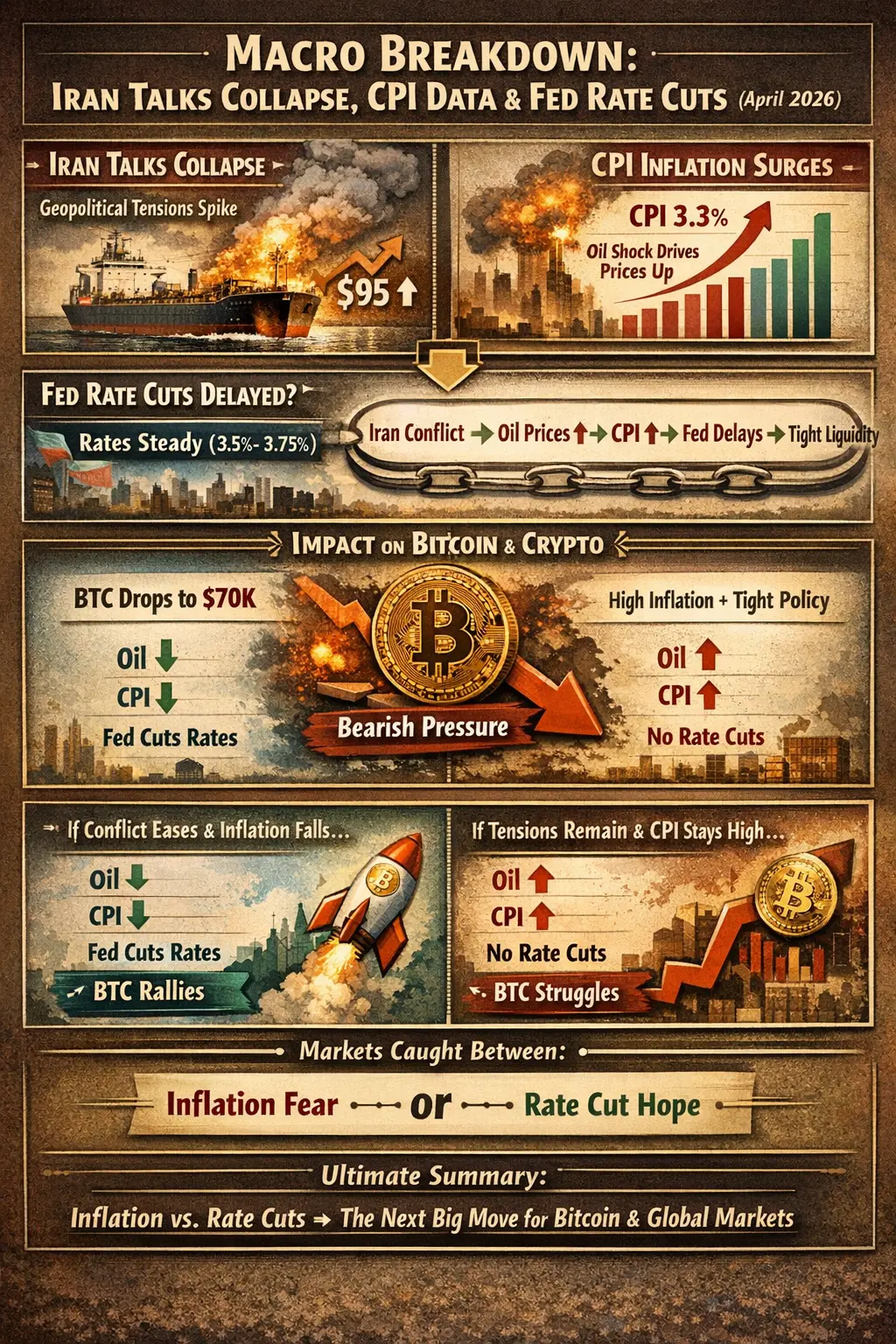
PreciousMetalsPullBackUnderPressure 🌍 Macro Chain Reaction: Oil, Inflation, and the Bitcoin Liquidity Trap
The collapse of US-Iran peace talks in Islamabad has sent a shockwave through global markets. We are no longer just looking at headlines; we are looking at a fundamental repricing of risk.
1. The Geopolitical Spark ⚡
The failure of diplomacy has immediately spiked energy risks. Markets are now pricing in:
Shipping Threats: Increased vulnerability in the Strait of Hormuz.
Supply Crises: Potential disruptions from core OPEC+ regions.
Price Action: Bren
BTC4,75%
post-image
  • Reward
  • Comment
  • Repost
  • Share
#PreciousMetalsPullBackUnderPressure
AngelEye
#PreciousMetalsPullBackUnderPressure 🌍 Macro Chain Reaction: Oil, Inflation, and the Bitcoin Liquidity Trap
The collapse of US-Iran peace talks in Islamabad has sent a shockwave through global markets. We are no longer just looking at headlines; we are looking at a fundamental repricing of risk.
1. The Geopolitical Spark ⚡
The failure of diplomacy has immediately spiked energy risks. Markets are now pricing in:
Shipping Threats: Increased vulnerability in the Strait of Hormuz.
Supply Crises: Potential disruptions from core OPEC+ regions.
Price Action: Brent & WTI Crude are currently surging in the $95–$97 range.
2. Oil: The Inflation Domino 🛢️
Oil is the "master key" of inflation. As energy costs climb, the "Signal Distortion" for central banks intensifies:
March 2026 CPI: Jumped to 3.3% (up from 2.4% in Feb).
Energy Impact: Energy prices spiked +10.9% MoM, with gasoline up over 20%.
The Dilemma: While core inflation (ex-food/energy) sits at a moderate 2.6%, the headline surge forces the Fed to remain hawkish to prevent expectations from becoming unanchored.
3. The Fed & The Liquidity Gate 🏦
The Federal Reserve is effectively trapped. Despite signs of an economic slowdown, sticky inflation (3.3%) has slammed the door on aggressive easing.
Current Stance: Rates held at 3.50%–3.75%.
Outlook: The "Dot Plot" has thinned; we are looking at 0–1 cut for the remainder of 2026.
The Formula: Inflation ↑ → Fed Caution ↑ → Liquidity Tightens → Risk Assets (BTC) Suffer.
4. Bitcoin: The Macro Mirror ₿
Bitcoin is trading around $71,000, showing a clear rejection from the $73K–$74K range. This isn't just "technical resistance"—it is a direct response to tightening global liquidity.5. Future Scenarios & Price Projections 🔮
Scenario A: The Bullish Pivot (Liquidity Returns)
Triggers: Oil stabilizes below $85; CPI cools; Fed signals a definitive cut.
BTC Target: $82,000 – $88,000 (+15% to +24% move).
Volume: Expect a 50–70% surge on breakout confirmation.
Scenario B: The Bearish Squeeze (Liquidity Dries Up)
Triggers: Oil breaks $100+; CPI remains sticky; Fed hints at potential hikes.
BTC Target: $58,000 – $62,000 (-12% to -18% correction).
Psychology: Fear-driven hedging and institutional de-risking.
📌 The Bottom Line
Bitcoin’s next major move won't be decided by a chart pattern, but by the Liquidity Tap. If geopolitics keeps oil high, the Fed keeps the tap closed. Watch the $95 oil level and the next CPI print—they are the real leading indicators for your crypto portfolio.
repost-content-media
  • Reward
  • Comment
  • Repost
  • Share
#Gate13thAnniversaryDr.HanLetter
Dear Gate users, partners, and media friends:
This year, Gate celebrates its thirteenth anniversary. When I founded this platform, Bitcoin and blockchain were still very niche topics. Today, Gate has become a platform serving hundreds of millions of users worldwide. Along the way, we could not have achieved this without the trust and support of every user, partner, and team member. On the occasion of our 13th anniversary, I want to share with you the development history of Gate, our milestone achievements, and our thoughts on the future.
BTC4,75%
  • Reward
  • Comment
  • Repost
  • Share
#Gate13thAnniversaryDr.HanLetter
Dear Gate users, partners, and media friends:
This year, Gate celebrates its thirteenth anniversary. When I founded this platform, Bitcoin and blockchain were still very niche topics. Today, Gate has become a platform serving hundreds of millions of users worldwide. Along the way, we could not have achieved this without the trust and support of every user, partner, and team member. On the occasion of our 13th anniversary, I want to share with you the development history of Gate, our milestone achievements, and our thoughts on the future.
BTC4,75%
Dr.Han
Gate Founder Dr. Han's 13th Anniversary Open Letter: Unleashing the Power of Transformation Amid Cyclical Changes
Dear Gate users, partners, and media friends:
This year, Gate celebrates its thirteenth anniversary. When I founded this platform, Bitcoin and blockchain were still very niche topics. Today, Gate has become a platform serving hundreds of millions of users worldwide. Along the way, we could not have achieved this without the trust and support of every user, partner, and team member. On the occasion of our 13th anniversary, I want to share with you the development history of Gate, our milestone achievements, and our thoughts on the future.
repost-content-media
  • Reward
  • Comment
  • Repost
  • Share
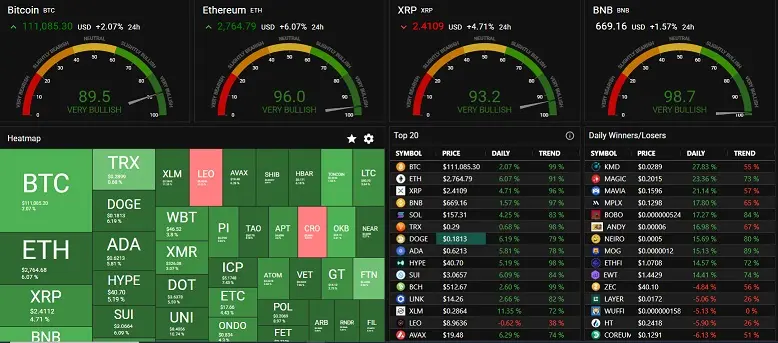
#GateSquareAprilPostingChallenge $BTC moved exactly like a planned breakout should: clean expansion, strong continuation, and the kind of follow-through that shows liquidity finally committed. $SOL
SOL4,84%
post-image
  • Reward
  • Comment
  • Repost
  • Share
#Gate13thAnniversaryDr.HanLetter
Building Through Cycles, Leading Into the Future
The 13-year journey of Gate.io is not just a story of growth—it is a case study in survival, adaptation, and long-term vision within one of the most volatile industries in modern finance. From its founding by Dr. Lin Han in 2013 to its current position as a globally recognized crypto platform, Gate’s evolution reflects the broader transformation of the blockchain ecosystem itself.
When Gate first emerged, the crypto landscape was still in its infancy. Bitcoin was largely experimental, liquidity was thin, and reg
BTC4,75%
DEFI6,17%
CryptoChampion
#Gate13thAnniversaryDr.HanLetter
Building Through Cycles, Leading Into the Future
The 13-year journey of Gate.io is not just a story of growth—it is a case study in survival, adaptation, and long-term vision within one of the most volatile industries in modern finance. From its founding by Dr. Lin Han in 2013 to its current position as a globally recognized crypto platform, Gate’s evolution reflects the broader transformation of the blockchain ecosystem itself.
When Gate first emerged, the crypto landscape was still in its infancy. Bitcoin was largely experimental, liquidity was thin, and regulatory clarity was almost nonexistent. The market was driven more by ideology than infrastructure. In that environment, launching an exchange required not just technical capability, but conviction in a future that most people could not yet see.
Over time, Gate transitioned from a simple trading platform into a multi-layered ecosystem. One of the most defining aspects of its journey has been its ability to expand without losing focus on core principles—security, transparency, and accessibility. While many platforms chased rapid growth at the expense of stability, Gate prioritized building trust incrementally. This approach became especially critical during multiple market downturns, where only the most resilient platforms survived.
A key milestone in this journey was the introduction of GateChain. Rather than relying solely on existing blockchain infrastructure, Gate took a step toward vertical integration by developing its own chain focused on asset security and decentralized applications. This move signaled a strategic shift—from being just an exchange to becoming a foundational player in Web3 infrastructure. GateChain’s emphasis on safeguarding user assets addressed one of the most persistent concerns in crypto: security vulnerabilities and asset loss.
Another defining feature of Gate’s growth has been its global expansion strategy. What began as a relatively localized operation has evolved into a platform serving millions of users across diverse regions. This expansion was not just geographical—it was also cultural and operational. By offering multilingual support, localized services, and adapting to different regulatory environments, Gate positioned itself as a truly global entity rather than a region-specific exchange.
However, what stands out most in Dr. Han’s anniversary reflections is the emphasis on trust as the foundation of everything. In an industry frequently shaken by hacks, collapses, and regulatory crackdowns, trust is not a marketing slogan—it is a survival mechanism. Gate reinforced this trust through initiatives like proof-of-reserves, transparent communication, and maintaining operational stability even during periods of extreme volatility.
The significance of surviving 13 years in crypto cannot be overstated. The industry has gone through multiple boom-and-bust cycles, each eliminating weaker players while strengthening those with sustainable models. Gate’s ability to navigate these cycles suggests a deep understanding of market structure—not just reacting to trends, but preparing for them.
Looking forward, the next phase of Gate’s evolution appears to be aligned with the broader transition toward Web3. This includes deeper integration into decentralized finance (DeFi), digital identity systems, and tokenized ecosystems. The focus is shifting from simply enabling trading to empowering users as participants in a decentralized economy. This aligns with a larger industry trend where users are no longer just customers—they are stakeholders.
Another critical area for the future is compliance. As governments and regulators around the world increase scrutiny on crypto platforms, the ability to operate within legal frameworks without compromising innovation will define the next generation of industry leaders. Gate’s proactive approach toward compliance suggests it aims to be part of the long-term financial infrastructure, not just a temporary disruptor.
Ultimately, Gate’s 13th anniversary is more than a corporate milestone—it represents a broader narrative about the maturation of the crypto industry. From uncertainty to structure, from niche adoption to global relevance, the journey reflects how far blockchain technology has come.
Dr. Han’s message reinforces a simple but powerful idea: longevity in crypto is not achieved through hype, but through consistency, trust, and the willingness to evolve. As the industry moves into its next phase, platforms like Gate will play a crucial role in shaping how digital assets integrate into the global financial system.
The first 13 years were about proving that crypto can survive. The next phase will be about proving that it can lead.
#GateSquareAprilPostingChallenge
#CreatorCarnival #Gate13周年
repost-content-media
  • Reward
  • Comment
  • Repost
  • Share
CryptoChampion
#PreciousMetalsPullBackUnderPressure
A Macro-Driven Shift and Its Broader Market Implications
The recent pullback in precious metals, particularly gold and silver, is not merely a technical correction—it reflects a deeper macroeconomic transition shaping global financial markets. Rather than signaling structural weakness, this decline highlights a shift in liquidity conditions, interest rate expectations, and investor positioning. Understanding these dynamics is essential for interpreting not only metals but also their growing connection to crypto and other asset classes.
Point 1: Rising Real Yields as the Primary Driver
The most significant factor behind the decline in gold and silver is the increase in real yields, or inflation-adjusted interest rates. As real yields rise, fixed-income assets such as government bonds become more attractive because they offer actual returns after accounting for inflation. In contrast, gold and silver are non-yielding assets, meaning they do not generate income. This creates a relative disadvantage, prompting investors to rotate capital toward yield-generating instruments. Historically, there has been a strong inverse relationship between real yields and gold prices, making this one of the most critical indicators in the current environment.
Point 2: Strengthening US Dollar Pressure
Another major contributor is the strength of the US dollar. Since precious metals are globally priced in USD, a stronger dollar increases their cost for international buyers. This reduces global demand and adds downward pressure on prices. The dollar’s strength is largely tied to expectations of higher interest rates and tighter monetary policy, reinforcing the broader macro narrative of restricted liquidity and higher capital costs.
Point 3: Profit-Taking and Market Repositioning
After strong upward movements in previous cycles, many investors are now locking in profits. This type of correction is a natural part of market behavior and does not necessarily indicate a long-term bearish trend. Instead, it reflects a reset in positioning, where leveraged and short-term trades are unwound. In fast-changing macro conditions, such pullbacks are common before markets find a new equilibrium.
Point 4: Broader Macro Environment and Liquidity Tightening
The decline in precious metals is occurring within a larger macro framework characterized by tightening liquidity, uncertainty around future interest rate cuts, and cautious investor sentiment. As central banks maintain restrictive policies, money becomes more expensive, reducing the flow of capital into risk assets. This environment affects nearly all markets simultaneously, from commodities to equities and digital assets.
Point 5: Impact on Crypto Markets
The relationship between precious metals and crypto assets is becoming increasingly relevant.
First, liquidity rotation plays a key role. Weakness in gold and silver can sometimes indicate that capital is shifting across asset classes. In certain scenarios, this rotation benefits crypto, particularly when investors move from defensive assets to higher-risk opportunities. However, in a tightening environment, both metals and crypto can decline together due to reduced liquidity.
Second, yield sensitivity affects both sectors. Like gold, cryptocurrencies do not inherently generate yield. When real yields rise, investors tend to favor assets that provide income, placing downward pressure on both metals and digital assets.
Third, volatility spillover is a growing phenomenon. Macro-driven movements in metals often translate into increased volatility in crypto markets, leading to rapid price swings and heightened uncertainty.
Point 6: Short-Term Outlook
In the near term, markets are likely to remain under pressure due to a strong dollar and persistent uncertainty around monetary policy. Volatility may increase, particularly during key economic data releases. Downside risks remain present as markets continue to adjust to tighter financial conditions.
Point 7: Mid-Term Outlook
Over the medium term, the outlook could improve if interest rate expectations stabilize and liquidity conditions ease. Precious metals may recover as safe-haven demand returns during periods of uncertainty. Crypto markets could either align with this recovery or diverge, depending on the direction of capital flows and investor sentiment.
Point 8: Key Indicators to Watch
Traders are closely monitoring several critical indicators to anticipate future market movements. These include real yields, the US Dollar Index, central bank policy signals, technical levels in gold, correlations between Bitcoin and gold, and overall global liquidity trends. Together, these metrics provide a comprehensive view of where capital is flowing and how markets may respond.
Final Thoughts
The current pullback in precious metals is a reflection of systemic financial tightening rather than isolated weakness. It underscores how interconnected global markets have become, with liquidity acting as the central force driving asset performance.
This is not just a metals story—it is a macro story. As financial conditions tighten, non-yielding assets face pressure. However, these phases often create opportunities. Once liquidity stabilizes, oversold assets, including gold, silver, and crypto, can experience strong recoveries. Investors who track macro indicators such as yields, currency strength, and liquidity flows will be better positioned to navigate and capitalize on these shifts.
#GateSquareAprilPostingChallenge
#CreatorCarnival #Gate13周年
repost-content-media
  • Reward
  • 3
  • Repost
  • Share
CryptoChampion:
LFG 🔥
View More
  • Reward
  • 3
  • Repost
  • Share
CryptoChampion:
LFG 🔥
View More
  • Reward
  • 2
  • Repost
  • Share
CryptoChampion:
To The Moon 🌕
View More
  • Reward
  • Comment
  • Repost
  • Share
CryptoChampion
#FoxPartnersWithKalshi
The Rise of Probability-Driven Media & the Future of Information Markets
The April 7, 2026 partnership between Fox and Kalshi marks a defining moment in the evolution of global information systems. This is not just another media-tech collaboration—it represents the convergence of financial markets, real-time data, and mainstream news consumption.
Under this integration, Kalshi’s live probability data is now embedded across FOX News Channel, FOX Business Network, FOX Weather, and the FOX One streaming platform. These probabilities are presented as “crowd-based forecasts,” covering everything from political outcomes and macroeconomic indicators to weather events and cultural trends. While this is a sponsored data partnership—meaning Kalshi pays for placement—Fox continues to maintain editorial independence through its own reporting and polling systems.
What makes this development significant is not just visibility, but normalization. Prediction markets are no longer niche tools for traders—they are becoming part of how millions of people interpret reality.
Kalshi’s Explosive Growth & Market Maturity
Kalshi’s rise has been nothing short of extraordinary. In 2025, the platform recorded between $23.8 billion and $43 billion in trading volume, a massive jump from $1.9 billion in 2024.
The momentum has accelerated in 2026:
January: ~$9.05B
February: ~$9.70B
March: ~$12.29B
Early April: ~$979M
This brings total year-to-date volume above $32 billion, confirming that demand is not temporary speculation but part of a growing structural shift.
Liquidity has also deepened significantly. Open interest consistently ranges between $487M and $500M+, while major markets often hold $5M–$20M+ per contract category. Tight bid-ask spreads (1–2 cents) indicate high efficiency and strong participation.
Kalshi’s valuation reflects this growth. In March 2026, it raised approximately $1 billion at a $22 billion valuation—doubling from late 2025. With total funding exceeding $2.5 billion, its business model is expanding beyond trading into data licensing, as seen with Fox.
Prediction Markets Go Mainstream
This move follows similar integrations by major media outlets like CNN and CNBC, signaling a broader transformation. Media is no longer just reporting outcomes—it is beginning to display real-time probabilities of those outcomes.
This shift introduces a new paradigm: Opinion → Polling → Market-Based Probability
Kalshi contracts are binary (0 or 1 payout), meaning prices directly reflect probability (e.g., $0.65 = 65% chance). Importantly, around 70% of users reportedly visit Kalshi just to view probabilities—not to trade. This reinforces its role as an informational layer, not just a financial platform.
Kalshi vs Polymarket: Two Models, One Future
The prediction market ecosystem is now dominated by two distinct models:
Kalshi: Regulated, fiat-based, institution-friendly (U.S. focused)
Polymarket: Crypto-native, decentralized, globally accessible
Both platforms are seeing billions in monthly volume, with combined activity often exceeding $20B per month during peak cycles. On major events, open interest across both ecosystems can surpass $400M+.
Kalshi offers compliance and mainstream integration, while Polymarket provides transparency, censorship resistance, and global participation. Together, they are shaping a hybrid future of regulated and decentralized information markets.
The Fox Effect: Behavioral Transformation
Fox reaches nearly 200 million monthly viewers. By embedding real-time probabilities into broadcasts, it is reshaping how people understand uncertainty.
This creates a powerful feedback loop: Exposure → Curiosity → Platform Visits → Participation → Liquidity → Better Price Discovery
Even non-traders begin to think in probabilities rather than opinions—a fundamental cognitive shift.
Impact on Crypto: Indirect but Powerful
While there is no immediate price impact on crypto markets, the long-term implications are significant.
This integration validates a core crypto thesis: markets can serve as truth-discovery mechanisms. As awareness grows, users may transition toward decentralized platforms like Polymarket for broader access and flexibility.
Long-term effects include:
Increased adoption of blockchain-based prediction markets
Growth in DeFi and oracle infrastructure
Expansion of event-driven financial products
Stronger institutional interest in “information finance”
Final Takeaway
The Fox–Kalshi partnership represents a structural shift, not a temporary trend. Prediction markets are evolving into global informational infrastructure, bridging media, finance, and technology.
We are entering a new era: From opinion-driven narratives → to probability-driven reality.
And at the core of this transformation lies a powerful idea: Markets don’t just trade assets—they price truth.
#GateSquareAprilPostingChallenge
#CreatorCarnival #Gate13周年
repost-content-media
  • Reward
  • 3
  • Repost
  • Share
CryptoChampion:
LFG 🔥
View More
  • Reward
  • 3
  • Repost
  • Share
CryptoChampion:
LFG 🔥
View More
CryptoChampion
Check out Gate and join me in the hottest event! https://www.gate.com/campaigns/4524?ref=VLARBF1YAG&ref_type=132
repost-content-media
  • Reward
  • 3
  • Repost
  • Share
CryptoChampion:
LFG 🔥
View More
  • Reward
  • 3
  • Repost
  • Share
CryptoChampion:
LFG 🔥
View More
nice to mit crypto ❤️‍🩹
post-image
  • Reward
  • 2
  • Repost
  • Share
CryptoChampion:
To The Moon 🌕
View More
  • Pin