Dragon_fly3

vip
Age 0.1 Yıl
Peak Tier 0
No content yet
post-image
Dubai_Prince
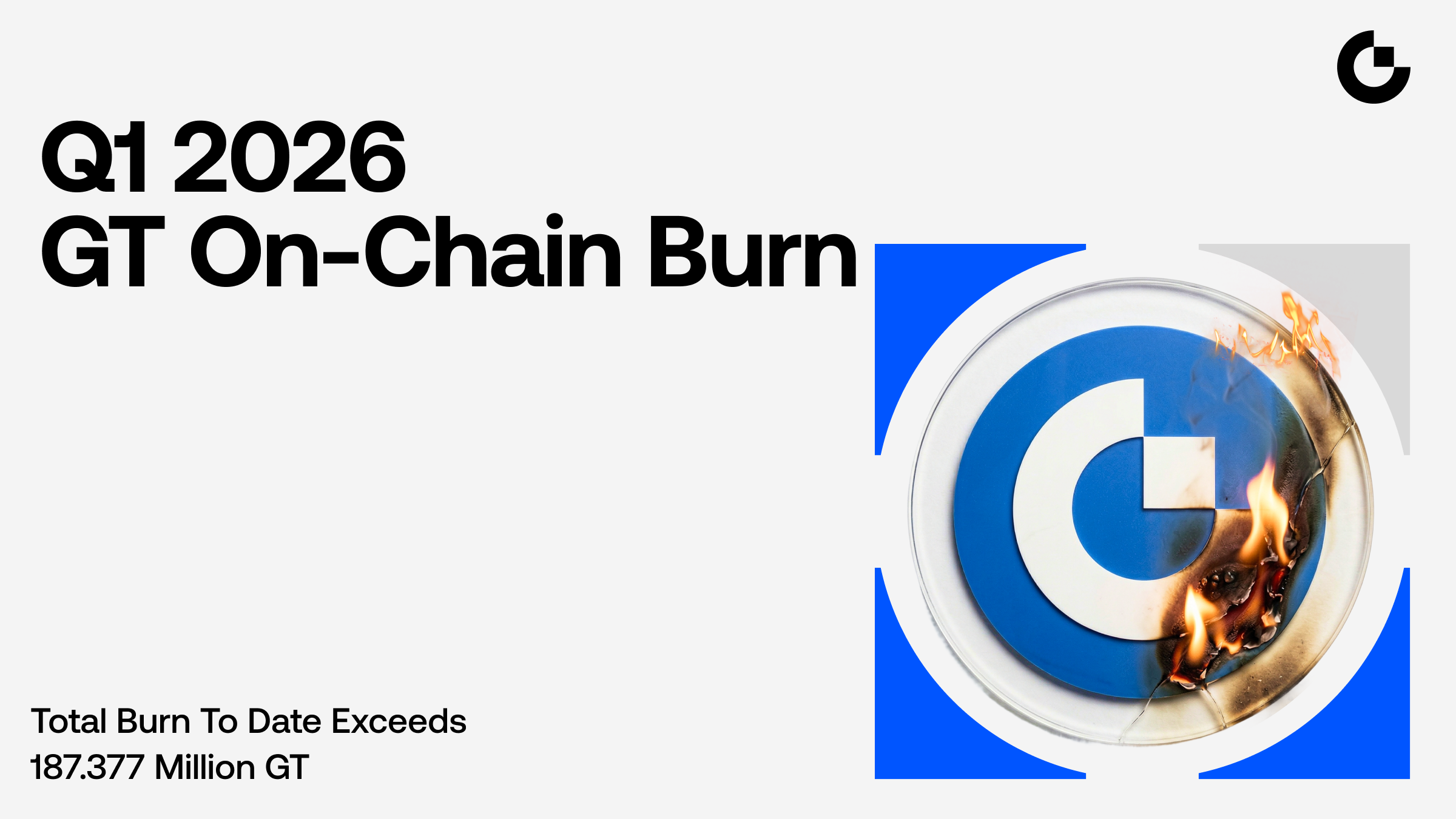
Burned amount this round: 2,557,729.381387 GTBurn value this round: over $20.68 millionTotal burned to date: 187,377,156 GTTotal burned value: over $1.382 billion (based on current prices)Looking ahead, Gate will steadily advance its established GT burn roadmap and strengthen its deflationary mechanism, while continuing to enhance its multi-asset trading infrastructure and application ecosystem and expanding GT's use cases and value support within a compliant framework. The coordinated evolution of the deflationary mechanism and the product ecosystem is reinforcing GT's scarcity and long-term value, injecting sustained momentum into Gate’s long-term growth and its strategy as a comprehensive financial platform.
repost-content-media
  • Reward
  • Comment
  • Repost
  • Share
post-image
Dubai_Prince
Burned amount this round: 2,557,729.381387 GTBurn value this round: over $20.68 millionTotal burned to date: 187,377,156 GTTotal burned value: over $1.382 billion (based on current prices)Looking ahead, Gate will steadily advance its established GT burn roadmap and strengthen its deflationary mechanism, while continuing to enhance its multi-asset trading infrastructure and application ecosystem and expanding GT's use cases and value support within a compliant framework. The coordinated evolution of the deflationary mechanism and the product ecosystem is reinforcing GT's scarcity and long-term value, injecting sustained momentum into Gate’s long-term growth and its strategy as a comprehensive financial platform.
repost-content-media
  • Reward
  • Comment
  • Repost
  • Share
#EthereumFoundationUnstakes$48.9METH
The reported unstaking of approximately $48.9 million worth of ETH linked to the Ethereum Foundation has become a major focal point across the crypto market, not because it confirms a bearish move, but because it highlights how sensitive the ecosystem has become to large-scale on-chain activity. In a market environment where every major wallet movement is instantly analyzed, interpreted, and amplified, even operational or treasury-related actions can rapidly evolve into sentiment-driving events.
At the center of the discussion is a key distinction that man
ETH-0,25%
Dubai_Prince
#EthereumFoundationUnstakes$48.9METH
The reported unstaking of approximately $48.9 million worth of ETH linked to the Ethereum Foundation has become a major focal point across the crypto market, not because it confirms a bearish move, but because it highlights how sensitive the ecosystem has become to large-scale on-chain activity. In a market environment where every major wallet movement is instantly analyzed, interpreted, and amplified, even operational or treasury-related actions can rapidly evolve into sentiment-driving events.
At the center of the discussion is a key distinction that many retail participants often overlook: unstaking is not equal to selling. In Ethereum’s proof-of-stake ecosystem, unstaking simply means withdrawing previously locked ETH from staking contracts. This action can serve multiple purposes, including liquidity rebalancing, operational funding, risk management, or ecosystem development allocation. The assumption that unstaking automatically leads to exchange selling is often premature and frequently inaccurate in large institutional or foundation-level behavior.
However, market reaction is rarely driven by technical definitions alone. The Ethereum Foundation is one of the most closely monitored entities in the entire crypto space. Any movement from its wallets naturally triggers speculation because of its historical influence on development funding, ecosystem grants, and long-term strategic positioning. A transaction nearing $49 million is not insignificant, and in a sentiment-driven market, scale alone is enough to generate volatility in perception.
The timing of this unstaking event adds another layer of complexity. Ethereum is currently operating in a macro-sensitive environment where liquidity conditions, interest rate expectations, and broader crypto risk appetite are already fragile. In such conditions, large on-chain movements tend to act as psychological accelerants. Even when the underlying intent is neutral, the market often reacts first and analyzes later.
What traders are now watching closely is not the unstaking itself, but the post-unstaking flow behavior. This is where the real signal lies:
If ETH remains within foundation-controlled wallets or is redistributed into staking mechanisms again, the market impact is likely to fade quickly, reinforcing the view that this is operational treasury management.
If a portion of the funds moves toward centralized exchanges, it may introduce short-term bearish sentiment due to perceived liquidity pressure.
If the funds are deployed into ecosystem funding, grants, or Layer 2 development initiatives, it could even be interpreted as structurally bullish for Ethereum’s long-term network growth.
This uncertainty is exactly why the market is reacting cautiously rather than decisively.
It is also important to place this event in the broader evolution of Ethereum’s staking economy. In earlier cycles, large ETH movements were rare and often more alarming. Today, however, staking, restaking, validator exits, and liquidity reallocation are part of normal network behavior. As more ETH becomes staked across protocols such as Lido and native staking systems, periodic large withdrawals are increasingly structural rather than exceptional.
The transparency of blockchain systems amplifies this effect. Unlike traditional financial markets where institutional flows are delayed or partially hidden, Ethereum’s on-chain visibility ensures that every meaningful movement is instantly public. This creates a unique dynamic: maximum transparency, but also maximum emotional reaction. Traders often respond to raw data without waiting for confirmation of intent, which leads to short-term volatility spikes even when fundamentals remain unchanged.
From a strategic perspective, the Ethereum Foundation’s historical behavior suggests a focus on long-term ecosystem sustainability rather than short-term market timing. Its financial operations are generally aligned with development cycles, grant distribution, and infrastructure support rather than speculative trading activity. This context is critical when interpreting any treasury movement.
In conclusion, the $48.9 million ETH unstaking event should not be viewed in isolation as a bearish signal. Instead, it represents a typical high-impact on-chain event that becomes meaningful primarily due to perception, timing, and scale. The real market implication will depend entirely on where these funds move next and how broader liquidity conditions evolve in the coming days.
Until then, this remains a sentiment-driven narrative event rather than a confirmed directional market catalyst.
#EthereumFoundationUnstakes$48.9METH #Ethereum #CryptoMarket #OnChainAnalysis
repost-content-media
  • Reward
  • Comment
  • Repost
  • Share
#IranProposesHormuzStraitReopeningTerms
The Strait of Hormuz has once again moved to the center of global geopolitical attention, not as a static shipping route, but as a strategic leverage point where diplomacy, security signaling, and energy economics are intersecting in real time. What is unfolding now should not be viewed through a simple “conflict vs peace” lens. It is a layered negotiation environment where pressure, positioning, and controlled uncertainty are all being used as tools of state strategy.
Iran’s signaling around conditional terms linked to maritime access and regional secu
Dubai_Prince
#IranProposesHormuzStraitReopeningTerms
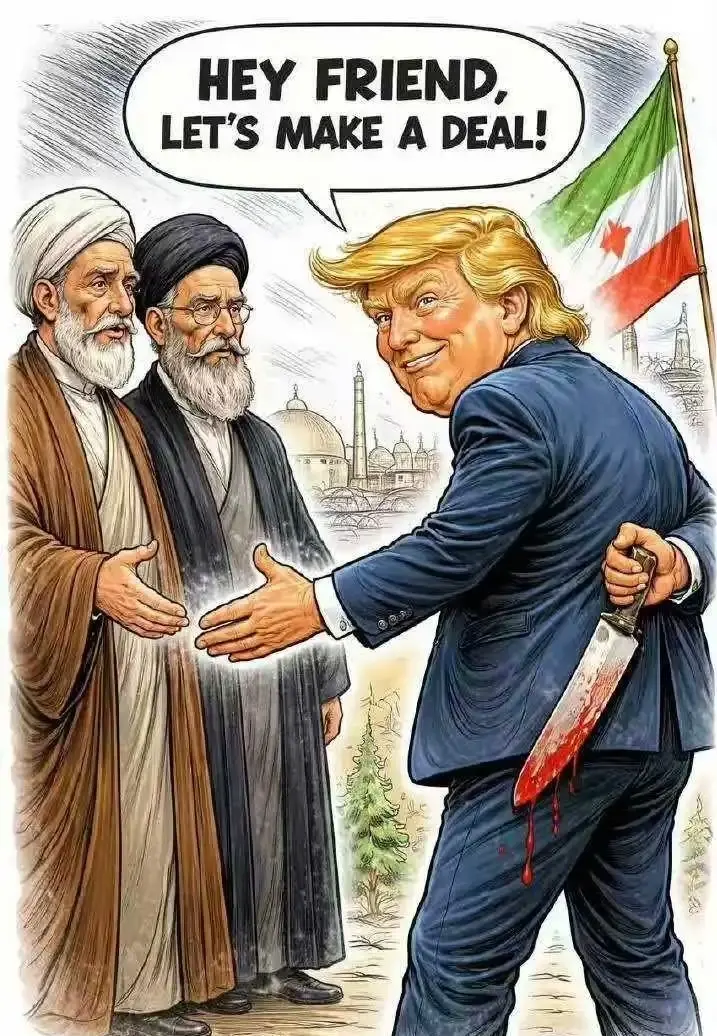
The Strait of Hormuz has once again moved to the center of global geopolitical attention, not as a static shipping route, but as a strategic leverage point where diplomacy, security signaling, and energy economics are intersecting in real time. What is unfolding now should not be viewed through a simple “conflict vs peace” lens. It is a layered negotiation environment where pressure, positioning, and controlled uncertainty are all being used as tools of state strategy.
Iran’s signaling around conditional terms linked to maritime access and regional security arrangements reflects a broader pattern seen in high-stakes geopolitical environments: influence is not exercised only through direct confrontation, but through calibrated ambiguity. In such settings, the objective is often not immediate escalation, but the maximization of bargaining power while maintaining strategic flexibility.
At the same time, the United States’ regional posture adjustments and heightened readiness signals reflect a parallel logic—deterrence through presence. When both sides simultaneously increase signaling intensity without converging into clear diplomatic resolution, the result is not immediate conflict, but elevated systemic uncertainty.
This uncertainty becomes most visible in the Strait of Hormuz because of its unmatched importance in global energy logistics. A significant share of global oil flows through this corridor, meaning that even partial disruption, perceived risk escalation, or security ambiguity can trigger immediate global pricing responses. Importantly, modern energy markets are not waiting for physical disruption—they are continuously repricing based on probability of disruption.
This is where the current phase becomes structurally important. The situation is not defined by a confirmed blockade scenario or an imminent closure outcome. Instead, it is defined by risk layering, where multiple small signals—military readiness adjustments, diplomatic pauses, negotiation friction, and regional security messaging—combine to form a broader risk premium in global energy markets.
From a strategic standpoint, a full and sustained closure of the Strait remains a low-probability scenario due to its extreme economic consequences for multiple stakeholders, including regional exporters and global importers. However, what carries significantly higher probability is a cycle of intermittent tension, controlled pressure, and negotiation-linked volatility that keeps the corridor in a persistent state of uncertainty without crossing into full disruption.
This distinction is critical because markets do not require extreme outcomes to reprice assets. They respond to shifting expectations. Even without physical interruption, sustained geopolitical tension around the Strait can maintain elevated oil risk premiums, influence inflation expectations, and indirectly affect monetary policy outlooks across major economies.
If tensions intensify further, the first observable market reaction is typically rapid risk premium expansion in oil prices, driven by speculative positioning and hedge recalibration. This is often followed by a stabilization phase where institutional participants reassess the duration and severity of the risk scenario. The final phase, if uncertainty persists, is structural repricing—where higher energy costs, insurance premiums, and logistical risks become embedded in long-term pricing models.
For broader global markets, the transmission effect extends beyond energy. Higher oil prices contribute to inflation pressure, which then influences interest rate expectations, bond yields, and equity valuation models. Risk-sensitive assets tend to experience higher volatility not because of directional certainty, but because of shifting macro assumptions embedded in pricing systems.
The key misunderstanding in analyzing such situations is assuming linear escalation paths. Geopolitical systems rarely move in straight lines. They operate in cycles of signaling, negotiation pressure, partial de-escalation, and renewed tension. The Strait of Hormuz, due to its strategic importance, becomes a focal point where these cycles are amplified and reflected instantly in global markets.
Ultimately, the current environment is not defined by a single binary outcome. It is defined by a spectrum of controlled uncertainty, where each diplomatic signal, military adjustment, or negotiation development incrementally reshapes global risk perception.
The Strait of Hormuz is no longer just a physical trade route—it functions as a real-time barometer of geopolitical risk pricing. And in this phase, the market is not reacting to confirmed events, but to the evolving probability structure of what might come next.
repost-content-media
  • Reward
  • Comment
  • Repost
  • Share
#IranProposesHormuzStraitReopeningTerms
#GLOBALMARKETLIQUIDITYSHIFT_AND_RISK_REPRICING
The current global financial environment is not behaving like a normal market cycle anymore. What is unfolding right now is a structural transition in how liquidity moves, how risk is priced, and how fast sentiment can flip across entire asset classes at the same time. Most participants are still interpreting this as “volatility,” but volatility is not the story. It is only the symptom.
What is actually happening is a coordinated repricing of global risk, driven by macro liquidity constraints, institutional
Dubai_Prince
#IranProposesHormuzStraitReopeningTerms
#GLOBALMARKETLIQUIDITYSHIFT_AND_RISK_REPRICING
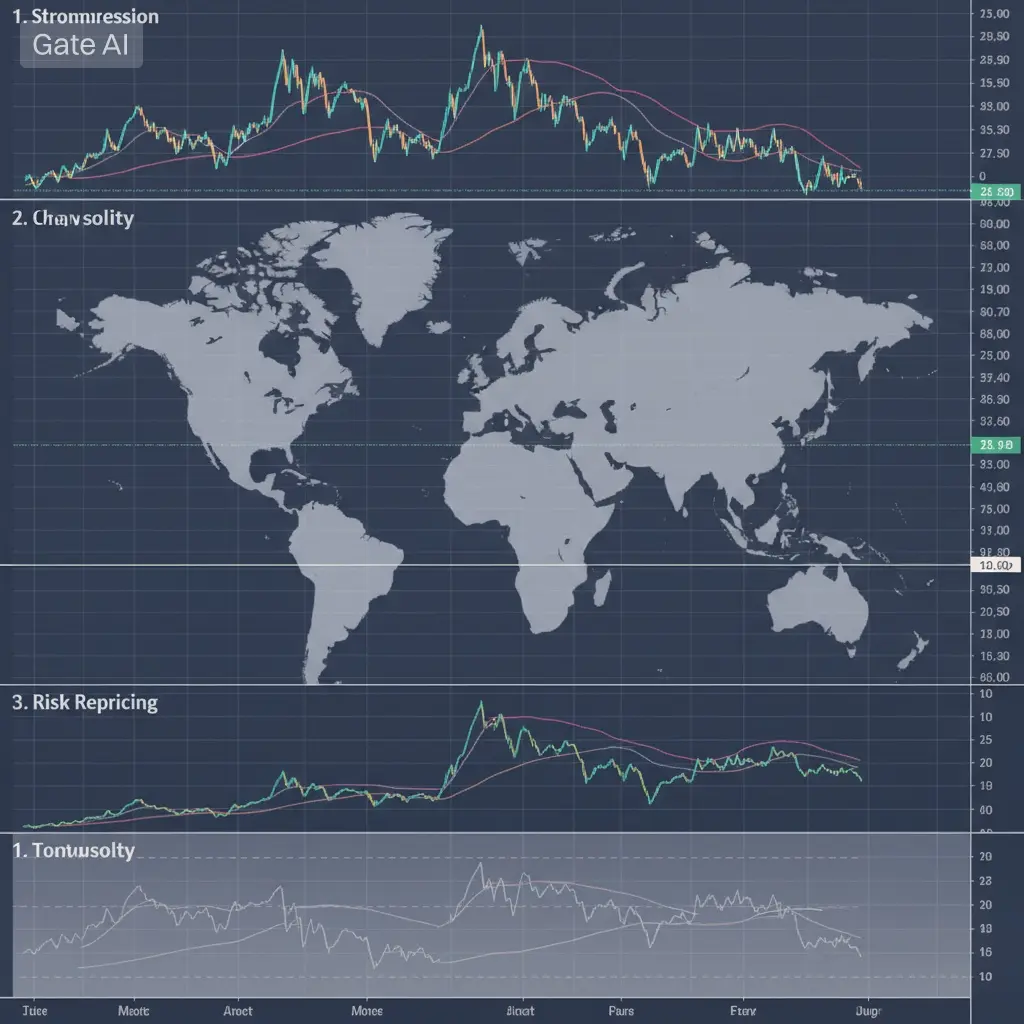
The current global financial environment is not behaving like a normal market cycle anymore. What is unfolding right now is a structural transition in how liquidity moves, how risk is priced, and how fast sentiment can flip across entire asset classes at the same time. Most participants are still interpreting this as “volatility,” but volatility is not the story. It is only the symptom.
What is actually happening is a coordinated repricing of global risk, driven by macro liquidity constraints, institutional positioning shifts, and geopolitical uncertainty feeding directly into financial flows. This is no longer a market where isolated technical setups can be trusted in a vacuum.
The most dangerous misunderstanding in this phase is assuming that price action is purely technical. It is not. Price is increasingly a reflection of liquidity availability, leverage distribution, and cross-asset capital rotation. When liquidity is abundant, markets drift and respect structure. When liquidity tightens or rotates, structure breaks violently and without warning.
This is exactly why recent market behavior feels inconsistent to retail participants. Sharp expansions followed by immediate reversals are not random. They are the result of liquidity gaps being exploited, stop clusters being cleared, and positioning imbalances being corrected in real time. The market is not moving emotionally. It is moving mechanically through areas where liquidity is trapped.
At the same time, macro headlines are no longer passive background noise. Geopolitical developments, energy security tensions, and monetary policy expectations are now direct triggers for liquidity reallocation. The mistake most traders make is reacting to the headline itself. Professional flow reacts to the liquidity consequence of the headline, not the emotional narrative.
Another critical shift is happening in how risk is being managed across global markets. The focus is no longer purely directional. Institutions are not simply betting up or down. They are continuously rotating exposure between asset classes based on risk efficiency, capital preservation, and volatility expectations. This is why correlations between crypto, equities, and the dollar index can suddenly strengthen or collapse without warning. It is not confusion. It is systemic rebalancing.
Retail behavior, on the other hand, remains trapped in outdated logic cycles: chasing breakouts after they happen, exiting positions during volatility spikes, and over-leveraging during perceived certainty phases. These behaviors are exactly what provide liquidity for larger players to execute their positioning. The market does not hunt individuals. It simply functions where liquidity is predictable.
What is currently forming beneath the surface is a compression phase. Liquidity is building above and below price in multiple major assets simultaneously. This type of structure does not remain neutral for long. It eventually resolves through expansion, not continuation. When it breaks, the move is typically fast, directional, and emotionally disruptive for the majority who were positioned incorrectly or too late.
The key shift required in this environment is mental, not technical. Stop treating the market as a sequence of isolated signals. Start viewing it as a layered system where macro liquidity, institutional flow, sentiment positioning, and execution timing all interact simultaneously. Missing even one layer leads to incomplete interpretation and consistent misjudgment.
At this stage, survival is not about predicting the exact direction of the next move. It is about understanding when the system is transitioning from equilibrium to imbalance. Because when that transition completes, price does not move gradually—it reprices aggressively until a new equilibrium is formed.
And by the time the move becomes obvious, it is no longer information. It is already distribution.
repost-content-media
  • Reward
  • Comment
  • Repost
  • Share
#比特币Breaks79K
Bitcoin has now decisively moved above the $79,000 threshold, a level that carried both psychological weight and technical significance within the recent market structure. This breakout is not simply a numerical milestone—it represents a meaningful shift in short-term market control, where buyers have demonstrated the ability to overcome a well-defined resistance ceiling that had contained price action for an extended period.
For several weeks, the market remained compressed within a narrow band, with repeated rejections near the $78,000–$79,000 region and consistent demand emer
BTC-0,29%
Dubai_Prince
#比特币Breaks79K
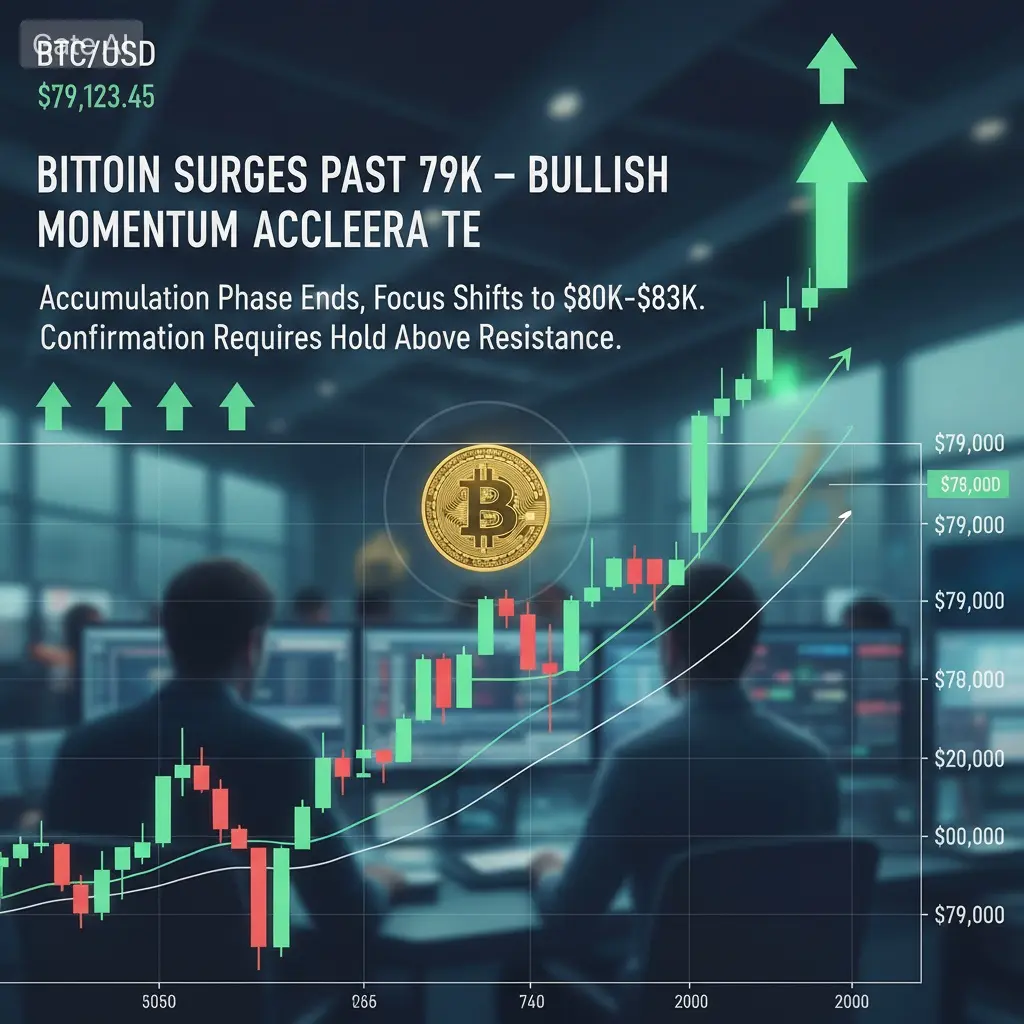
Bitcoin has now decisively moved above the $79,000 threshold, a level that carried both psychological weight and technical significance within the recent market structure. This breakout is not simply a numerical milestone—it represents a meaningful shift in short-term market control, where buyers have demonstrated the ability to overcome a well-defined resistance ceiling that had contained price action for an extended period.
For several weeks, the market remained compressed within a narrow band, with repeated rejections near the $78,000–$79,000 region and consistent demand emerging between $75,000 and $76,500. This type of price behavior typically reflects equilibrium between buyers and sellers, but the key detail was not the range itself—it was how price behaved within it. Instead of forming lower highs or showing signs of distribution, the market continued printing higher lows, indicating that demand was quietly strengthening beneath the surface.
This structural behavior is often characteristic of accumulation rather than distribution. Sellers attempted to defend resistance multiple times, yet they failed to push price meaningfully lower. Over time, this eroded the strength of the supply zone. Once liquidity at the top of the range was sufficiently absorbed, the path of least resistance shifted upward, allowing the breakout above $79K to occur with momentum.
A critical component of this move lies in the interaction between spot demand and derivatives positioning. Institutional flows, particularly through ETF-related exposure, have contributed consistent buy-side pressure, gradually reducing available supply in the market. At the same time, a buildup of leveraged short positions near resistance created a fragile environment. When price began to break higher, these short positions were forced to close, triggering a cascade of liquidations. This short squeeze effect acted as an accelerant, pushing price through resistance faster than organic spot demand alone would typically achieve.
Macro conditions have also played a subtle but important role. Earlier phases of volatility were heavily influenced by external uncertainties, including geopolitical developments and fluctuations in energy markets. Recently, however, there has been a relative stabilization in broader risk sentiment. While not entirely risk-on, the reduction in immediate macro pressure has allowed capital to re-enter higher-risk assets. In such environments, Bitcoin, due to its liquidity and dominance, tends to react first, often setting the tone for the wider crypto market.
From a technical standpoint, the market is now entering a critical evaluation zone. The break above $79,000 opens a pathway toward the $80,000–$83,000 range, which serves as a major resistance cluster. This zone is significant not only because of its psychological impact but also due to historical supply, where selling pressure has previously emerged. A sustained move above this region—supported by strong daily closes and continued volume—would indicate a deeper structural shift and strengthen the case for bullish continuation.
However, it is important to maintain perspective. Despite the breakout, the broader market structure still reflects a macro consolidation phase that has persisted for months. This means that while momentum has shifted in favor of buyers, the trend is not yet fully confirmed. Markets in such transitional states are prone to volatility, including sharp pullbacks or false breakouts if momentum fails to sustain.
On the downside, the $74,000–$75,000 zone remains a key area of support. This region has consistently attracted demand and acted as a base for previous upward movements. If price fails to hold above the breakout level and loses momentum near $80K, a retest of this support would be a logical development. The reaction at that level will be crucial in determining whether the current move evolves into a sustained trend or reverts back into a broader range-bound structure.
Liquidity dynamics further amplify the importance of this phase. Order books near resistance are often thin, meaning once price begins to move, it can do so rapidly. At the same time, the presence of leverage in derivatives markets increases the likelihood of exaggerated moves in both directions. This creates an environment where momentum can accelerate quickly—but can also reverse just as sharply if sentiment shifts.
In essence, the move above $79K signals a clear increase in bullish pressure and a shift in short-term control toward buyers. Yet, it should be viewed as the beginning of a potential expansion phase rather than its confirmation. The market is currently transitioning, and confirmation will depend on whether price can establish stability above former resistance and convert it into support.
The coming sessions will be decisive. Sustained strength above $79,000, followed by a controlled advance into and through the $80,000–$83,000 range, would significantly increase the probability of a broader upward continuation. Conversely, failure to maintain these levels could lead to renewed consolidation, with price revisiting lower liquidity zones before attempting another breakout.
#GateSquare
#ContentMining
#CreaterCarnival
$BTC
repost-content-media
  • Reward
  • Comment
  • Repost
  • Share
#CryptoMarketsRiseBroadly
Comprehensive Analysis of the Broad Crypto Market Rise
The cryptocurrency market is experiencing a significant upward momentum with Bitcoin and Ethereum leading the charge, supported by strong institutional inflows and positive market sentiment across multiple sectors. Here is a detailed step-by-step breakdown of the current market conditions, the extent of the rise, and future projections.
Bitcoin's Dominant Performance and Institutional Adoption
Bitcoin has demonstrated remarkable strength with a 24-hour gain of 1.99 percent, currently trading at approximately 79,0
BTC-0,29%
ETH-0,25%
WEN40,79%
Dubai_Prince
#CryptoMarketsRiseBroadly
Comprehensive Analysis of the Broad Crypto Market Rise
The cryptocurrency market is experiencing a significant upward momentum with Bitcoin and Ethereum leading the charge, supported by strong institutional inflows and positive market sentiment across multiple sectors. Here is a detailed step-by-step breakdown of the current market conditions, the extent of the rise, and future projections.
Bitcoin's Dominant Performance and Institutional Adoption
Bitcoin has demonstrated remarkable strength with a 24-hour gain of 1.99 percent, currently trading at approximately 79,063 USDT after reaching a daily high of 79,477 USDT. The most significant driver behind this rally is the continuous institutional accumulation. United States spot Bitcoin ETFs have recorded nine consecutive days of net inflows, with major financial giants like BlackRock consistently absorbing supply. Long-term holder positions have surged by 69 percent, indicating a fundamental shift from retail speculation to institutional permanent allocation. The Coinbase premium index has maintained positive territory for eighteen straight days, reflecting sustained buying pressure from American investors. On-chain data reveals that whales are accelerating their accumulation, and the market structure has transitioned from extreme pessimism to strong FOMO sentiment, signaling a new phase of supply restructuring and power transfer.
Ethereum's Breakthrough and Ecosystem Developments
Ethereum has outperformed Bitcoin with a more substantial 24-hour increase of 3.21 percent, trading at 2,387 USDT after touching a daily peak of 2,404 USDT. The breakthrough above the 2,400 USDT resistance level marks a significant technical achievement. United States spot Ethereum ETFs recorded inflows of 23.4 million USDT yesterday, demonstrating continued institutional interest. Major asset managers including BlackRock, Grayscale, and BitMine are actively increasing their Ethereum positions, with Grayscale staking an additional 102,400 ETH and BitMine's staking scale rising to 3.5878 million ETH. The upcoming Glamsterdam upgrade and the advancement of EIP-8182 privacy proposals are adding fundamental value. Furthermore, the DeFi ecosystem is recovering through the DeFi United collaborative rescue initiative, which has already raised over 100,000 ETH, restoring confidence in the broader Ethereum ecosystem.
Market-Wide Gainers and Sector Rotation
The broad market rise extends well beyond the top two cryptocurrencies. Analysis of the top gainers reveals impressive performances across diverse sectors. WEN leads the pack with an extraordinary 68.82 percent surge, followed by Crypto Burger at 36.22 percent and OKZOO at 34.72 percent. Infrastructure and protocol tokens like Naoris Protocol and Infinity Ground have climbed 31.48 percent and 31.46 percent respectively. Even established DeFi tokens such as Lido DAO have posted gains exceeding 22 percent. This widespread appreciation indicates healthy sector rotation rather than isolated speculation, with AI-related tokens, infrastructure protocols, and DeFi assets all participating in the upward movement.
Market Capitalization and Volume Analysis
The top ten cryptocurrencies by market capitalization collectively represent over 1.9 trillion USDT in value. Bitcoin maintains its dominance with a market cap of approximately 1.58 trillion USDT, while Ethereum holds around 288 billion USDT. Trading volumes remain robust, with Bitcoin recording over 382 million USDT in 24-hour volume and Ethereum exceeding 250 million USDT. These substantial volume figures confirm that the current rise is supported by genuine buying interest rather than low-liquidity manipulation.
Fear and Greed Index and Market Sentiment
The current Fear and Greed Index stands at 47, classified as neutral territory. This reading suggests that while optimism is building, the market has not yet reached extreme greed levels that typically precede corrections. The neutral sentiment provides room for further upward movement before psychological resistance emerges. The transition from the recent fearful conditions to neutral sentiment reflects improving market confidence without the euphoria that often signals market tops.
Future Rise Probability and Percentage Projections
Based on technical analysis and fundamental indicators, several scenarios emerge for potential further gains. Bitcoin faces critical resistance at the 80,000 USDT psychological level. A successful breakout above this threshold could trigger a move toward 85,000 USDT, representing an additional 7.5 percent gain from current levels. The confluence of ETF inflows, institutional adoption, and favorable regulatory developments in the United States, Japan, and Czech Republic supports this bullish scenario.
Ethereum shows stronger momentum with potential to reach 2,500 USDT in the near term, representing approximately 4.7 percent upside. The combination of staking growth, upgrade anticipation, and DeFi recovery provides multiple catalysts. If the broader altcoin season materializes, mid-cap and small-cap tokens could see gains ranging from 15 to 30 percent as capital rotates from majors to higher-beta assets.
Risk Factors and Considerations
Despite the positive outlook, several risks warrant attention. The market has risen rapidly, and profit-taking could trigger short-term corrections. Macroeconomic factors including Federal Reserve policy decisions and global liquidity conditions remain influential. Additionally, while institutional inflows are strong, any reversal in ETF flows could dampen sentiment. Traders should monitor the 77,500 USDT support level for Bitcoin and 2,300 USDT for Ethereum as critical downside thresholds.
Conclusion
The current broad crypto market rise represents a fundamentally driven uptrend supported by institutional adoption, technological improvements, and improving regulatory clarity. Bitcoin and Ethereum have posted gains of approximately 2 to 3 percent in the past 24 hours, with the potential for additional 5 to 10 percent gains in the coming weeks if resistance levels are breached. The Fear and Greed Index at neutral levels suggests room for further appreciation before reaching overheated conditions. Diversified participation across AI tokens, infrastructure protocols, and DeFi assets indicates healthy market breadth rather than concentrated speculation. Investors should maintain awareness of support levels while recognizing that the current trend has fundamental backing from institutional flows and ecosystem developments.
repost-content-media
  • Reward
  • Comment
  • Repost
  • Share
#IranProposesHormuzStraitReopeningTerms
The emerging discussion around Iran proposing conditional terms for reopening or stabilizing the Strait of Hormuz marks a critical inflection point in global geopolitics, energy security, and market psychology. This development is not an isolated diplomatic signal—it is a layered strategic maneuver shaped by economic pressure, regional tensions, and shifting global alliances. Below is a structured, step-by-step analysis to understand the depth, implications, and forward trajectory of this situation.
Step One: Strategic Importance of the Strait of Hormuz
Dubai_Prince
#IranProposesHormuzStraitReopeningTerms
The emerging discussion around Iran proposing conditional terms for reopening or stabilizing the Strait of Hormuz marks a critical inflection point in global geopolitics, energy security, and market psychology. This development is not an isolated diplomatic signal—it is a layered strategic maneuver shaped by economic pressure, regional tensions, and shifting global alliances. Below is a structured, step-by-step analysis to understand the depth, implications, and forward trajectory of this situation.
Step One: Strategic Importance of the Strait of Hormuz
The Strait of Hormuz is one of the most vital maritime chokepoints in the world, responsible for the transit of roughly 20–25% of global oil supply. Any disruption, threat, or conditional reopening directly impacts global energy prices, shipping insurance costs, and macroeconomic stability. Control or influence over this passage provides immense geopolitical leverage, particularly for Iran, which sits along its northern coastline.
Step Two: Context Behind Iran’s Proposal
Iran’s proposal does not emerge in a vacuum. It is shaped by ongoing economic sanctions, regional military tensions, and diplomatic isolation from Western powers. By introducing reopening “terms,” Iran is effectively repositioning itself from a reactive actor to a negotiating force. This indicates a shift from pure confrontation toward conditional engagement—where access to the Strait becomes a bargaining chip.
Step Three: Likely Conditions Being Proposed
While official details may vary, such proposals typically revolve around:
Easing or lifting of economic sanctions
Recognition of regional security rights
Reduction of foreign military presence in nearby waters
Guarantees related to trade flow and oil exports
These conditions are designed to simultaneously relieve domestic economic pressure and reshape regional power dynamics in Iran’s favor.
Step Four: Global Market Reaction and Energy Implications
Markets tend to respond immediately to any news involving the Strait of Hormuz. Even the suggestion of conditional reopening introduces volatility. Oil prices may initially spike due to uncertainty, followed by potential stabilization if negotiations progress positively. Energy-importing nations—especially in Asia and Europe—closely monitor such developments due to their dependency on uninterrupted oil flow.
Step Five: Impact on Shipping and Trade Logistics
Beyond oil, the Strait is critical for global trade routes. Increased tensions raise insurance premiums for tankers, delay shipments, and reroute logistics chains. A conditional reopening, if accepted, could normalize shipping flows—but only under a framework influenced by Iran’s strategic demands. This adds a layer of political dependency to what was previously a largely open international waterway.
Step Six: Diplomatic Signaling and Power Positioning
Iran’s move is also a message to multiple audiences:
To Western powers: sanctions and pressure have limits
To regional neighbors: Iran remains a central power broker
To global markets: stability is negotiable, not guaranteed
This repositioning enhances Iran’s bargaining strength while forcing other nations to engage rather than isolate.
Step Seven: Military and Security Considerations
The Strait has long been a zone of military sensitivity, with frequent patrols by international naval forces. Any reopening terms tied to reduced military presence could significantly alter the security architecture of the region. However, this also raises concerns among Gulf states and Western allies regarding freedom of navigation and long-term stability.
Step Eight: Broader Geopolitical Implications
This development connects to a larger global shift where economic pressure tools (like sanctions) are increasingly being countered with strategic leverage (like control of trade routes). It reflects a transition toward multipolar negotiation dynamics, where regional powers assert influence more openly rather than aligning strictly within traditional global blocs.
Step Nine: Risks and Uncertainties
Despite the potential for de-escalation, several risks remain:
Breakdown of negotiations leading to further escalation
Misinterpretation of military movements in the region
Internal political pressures within Iran or opposing nations
External actors influencing or complicating the negotiation process
These uncertainties mean that even positive signals must be treated with caution.
Step Ten: Forward Outlook
The next phase depends heavily on international response. If major powers engage diplomatically, a structured agreement could emerge, stabilizing both the Strait and broader regional tensions. However, if proposals are rejected or politicized, the situation could intensify, leading to prolonged uncertainty in both geopolitical and financial markets.
Conclusion
Iran’s proposed terms for reopening or stabilizing the Strait of Hormuz represent far more than a regional issue—they are a test of global negotiation frameworks in an era of shifting power balances. The situation highlights how geography, economics, and politics intersect to shape global outcomes. Whether this leads to cooperation or confrontation will define not only regional stability but also the trajectory of global energy markets in the near future.
#HormuzStrait
#Geopolitics
#OilMarkets
#GlobalTrade
repost-content-media
  • Reward
  • Comment
  • Repost
  • Share
#IranProposesHormuzStraitReopeningTerms
The Strait of Hormuz has once again moved to the center of global geopolitical attention, not as a static shipping route, but as a strategic leverage point where diplomacy, security signaling, and energy economics are intersecting in real time. What is unfolding now should not be viewed through a simple “conflict vs peace” lens. It is a layered negotiation environment where pressure, positioning, and controlled uncertainty are all being used as tools of state strategy.
Iran’s signaling around conditional terms linked to maritime access and regional secu
Dubai_Prince
#IranProposesHormuzStraitReopeningTerms
The Strait of Hormuz has once again moved to the center of global geopolitical attention, not as a static shipping route, but as a strategic leverage point where diplomacy, security signaling, and energy economics are intersecting in real time. What is unfolding now should not be viewed through a simple “conflict vs peace” lens. It is a layered negotiation environment where pressure, positioning, and controlled uncertainty are all being used as tools of state strategy.
Iran’s signaling around conditional terms linked to maritime access and regional security arrangements reflects a broader pattern seen in high-stakes geopolitical environments: influence is not exercised only through direct confrontation, but through calibrated ambiguity. In such settings, the objective is often not immediate escalation, but the maximization of bargaining power while maintaining strategic flexibility.
At the same time, the United States’ regional posture adjustments and heightened readiness signals reflect a parallel logic—deterrence through presence. When both sides simultaneously increase signaling intensity without converging into clear diplomatic resolution, the result is not immediate conflict, but elevated systemic uncertainty.
This uncertainty becomes most visible in the Strait of Hormuz because of its unmatched importance in global energy logistics. A significant share of global oil flows through this corridor, meaning that even partial disruption, perceived risk escalation, or security ambiguity can trigger immediate global pricing responses. Importantly, modern energy markets are not waiting for physical disruption—they are continuously repricing based on probability of disruption.
This is where the current phase becomes structurally important. The situation is not defined by a confirmed blockade scenario or an imminent closure outcome. Instead, it is defined by risk layering, where multiple small signals—military readiness adjustments, diplomatic pauses, negotiation friction, and regional security messaging—combine to form a broader risk premium in global energy markets.
From a strategic standpoint, a full and sustained closure of the Strait remains a low-probability scenario due to its extreme economic consequences for multiple stakeholders, including regional exporters and global importers. However, what carries significantly higher probability is a cycle of intermittent tension, controlled pressure, and negotiation-linked volatility that keeps the corridor in a persistent state of uncertainty without crossing into full disruption.
This distinction is critical because markets do not require extreme outcomes to reprice assets. They respond to shifting expectations. Even without physical interruption, sustained geopolitical tension around the Strait can maintain elevated oil risk premiums, influence inflation expectations, and indirectly affect monetary policy outlooks across major economies.
If tensions intensify further, the first observable market reaction is typically rapid risk premium expansion in oil prices, driven by speculative positioning and hedge recalibration. This is often followed by a stabilization phase where institutional participants reassess the duration and severity of the risk scenario. The final phase, if uncertainty persists, is structural repricing—where higher energy costs, insurance premiums, and logistical risks become embedded in long-term pricing models.
For broader global markets, the transmission effect extends beyond energy. Higher oil prices contribute to inflation pressure, which then influences interest rate expectations, bond yields, and equity valuation models. Risk-sensitive assets tend to experience higher volatility not because of directional certainty, but because of shifting macro assumptions embedded in pricing systems.
The key misunderstanding in analyzing such situations is assuming linear escalation paths. Geopolitical systems rarely move in straight lines. They operate in cycles of signaling, negotiation pressure, partial de-escalation, and renewed tension. The Strait of Hormuz, due to its strategic importance, becomes a focal point where these cycles are amplified and reflected instantly in global markets.
Ultimately, the current environment is not defined by a single binary outcome. It is defined by a spectrum of controlled uncertainty, where each diplomatic signal, military adjustment, or negotiation development incrementally reshapes global risk perception.
The Strait of Hormuz is no longer just a physical trade route—it functions as a real-time barometer of geopolitical risk pricing. And in this phase, the market is not reacting to confirmed events, but to the evolving probability structure of what might come next.
repost-content-media
  • Reward
  • Comment
  • Repost
  • Share
#CrudeOilPriceRose
#原油价格上涨
#CrudeOilSurge | BTC Trading Pair Market Analysis | Global Energy Shock & Crypto Correlation
The global energy and financial markets are currently experiencing one of the most sensitive and volatility-driven phases in recent months. A rapid escalation in geopolitical tension across the Middle East has triggered immediate disruptions in oil logistics, shipping security, and strategic energy infrastructure. The situation is no longer a localized regional concern—it has evolved into a systemic global supply shock with direct implications for inflation, liquidity flow,
BTC-0,29%
Dubai_Prince
#CrudeOilPriceRose
#原油价格上涨
#CrudeOilSurge | BTC Trading Pair Market Analysis | Global Energy Shock & Crypto Correlation
The global energy and financial markets are currently experiencing one of the most sensitive and volatility-driven phases in recent months. A rapid escalation in geopolitical tension across the Middle East has triggered immediate disruptions in oil logistics, shipping security, and strategic energy infrastructure. The situation is no longer a localized regional concern—it has evolved into a systemic global supply shock with direct implications for inflation, liquidity flow, and digital asset volatility.
Sudden developments have intensified market fear and uncertainty. Reports indicate that Oman’s key oil export terminal has been fully evacuated, signaling a precautionary shutdown of critical energy infrastructure. At the same time, Iraq’s oil ports have been forced into operational suspension, further tightening regional supply chains. In parallel, incidents involving attacks on oil tankers in the Gulf have heightened maritime risk premiums, forcing insurance costs and freight volatility sharply upward. These disruptions collectively point toward a coordinated stress event in global crude transportation routes.
In response to escalating supply risks, the International Energy Agency (IEA) has reportedly released 400 million barrels from strategic reserves. This move reflects an emergency attempt to stabilize supply expectations and prevent a sharper inflation shock across global economies. However, despite intervention, market sentiment remains highly reactive, with traders positioning aggressively for further upside volatility in energy prices.
At the center of this turbulence lies a classic market conflict: supply shock versus demand stability. While global demand has not collapsed, supply friction has increased dramatically. This imbalance is pushing both institutional and speculative capital into defensive and momentum-driven strategies.
---
1. Macro Situation: Energy Supply Shock and Geopolitical Pressure
The Middle East remains the core energy artery of the global economy. Any disruption in this region has a multiplier effect across:
Global inflation expectations
Shipping and logistics costs
Industrial production pricing
Central bank policy pressure
The evacuation of key oil facilities and maritime disruptions signals a shift from “risk monitoring” to “active supply interruption scenario.” Markets are now pricing in not just temporary instability, but potential prolonged disruption cycles.
The geopolitical dimension adds further complexity. Diplomatic negotiations involving Iran and the United States are now under heightened scrutiny. Iran’s reported ceasefire-related conditions introduce a possible de-escalation pathway, but market participants remain skeptical about immediate resolution due to historical volatility in negotiation cycles.
---
2. Oil Market Dynamics: Bulls vs Bears Collision
The oil market is now in a high-volatility equilibrium where both bullish and bearish forces are aggressively positioned:
Bullish Drivers:
Supply chain disruptions in the Gulf region
Maritime security risks increasing transport costs
Strategic reserve releases not fully offsetting supply fear
Speculative momentum entering energy futures
Bearish Counterforces:
IEA reserve release signaling supply cushioning
Potential diplomatic de-escalation talks
Demand uncertainty from global economic slowdown risks
This creates a classic “volatility expansion phase” where price direction becomes secondary to liquidity flow intensity. In such environments, sharp intraday swings become more dominant than sustained directional trends.
---
3. BTC Trading Pair Impact: Crypto Market Transmission Effect
The most critical cross-market question now is how oil volatility transmits into cryptocurrency pricing, especially BTC trading pairs.
Historically, Bitcoin reacts to macro shocks in three distinct phases:
Phase 1: Risk-Off Liquidity Drain
When geopolitical tension spikes, leveraged positions across all markets reduce exposure. Initially, BTC often experiences downward pressure as liquidity is pulled back into USD and stable assets.
Phase 2: Inflation Hedge Narrative Activation
As oil prices rise, inflation expectations increase. This reintroduces Bitcoin as a potential macro hedge asset. Institutional narratives begin to shift from risk-off to inflation-hedging allocation.
Phase 3: Liquidity Re-Entry and Volatility Expansion
If central banks respond with liquidity support or rate stabilization expectations, crypto markets often rebound sharply with increased volatility expansion.
Currently, BTC trading pairs are positioned in a transitional zone between Phase 1 and Phase 2. This means:
Short-term volatility remains high
Direction is uncertain but reactive
Correlation with oil is temporarily increasing
Institutional positioning is defensive but watching macro triggers
---
4. Market Psychology: Fear-Driven Opportunity Cycle
This environment is not purely fundamental—it is deeply psychological. Traders are reacting to:
Fear of escalation
Fear of supply disruption
Fear of inflation spikes
Fear of sudden policy reaction
However, experienced market participants understand that such fear cycles often create asymmetric opportunity windows. When oil spikes sharply due to geopolitical risk, crypto markets initially overreact, but later reprice based on liquidity and macro stabilization.
---
5. Scenario Outlook: Next Market Paths
Scenario A: Diplomatic De-escalation
Oil stabilizes or retraces
BTC rebounds with liquidity return
Risk assets recover rapidly
Scenario B: Continued Disruption
Oil remains elevated or climbs further
Inflation expectations rise globally
BTC becomes volatile hedge asset, not stable risk asset
Increased correlation with macro shocks
Scenario C: Escalation Shock
Sharp oil spike continuation
Global risk-off dominates
BTC initially drops, then rebounds on liquidity response cycle
---
Final Market Interpretation
The current market structure is defined by one core condition: instability in energy supply chains is directly feeding into macro uncertainty, and that uncertainty is now flowing into both traditional commodities and crypto assets simultaneously.
Oil is acting as the primary shock transmitter. BTC is acting as a secondary liquidity amplifier.
The BTC trading pair behavior in the coming days will depend less on internal crypto fundamentals and more on:
Geopolitical news flow
Oil price stability
Liquidity injections or tightening signals
Institutional risk appetite adjustments
In such environments, markets do not move in smooth trends—they move in reaction waves.
---
Conclusion
The intersection of crude oil volatility and Bitcoin trading dynamics marks a critical macro moment. Energy markets are sending inflation and supply signals, while crypto markets are translating those signals into liquidity and risk sentiment adjustments.
Traders are now positioned at the center of a multi-asset feedback loop where oil shocks influence macro expectations, and those expectations directly shape BTC trading pair volatility.
The next decisive move will not come from isolated market factors, but from the resolution—or escalation—of geopolitical energy tensions currently unfolding.
#原油价格上涨
#OilShockAnalysis
repost-content-media
  • Reward
  • Comment
  • Repost
  • Share
#WHCADinnerShootingIncident
A Comprehensive Step-by-Step Analysis of the WHCA Dinner Shooting Incident
The recent shooting incident associated with the White House Correspondents' Association (WHCA) Dinner has triggered widespread concern, not only due to its immediate implications for public safety but also because of the symbolic weight the event carries within political, media, and national security circles. This development demands a careful, structured breakdown to understand its context, impact, and broader consequences.
Step One: Understanding the Event Context
The WHCA Dinner is tradi
Dubai_Prince
#WHCADinnerShootingIncident
A Comprehensive Step-by-Step Analysis of the WHCA Dinner Shooting Incident
The recent shooting incident associated with the White House Correspondents' Association (WHCA) Dinner has triggered widespread concern, not only due to its immediate implications for public safety but also because of the symbolic weight the event carries within political, media, and national security circles. This development demands a careful, structured breakdown to understand its context, impact, and broader consequences.
Step One: Understanding the Event Context
The WHCA Dinner is traditionally regarded as a high-profile gathering that brings together journalists, political leaders, policymakers, and influential public figures. It represents a rare intersection of media and government in a semi-formal, socially symbolic environment. Any disruption within or around such an event inherently carries amplified significance.
Step Two: The Nature of the Incident
Initial reports indicate that the shooting occurred in proximity to the event rather than at its core, although details remain subject to ongoing investigation. What is critical at this stage is distinguishing between targeted intent, random violence, or a security breach scenario. Each possibility leads to very different interpretations and responses.
Step Three: Immediate Security Response
Security agencies responded rapidly, implementing containment protocols, restricting movement, and ensuring the safety of attendees. Events of this magnitude are typically protected by layered security frameworks, including federal agencies, local law enforcement, and specialized units. The speed and coordination of the response will likely be analyzed in detail to assess preparedness and efficiency.
Step Four: Information Flow and Media Reaction
As expected, the media response has been swift but fragmented. Early-stage reporting in such incidents often contains inconsistencies due to limited verified data. The role of responsible journalism becomes crucial here—balancing urgency with accuracy while avoiding speculation that could escalate public anxiety.
Step Five: Public Sentiment and Psychological Impact
Incidents like this extend beyond physical harm; they influence public perception of safety, particularly in spaces associated with governance and institutional authority. The psychological ripple effect can be significant, especially when such events intersect with symbols of political and media stability.
Step Six: Political and Institutional Implications
Given the stature of the WHCA Dinner, the incident may prompt renewed discussions around security protocols at high-level gatherings. It may also influence policy debates related to public safety, event security standards, and risk management in politically sensitive environments.
Step Seven: Broader Narrative and Speculation Risks
In high-visibility incidents, narratives tend to evolve rapidly—sometimes faster than facts. It is essential to approach unfolding developments with analytical caution. Premature conclusions can distort reality and contribute to misinformation cycles, particularly in digital and social media ecosystems.
Step Eight: Forward-Looking Considerations
Moving ahead, key focus areas will include:
Verification of the motive and identity of those involved
Evaluation of security gaps, if any
Institutional responses and policy adjustments
Media responsibility in shaping public understanding
This incident serves as a reminder that even highly secured and symbolically significant events are not entirely immune to disruption. The real measure lies not only in preventing such occurrences but also in how effectively institutions respond, adapt, and communicate in their aftermath.
Conclusion
The WHCA Dinner Shooting Incident is more than a singular event—it is a moment that intersects security, media responsibility, and public perception. As more verified information emerges, a clearer picture will form. Until then, disciplined analysis and restraint remain essential in understanding its true scope and implications.
#WHCAIncident #GlobalSecurity #MediaAndPolitics #BreakingAnalysis
repost-content-media
  • Reward
  • Comment
  • Repost
  • Share
#IranProposesHormuzStraitReopeningTerms
#GLOBALMARKETLIQUIDITYSHIFT_AND_RISK_REPRICING
The current global financial environment is not behaving like a normal market cycle anymore. What is unfolding right now is a structural transition in how liquidity moves, how risk is priced, and how fast sentiment can flip across entire asset classes at the same time. Most participants are still interpreting this as “volatility,” but volatility is not the story. It is only the symptom.
What is actually happening is a coordinated repricing of global risk, driven by macro liquidity constraints, institutional
Dubai_Prince
#IranProposesHormuzStraitReopeningTerms
#GLOBALMARKETLIQUIDITYSHIFT_AND_RISK_REPRICING
The current global financial environment is not behaving like a normal market cycle anymore. What is unfolding right now is a structural transition in how liquidity moves, how risk is priced, and how fast sentiment can flip across entire asset classes at the same time. Most participants are still interpreting this as “volatility,” but volatility is not the story. It is only the symptom.
What is actually happening is a coordinated repricing of global risk, driven by macro liquidity constraints, institutional positioning shifts, and geopolitical uncertainty feeding directly into financial flows. This is no longer a market where isolated technical setups can be trusted in a vacuum.
The most dangerous misunderstanding in this phase is assuming that price action is purely technical. It is not. Price is increasingly a reflection of liquidity availability, leverage distribution, and cross-asset capital rotation. When liquidity is abundant, markets drift and respect structure. When liquidity tightens or rotates, structure breaks violently and without warning.
This is exactly why recent market behavior feels inconsistent to retail participants. Sharp expansions followed by immediate reversals are not random. They are the result of liquidity gaps being exploited, stop clusters being cleared, and positioning imbalances being corrected in real time. The market is not moving emotionally. It is moving mechanically through areas where liquidity is trapped.
At the same time, macro headlines are no longer passive background noise. Geopolitical developments, energy security tensions, and monetary policy expectations are now direct triggers for liquidity reallocation. The mistake most traders make is reacting to the headline itself. Professional flow reacts to the liquidity consequence of the headline, not the emotional narrative.
Another critical shift is happening in how risk is being managed across global markets. The focus is no longer purely directional. Institutions are not simply betting up or down. They are continuously rotating exposure between asset classes based on risk efficiency, capital preservation, and volatility expectations. This is why correlations between crypto, equities, and the dollar index can suddenly strengthen or collapse without warning. It is not confusion. It is systemic rebalancing.
Retail behavior, on the other hand, remains trapped in outdated logic cycles: chasing breakouts after they happen, exiting positions during volatility spikes, and over-leveraging during perceived certainty phases. These behaviors are exactly what provide liquidity for larger players to execute their positioning. The market does not hunt individuals. It simply functions where liquidity is predictable.
What is currently forming beneath the surface is a compression phase. Liquidity is building above and below price in multiple major assets simultaneously. This type of structure does not remain neutral for long. It eventually resolves through expansion, not continuation. When it breaks, the move is typically fast, directional, and emotionally disruptive for the majority who were positioned incorrectly or too late.
The key shift required in this environment is mental, not technical. Stop treating the market as a sequence of isolated signals. Start viewing it as a layered system where macro liquidity, institutional flow, sentiment positioning, and execution timing all interact simultaneously. Missing even one layer leads to incomplete interpretation and consistent misjudgment.
At this stage, survival is not about predicting the exact direction of the next move. It is about understanding when the system is transitioning from equilibrium to imbalance. Because when that transition completes, price does not move gradually—it reprices aggressively until a new equilibrium is formed.
And by the time the move becomes obvious, it is no longer information. It is already distribution.
repost-content-media
  • Reward
  • Comment
  • Repost
  • Share
#IranProposesHormuzStraitReopeningTerms
The emerging discussion around Iran proposing conditional terms for reopening or stabilizing the Strait of Hormuz marks a critical inflection point in global geopolitics, energy security, and market psychology. This development is not an isolated diplomatic signal—it is a layered strategic maneuver shaped by economic pressure, regional tensions, and shifting global alliances. Below is a structured, step-by-step analysis to understand the depth, implications, and forward trajectory of this situation.
Step One: Strategic Importance of the Strait of Hormuz
Dubai_Prince
#IranProposesHormuzStraitReopeningTerms
The emerging discussion around Iran proposing conditional terms for reopening or stabilizing the Strait of Hormuz marks a critical inflection point in global geopolitics, energy security, and market psychology. This development is not an isolated diplomatic signal—it is a layered strategic maneuver shaped by economic pressure, regional tensions, and shifting global alliances. Below is a structured, step-by-step analysis to understand the depth, implications, and forward trajectory of this situation.
Step One: Strategic Importance of the Strait of Hormuz
The Strait of Hormuz is one of the most vital maritime chokepoints in the world, responsible for the transit of roughly 20–25% of global oil supply. Any disruption, threat, or conditional reopening directly impacts global energy prices, shipping insurance costs, and macroeconomic stability. Control or influence over this passage provides immense geopolitical leverage, particularly for Iran, which sits along its northern coastline.
Step Two: Context Behind Iran’s Proposal
Iran’s proposal does not emerge in a vacuum. It is shaped by ongoing economic sanctions, regional military tensions, and diplomatic isolation from Western powers. By introducing reopening “terms,” Iran is effectively repositioning itself from a reactive actor to a negotiating force. This indicates a shift from pure confrontation toward conditional engagement—where access to the Strait becomes a bargaining chip.
Step Three: Likely Conditions Being Proposed
While official details may vary, such proposals typically revolve around:
Easing or lifting of economic sanctions
Recognition of regional security rights
Reduction of foreign military presence in nearby waters
Guarantees related to trade flow and oil exports
These conditions are designed to simultaneously relieve domestic economic pressure and reshape regional power dynamics in Iran’s favor.
Step Four: Global Market Reaction and Energy Implications
Markets tend to respond immediately to any news involving the Strait of Hormuz. Even the suggestion of conditional reopening introduces volatility. Oil prices may initially spike due to uncertainty, followed by potential stabilization if negotiations progress positively. Energy-importing nations—especially in Asia and Europe—closely monitor such developments due to their dependency on uninterrupted oil flow.
Step Five: Impact on Shipping and Trade Logistics
Beyond oil, the Strait is critical for global trade routes. Increased tensions raise insurance premiums for tankers, delay shipments, and reroute logistics chains. A conditional reopening, if accepted, could normalize shipping flows—but only under a framework influenced by Iran’s strategic demands. This adds a layer of political dependency to what was previously a largely open international waterway.
Step Six: Diplomatic Signaling and Power Positioning
Iran’s move is also a message to multiple audiences:
To Western powers: sanctions and pressure have limits
To regional neighbors: Iran remains a central power broker
To global markets: stability is negotiable, not guaranteed
This repositioning enhances Iran’s bargaining strength while forcing other nations to engage rather than isolate.
Step Seven: Military and Security Considerations
The Strait has long been a zone of military sensitivity, with frequent patrols by international naval forces. Any reopening terms tied to reduced military presence could significantly alter the security architecture of the region. However, this also raises concerns among Gulf states and Western allies regarding freedom of navigation and long-term stability.
Step Eight: Broader Geopolitical Implications
This development connects to a larger global shift where economic pressure tools (like sanctions) are increasingly being countered with strategic leverage (like control of trade routes). It reflects a transition toward multipolar negotiation dynamics, where regional powers assert influence more openly rather than aligning strictly within traditional global blocs.
Step Nine: Risks and Uncertainties
Despite the potential for de-escalation, several risks remain:
Breakdown of negotiations leading to further escalation
Misinterpretation of military movements in the region
Internal political pressures within Iran or opposing nations
External actors influencing or complicating the negotiation process
These uncertainties mean that even positive signals must be treated with caution.
Step Ten: Forward Outlook
The next phase depends heavily on international response. If major powers engage diplomatically, a structured agreement could emerge, stabilizing both the Strait and broader regional tensions. However, if proposals are rejected or politicized, the situation could intensify, leading to prolonged uncertainty in both geopolitical and financial markets.
Conclusion
Iran’s proposed terms for reopening or stabilizing the Strait of Hormuz represent far more than a regional issue—they are a test of global negotiation frameworks in an era of shifting power balances. The situation highlights how geography, economics, and politics intersect to shape global outcomes. Whether this leads to cooperation or confrontation will define not only regional stability but also the trajectory of global energy markets in the near future.
#HormuzStrait
#Geopolitics
#OilMarkets
#GlobalTrade
repost-content-media
  • Reward
  • Comment
  • Repost
  • Share
#BTC
## BTC Current Status
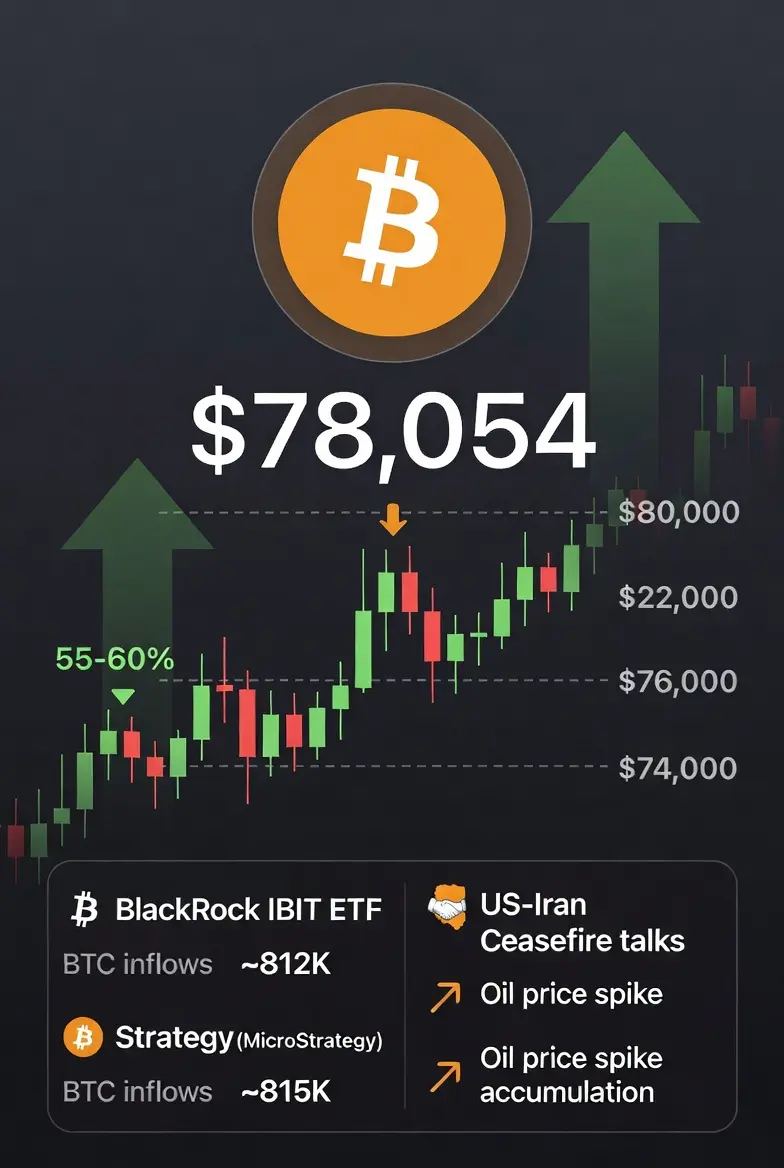
Bitcoin is trading at $78,054.40 with a 24-hour gain of 0.45%. Over the past week, it has risen 2.92%, and the monthly performance shows an impressive 17.59% increase. The price has broken above $78K and is consolidating near four-week highs. The market structure presents mixed signals: short-term momentum appears bullish with a double bottom formation visible on the charts, but daily indicators including CCI, Williams %R, and MACD suggest overbought conditions that could trigger a pullback.
US. IRAN Situation: Latest Updates
Tensions between the US and Iran remain
BTC-0,29%
HighAmbition
#BTC
## BTC Current Status
Bitcoin is trading at $78,054.40 with a 24-hour gain of 0.45%. Over the past week, it has risen 2.92%, and the monthly performance shows an impressive 17.59% increase. The price has broken above $78K and is consolidating near four-week highs. The market structure presents mixed signals: short-term momentum appears bullish with a double bottom formation visible on the charts, but daily indicators including CCI, Williams %R, and MACD suggest overbought conditions that could trigger a pullback.
US. IRAN Situation: Latest Updates
Tensions between the US and Iran remain elevated, though ceasefire talks are ongoing. Recent reports indicate that extended US-Iran ceasefire talks have lifted overall market risk appetite, pushing Bitcoin to monthly highs near $78,922. Iran reimposed controls over the Strait of Hormuz during the weekend, causing Brent crude oil to jump 5.7% while Bitcoin only experienced a modest 1.6% pullback, demonstrating crypto's relative resilience compared to traditional markets. BlackRock and Strategy (formerly MicroStrategy) appear to be in an arms race for Bitcoin supply accumulation. BlackRock's IBIT ETF recorded $612 million in inflows last week, while Strategy now holds 815,061 BTC, surpassing BlackRock's 802,823 BTC holdings. Each Iran-related shock is producing smaller Bitcoin sell-offs than the previous one, suggesting that geopolitical risk is largely priced into the market. Crypto is increasingly acting as a geopolitical shock absorber.
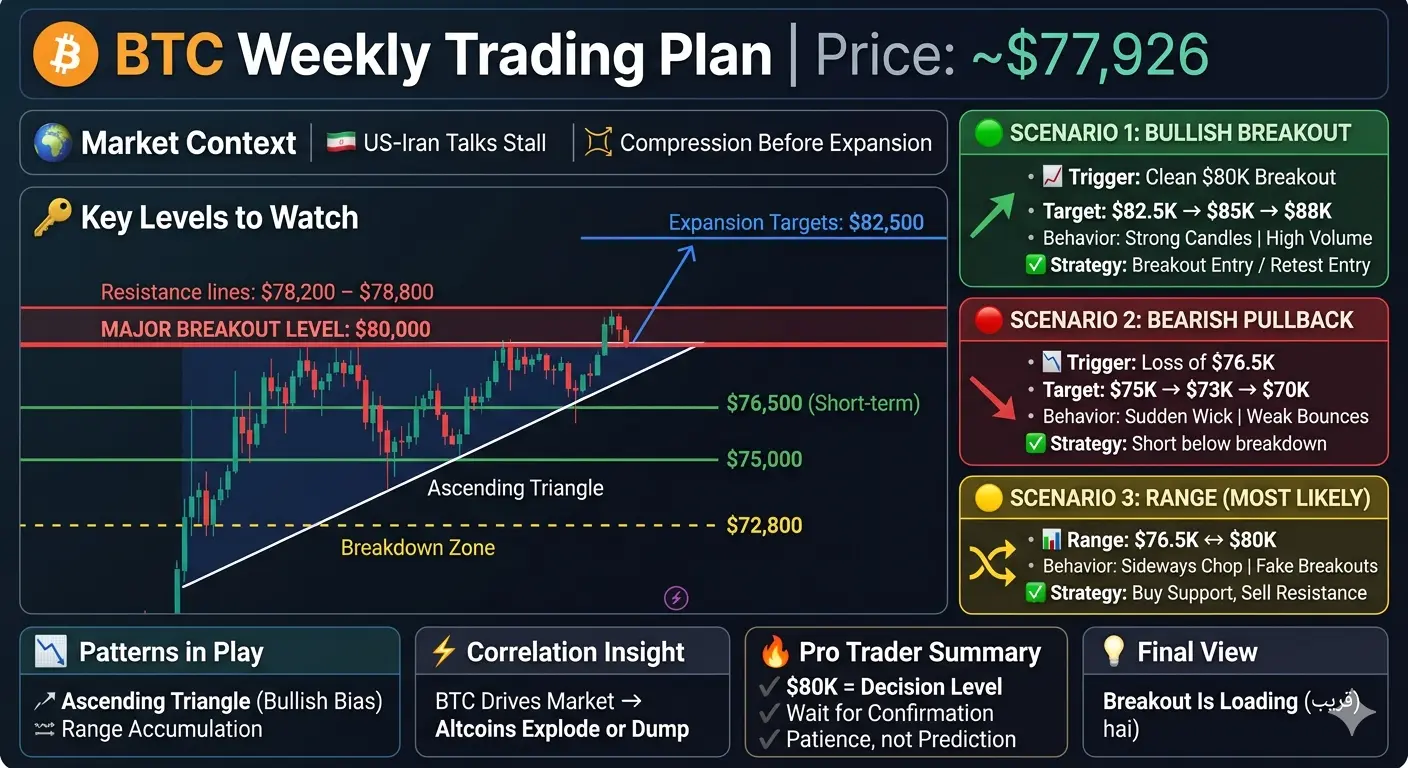
BULLISH Scenario (Probability: 55-60%)
The bullish case rests on several catalysts. Institutional accumulation continues with ETF inflows averaging $1.9 billion weekly. The $80,000 level represents key resistance, and breaking above it would trigger approximately $619 million in short liquidations. The Coinbase premium index has remained positive for 18 consecutive days, indicating strong US buying pressure. Additionally, the SEC under Chairman Paul Atkins is taking a noticeably friendlier stance toward crypto regulation compared to the previous administration. Near-term price targets include $80,000 to $82,000, which forms a significant resistance cluster. If $82,000 breaks with strong volume, mid-term targets of $85,000 to $88,000 become achievable. Technical confirmation would come from a daily close above $79,000 with the lagging span clearing the Kumo cloud on the Ichimoku indicator.
BEARISH Scenario (Probability: 40-45%)
The bearish case presents several risks worth monitoring. Daily MACD is showing bearish divergence, with price making higher highs while momentum indicators decline. Overbought conditions on both CCI and Williams %R suggest potential exhaustion. If US-Iran talks collapse unexpectedly, risk-off sentiment could trigger a cascade of selling. A breakdown below $76,000 support would trigger approximately $645 million in long liquidations, potentially accelerating the decline. Support levels to watch include $76,000 as critical support, followed by $73,000 to $74,000 in the previous accumulation zone, and $71,000 as a major structural level.
Trading Strategy Recommendations
For short-term traders focusing on the 1-7 day timeframe, there are two primary scenarios to consider. In the breakout play scenario, enter long positions above $79,500 with confirmation, targeting $81,500 to $82,000, with a stop loss placed at $78,200 below recent support, offering a risk-to-reward ratio of approximately 1 to 2.5. Alternatively, for range-bound conditions, the current trading range sits between $77,000 and $78,200, where traders can buy dips toward $77,500 and sell rallies toward $78,000 and above, maintaining tight stops on both sides.
For swing traders with a 1-4 week horizon, a conservative approach would involve waiting for a daily close above $80,000 before adding to long positions, scaling in with 25% position sizes on confirmed breaks, while keeping 50% of capital available for dip-buying opportunities below $76,000. More aggressive traders might consider holding current longs with a trailing stop at $77,000, adding to positions on any dips into the $76,000 to $77,000 zone, with a target of $85,000 or higher over the next two to four weeks.
Risk management remains paramount in the current environment. Given the 17.5% run over the past 30 days, consider reducing position sizes by 20-30% from normal levels. For futures trading, use maximum leverage of 3-5x as volatility is likely to expand near the $80,000 level. Monitor correlations with oil prices and the US Dollar Index, as simultaneous spikes in both could cause crypto to lag traditional markets. Be aware that $80,000 represents a magnet for short liquidations while $76,000 serves the same function for long liquidations.
Key levels to watch include $82,000 as major resistance in the negative gamma zone, $80,000 as key resistance with high call open interest, $78,000 as current psychological support, $76,000 as critical support and a long liquidation trigger, and $74,000 as a strong demand zone where buyers have historically stepped in.
Bottom Line: The path of least resistance remains upward while institutional flows continue, but exercise caution near $80K resistance. The US-Iran situation is a known risk that markets have largely adapted to. Your edge lies in waiting for clean breaks rather than anticipating them.
repost-content-media
  • Reward
  • Comment
  • Repost
  • Share
#EthereumMarketAnalysis
Comprehensive Ethereum (ETH) Market Analysis
Current Market Status
Ethereum is currently trading around $2,332, showing modest positive movement with a 0.53% gain over the past 24 hours. The price has been consolidating within a narrow range between $2,301 and $2,337, reflecting a period of indecision as market participants await clearer directional catalysts. Trading volume remains healthy at approximately $113 million in 24-hour quote volume, indicating sustained interest despite the sideways price action.
US-Iran Peace Talks and Geopolitical Impact
The stalled US-Ir
ETH-0,25%
BTC-0,29%
AAVE1,62%
ARB-3,89%
HighAmbition
#EthereumMarketAnalysis
Comprehensive Ethereum (ETH) Market Analysis
Current Market Status
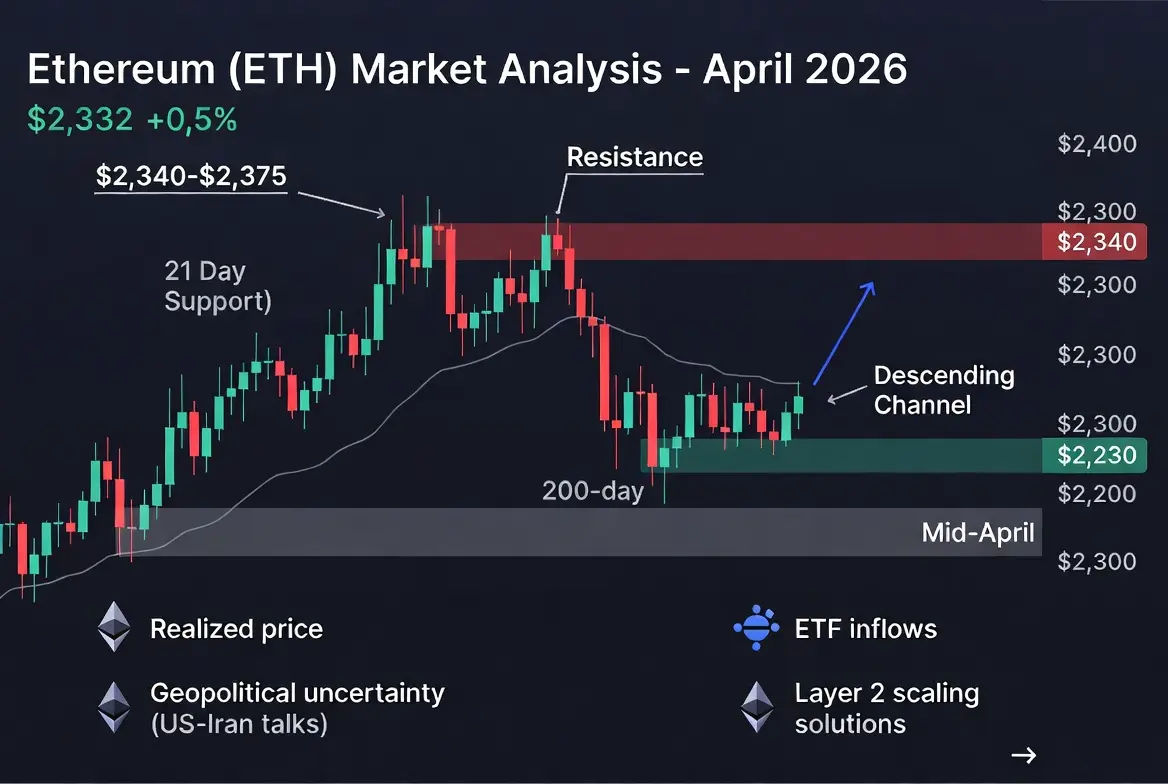
Ethereum is currently trading around $2,332, showing modest positive movement with a 0.53% gain over the past 24 hours. The price has been consolidating within a narrow range between $2,301 and $2,337, reflecting a period of indecision as market participants await clearer directional catalysts. Trading volume remains healthy at approximately $113 million in 24-hour quote volume, indicating sustained interest despite the sideways price action.
US-Iran Peace Talks and Geopolitical Impact
The stalled US-Iran peace negotiations represent a significant overhang on risk assets including Ethereum. Recent reports indicate that talks in Islamabad ended without breakthrough, with Iran blaming US naval blockades for the impasse. This geopolitical uncertainty has created a risk-off environment where institutional capital tends to retreat from high-beta assets like cryptocurrencies.
The connection between these talks and ETH valuation operates through multiple channels. First, successful negotiations would likely reduce oil prices and inflationary pressures, potentially allowing central banks to maintain or lower interest rates. Lower rates generally benefit crypto markets by reducing the opportunity cost of holding non-yielding assets and improving liquidity conditions. Conversely, failed talks or escalating tensions could trigger safe-haven flows into traditional assets while pressuring risk-on positions.
Recent market behavior suggests crypto may be developing resilience to geopolitical shocks. During the latest Iran-related flare-up, Bitcoin and Ethereum showed more muted reactions compared to traditional markets like oil and equities. This divergence could indicate that crypto holders who were inclined to sell on geopolitical headlines have already exited, or that spot ETF inflows are providing a more stable demand floor than previous cycles dominated by futures-driven volatility.
Technical Analysis and Key Levels
From a technical perspective, Ethereum faces immediate resistance at $2,340-$2,375, which aligns with the 21-period simple moving average and the upper band of a descending trend channel that formed in mid-April. Support levels are clustered around $2,300, $2,230 (near the 200-period EMA), and $2,180 at the lower band of the descending channel.
The price structure shows ETH trading below its 21 SMA while remaining within a descending trend channel, suggesting near-term weakness. However, the realized price around $2,340 has been acting as dynamic support, and holding above this level could signal potential for macro expansion. A decisive break below $2,230 would invalidate the bullish structure and potentially target $1,845, while a sustained move above $2,375 could open the path toward $2,900 resistance.
Factors Impacting Ethereum
Multiple fundamental factors are currently influencing Ethereum's price trajectory. On the positive side, institutional adoption continues through spot ETF inflows and increased staking participation. Major institutions like Grayscale and BitMine have expanded their ETH holdings, while the DeFi ecosystem shows resilience with initiatives like Aave's DeFi United raising substantial ETH for risk mitigation.
Technological developments also support the bull case. The Pectra upgrade has improved network efficiency, while Layer 2 scaling solutions including Arbitrum, Optimism, and Base are processing millions of transactions daily at reduced costs. Uniswap V4 Hooks and privacy proposals like EIP-8182 demonstrate ongoing innovation within the ecosystem.
Conversely, bearish pressures include tightening liquidity conditions, negative funding rates in derivatives markets, and rising Bitcoin dominance which often correlates with ETH underperformance. The broader DeFi sector faces systemic risk concerns following recent security incidents, though community responses like the DeFi United initiative show the ecosystem's capacity for collaborative problem-solving.
Trading Strategy Recommendations
For active traders, the current environment suggests a cautious approach with clear risk management parameters. Short-term traders might consider short positions if ETH rejects at the $2,375 resistance level, targeting $2,300 and potentially $2,230 on breaks below the ascending trend channel. Stop-losses should be placed above $2,400 to protect against false breakouts.
Long-term position traders may find accumulation opportunities on any dips toward the $2,200-$2,300 range, particularly if the price holds above the 200 EMA. The confluence of realized price support and long-term technical structure suggests this zone could represent favorable risk-reward entry points for multi-month positions.
Risk management remains paramount given the geopolitical overhang. Position sizing should reflect the elevated uncertainty, with traders prepared for potential volatility spikes if US-Iran talks show meaningful progress or deterioration. Monitoring funding rates, perpetual swap premiums, and options market skew can provide early signals of shifting sentiment.
Outlook and Conclusion
Ethereum sits at a critical juncture where near-term technical weakness contrasts with longer-term fundamental strength. The stalled US-Iran negotiations create uncertainty that could persist until diplomatic clarity emerges, potentially capping upside until resolved. However, the ecosystem's institutional adoption, technological progress, and demonstrated resilience to geopolitical shocks suggest underlying support.
Traders should remain flexible, prepared to adjust positions based on both technical breaks and geopolitical developments. The $2,230-$2,375 range defines the current battleground, with breaks in either direction likely to establish the next significant trend. Patience and disciplined risk management will be essential until clearer directional signals emerge from both technical patterns and macro developments.
repost-content-media
  • Reward
  • Comment
  • Repost
  • Share
#EthereumMarketAnalysis
Comprehensive Ethereum (ETH) Market Analysis
Current Market Status
Ethereum is currently trading around $2,332, showing modest positive movement with a 0.53% gain over the past 24 hours. The price has been consolidating within a narrow range between $2,301 and $2,337, reflecting a period of indecision as market participants await clearer directional catalysts. Trading volume remains healthy at approximately $113 million in 24-hour quote volume, indicating sustained interest despite the sideways price action.
US-Iran Peace Talks and Geopolitical Impact
The stalled US-Ir
ETH-0,25%
BTC-0,29%
AAVE1,62%
ARB-3,89%
HighAmbition
#EthereumMarketAnalysis
Comprehensive Ethereum (ETH) Market Analysis
Current Market Status
Ethereum is currently trading around $2,332, showing modest positive movement with a 0.53% gain over the past 24 hours. The price has been consolidating within a narrow range between $2,301 and $2,337, reflecting a period of indecision as market participants await clearer directional catalysts. Trading volume remains healthy at approximately $113 million in 24-hour quote volume, indicating sustained interest despite the sideways price action.
US-Iran Peace Talks and Geopolitical Impact
The stalled US-Iran peace negotiations represent a significant overhang on risk assets including Ethereum. Recent reports indicate that talks in Islamabad ended without breakthrough, with Iran blaming US naval blockades for the impasse. This geopolitical uncertainty has created a risk-off environment where institutional capital tends to retreat from high-beta assets like cryptocurrencies.
The connection between these talks and ETH valuation operates through multiple channels. First, successful negotiations would likely reduce oil prices and inflationary pressures, potentially allowing central banks to maintain or lower interest rates. Lower rates generally benefit crypto markets by reducing the opportunity cost of holding non-yielding assets and improving liquidity conditions. Conversely, failed talks or escalating tensions could trigger safe-haven flows into traditional assets while pressuring risk-on positions.
Recent market behavior suggests crypto may be developing resilience to geopolitical shocks. During the latest Iran-related flare-up, Bitcoin and Ethereum showed more muted reactions compared to traditional markets like oil and equities. This divergence could indicate that crypto holders who were inclined to sell on geopolitical headlines have already exited, or that spot ETF inflows are providing a more stable demand floor than previous cycles dominated by futures-driven volatility.
Technical Analysis and Key Levels
From a technical perspective, Ethereum faces immediate resistance at $2,340-$2,375, which aligns with the 21-period simple moving average and the upper band of a descending trend channel that formed in mid-April. Support levels are clustered around $2,300, $2,230 (near the 200-period EMA), and $2,180 at the lower band of the descending channel.
The price structure shows ETH trading below its 21 SMA while remaining within a descending trend channel, suggesting near-term weakness. However, the realized price around $2,340 has been acting as dynamic support, and holding above this level could signal potential for macro expansion. A decisive break below $2,230 would invalidate the bullish structure and potentially target $1,845, while a sustained move above $2,375 could open the path toward $2,900 resistance.
Factors Impacting Ethereum
Multiple fundamental factors are currently influencing Ethereum's price trajectory. On the positive side, institutional adoption continues through spot ETF inflows and increased staking participation. Major institutions like Grayscale and BitMine have expanded their ETH holdings, while the DeFi ecosystem shows resilience with initiatives like Aave's DeFi United raising substantial ETH for risk mitigation.
Technological developments also support the bull case. The Pectra upgrade has improved network efficiency, while Layer 2 scaling solutions including Arbitrum, Optimism, and Base are processing millions of transactions daily at reduced costs. Uniswap V4 Hooks and privacy proposals like EIP-8182 demonstrate ongoing innovation within the ecosystem.
Conversely, bearish pressures include tightening liquidity conditions, negative funding rates in derivatives markets, and rising Bitcoin dominance which often correlates with ETH underperformance. The broader DeFi sector faces systemic risk concerns following recent security incidents, though community responses like the DeFi United initiative show the ecosystem's capacity for collaborative problem-solving.
Trading Strategy Recommendations
For active traders, the current environment suggests a cautious approach with clear risk management parameters. Short-term traders might consider short positions if ETH rejects at the $2,375 resistance level, targeting $2,300 and potentially $2,230 on breaks below the ascending trend channel. Stop-losses should be placed above $2,400 to protect against false breakouts.
Long-term position traders may find accumulation opportunities on any dips toward the $2,200-$2,300 range, particularly if the price holds above the 200 EMA. The confluence of realized price support and long-term technical structure suggests this zone could represent favorable risk-reward entry points for multi-month positions.
Risk management remains paramount given the geopolitical overhang. Position sizing should reflect the elevated uncertainty, with traders prepared for potential volatility spikes if US-Iran talks show meaningful progress or deterioration. Monitoring funding rates, perpetual swap premiums, and options market skew can provide early signals of shifting sentiment.
Outlook and Conclusion
Ethereum sits at a critical juncture where near-term technical weakness contrasts with longer-term fundamental strength. The stalled US-Iran negotiations create uncertainty that could persist until diplomatic clarity emerges, potentially capping upside until resolved. However, the ecosystem's institutional adoption, technological progress, and demonstrated resilience to geopolitical shocks suggest underlying support.
Traders should remain flexible, prepared to adjust positions based on both technical breaks and geopolitical developments. The $2,230-$2,375 range defines the current battleground, with breaks in either direction likely to establish the next significant trend. Patience and disciplined risk management will be essential until clearer directional signals emerge from both technical patterns and macro developments.
repost-content-media
  • Reward
  • Comment
  • Repost
  • Share
#EthereumMarketAnalysis
Comprehensive Ethereum (ETH) Market Analysis
Current Market Status
Ethereum is currently trading around $2,332, showing modest positive movement with a 0.53% gain over the past 24 hours. The price has been consolidating within a narrow range between $2,301 and $2,337, reflecting a period of indecision as market participants await clearer directional catalysts. Trading volume remains healthy at approximately $113 million in 24-hour quote volume, indicating sustained interest despite the sideways price action.
US-Iran Peace Talks and Geopolitical Impact
The stalled US-Ir
ETH-0,25%
BTC-0,29%
AAVE1,62%
ARB-3,89%
HighAmbition
#EthereumMarketAnalysis
Comprehensive Ethereum (ETH) Market Analysis
Current Market Status
Ethereum is currently trading around $2,332, showing modest positive movement with a 0.53% gain over the past 24 hours. The price has been consolidating within a narrow range between $2,301 and $2,337, reflecting a period of indecision as market participants await clearer directional catalysts. Trading volume remains healthy at approximately $113 million in 24-hour quote volume, indicating sustained interest despite the sideways price action.
US-Iran Peace Talks and Geopolitical Impact
The stalled US-Iran peace negotiations represent a significant overhang on risk assets including Ethereum. Recent reports indicate that talks in Islamabad ended without breakthrough, with Iran blaming US naval blockades for the impasse. This geopolitical uncertainty has created a risk-off environment where institutional capital tends to retreat from high-beta assets like cryptocurrencies.
The connection between these talks and ETH valuation operates through multiple channels. First, successful negotiations would likely reduce oil prices and inflationary pressures, potentially allowing central banks to maintain or lower interest rates. Lower rates generally benefit crypto markets by reducing the opportunity cost of holding non-yielding assets and improving liquidity conditions. Conversely, failed talks or escalating tensions could trigger safe-haven flows into traditional assets while pressuring risk-on positions.
Recent market behavior suggests crypto may be developing resilience to geopolitical shocks. During the latest Iran-related flare-up, Bitcoin and Ethereum showed more muted reactions compared to traditional markets like oil and equities. This divergence could indicate that crypto holders who were inclined to sell on geopolitical headlines have already exited, or that spot ETF inflows are providing a more stable demand floor than previous cycles dominated by futures-driven volatility.
Technical Analysis and Key Levels
From a technical perspective, Ethereum faces immediate resistance at $2,340-$2,375, which aligns with the 21-period simple moving average and the upper band of a descending trend channel that formed in mid-April. Support levels are clustered around $2,300, $2,230 (near the 200-period EMA), and $2,180 at the lower band of the descending channel.
The price structure shows ETH trading below its 21 SMA while remaining within a descending trend channel, suggesting near-term weakness. However, the realized price around $2,340 has been acting as dynamic support, and holding above this level could signal potential for macro expansion. A decisive break below $2,230 would invalidate the bullish structure and potentially target $1,845, while a sustained move above $2,375 could open the path toward $2,900 resistance.
Factors Impacting Ethereum
Multiple fundamental factors are currently influencing Ethereum's price trajectory. On the positive side, institutional adoption continues through spot ETF inflows and increased staking participation. Major institutions like Grayscale and BitMine have expanded their ETH holdings, while the DeFi ecosystem shows resilience with initiatives like Aave's DeFi United raising substantial ETH for risk mitigation.
Technological developments also support the bull case. The Pectra upgrade has improved network efficiency, while Layer 2 scaling solutions including Arbitrum, Optimism, and Base are processing millions of transactions daily at reduced costs. Uniswap V4 Hooks and privacy proposals like EIP-8182 demonstrate ongoing innovation within the ecosystem.
Conversely, bearish pressures include tightening liquidity conditions, negative funding rates in derivatives markets, and rising Bitcoin dominance which often correlates with ETH underperformance. The broader DeFi sector faces systemic risk concerns following recent security incidents, though community responses like the DeFi United initiative show the ecosystem's capacity for collaborative problem-solving.
Trading Strategy Recommendations
For active traders, the current environment suggests a cautious approach with clear risk management parameters. Short-term traders might consider short positions if ETH rejects at the $2,375 resistance level, targeting $2,300 and potentially $2,230 on breaks below the ascending trend channel. Stop-losses should be placed above $2,400 to protect against false breakouts.
Long-term position traders may find accumulation opportunities on any dips toward the $2,200-$2,300 range, particularly if the price holds above the 200 EMA. The confluence of realized price support and long-term technical structure suggests this zone could represent favorable risk-reward entry points for multi-month positions.
Risk management remains paramount given the geopolitical overhang. Position sizing should reflect the elevated uncertainty, with traders prepared for potential volatility spikes if US-Iran talks show meaningful progress or deterioration. Monitoring funding rates, perpetual swap premiums, and options market skew can provide early signals of shifting sentiment.
Outlook and Conclusion
Ethereum sits at a critical juncture where near-term technical weakness contrasts with longer-term fundamental strength. The stalled US-Iran negotiations create uncertainty that could persist until diplomatic clarity emerges, potentially capping upside until resolved. However, the ecosystem's institutional adoption, technological progress, and demonstrated resilience to geopolitical shocks suggest underlying support.
Traders should remain flexible, prepared to adjust positions based on both technical breaks and geopolitical developments. The $2,230-$2,375 range defines the current battleground, with breaks in either direction likely to establish the next significant trend. Patience and disciplined risk management will be essential until clearer directional signals emerge from both technical patterns and macro developments.
repost-content-media
  • Reward
  • Comment
  • Repost
  • Share
#Gate13thAnniversaryLive
The 13-Year Legacy of GATE: A Journey of Excellence, Growth, and Transformation
A Milestone Beyond Celebration
The completion of 13 remarkable years of GATE is not merely a numerical milestone; it represents a powerful journey of academic discipline, structured evaluation, and continuous evolution that has redefined how engineering talent is identified, nurtured, and elevated across highly competitive academic and professional landscapes.
This anniversary reflects years of consistent effort, refinement, and innovation, where the focus has always remained on building a
HighAmbition
#Gate13thAnniversaryLive
The 13-Year Legacy of GATE: A Journey of Excellence, Growth, and Transformation
A Milestone Beyond Celebration
The completion of 13 remarkable years of GATE is not merely a numerical milestone; it represents a powerful journey of academic discipline, structured evaluation, and continuous evolution that has redefined how engineering talent is identified, nurtured, and elevated across highly competitive academic and professional landscapes.
This anniversary reflects years of consistent effort, refinement, and innovation, where the focus has always remained on building a fair, transparent, and intellectually demanding platform that challenges students to think deeply, analyze critically, and perform with clarity rather than relying on superficial preparation.
The Vision Behind GATE: Building Merit Through Excellence
At its core, GATE was never just designed to be an examination; it was envisioned as a gateway that connects academic learning with real-world engineering and research opportunities, ensuring that merit becomes the true foundation of selection and progression.
Over the years, this vision has strengthened, and today GATE stands as a globally respected benchmark that evaluates not only knowledge but also the ability to apply concepts under pressure, solve complex problems, and demonstrate analytical depth in a highly competitive environment.
Evolution Over 13 Years: A System That Never Stopped Improving
One of the most impressive aspects of GATE’s journey is its continuous evolution, where every passing year has brought meaningful improvements in structure, pattern, and evaluation methodology to align with modern academic and industry expectations.
The system has gradually integrated advanced digital processes, improved question design standards, enhanced fairness in evaluation, and consistently refined its approach to ensure that students are assessed in the most accurate and unbiased manner possible.
This constant improvement reflects a commitment not just to maintain standards but to raise them higher with every passing year.
Impact on Students: Shaping Futures, Not Just Careers
The influence of GATE extends far beyond examination results, as it has played a transformative role in shaping the academic and professional futures of millions of students who aspire to excel in engineering, technology, and research domain
It has opened doors to prestigious institutions, created opportunities in leading public sector organizations, and encouraged students to develop a mindset focused on innovation, research, and problem-solving at a global level.
More importantly, it has taught students the value of consistency, patience, and structured preparation, which remain essential skills for lifelong success.
Personal Reflection: A Journey from Zero to Continuous Learning
On a personal level, this journey holds deep meaning, because starting from zero and gradually building understanding through consistent effort has been both challenging and incredibly rewarding.
Every step of learning has contributed to building confidence, improving conceptual clarity, and developing a stronger mindset that embraces growth rather than fearing difficulty.
I sincerely feel grateful for this journey and thank Almighty Allah for guiding me through every phase of learning, allowing me to understand complex concepts, improve my skills, and stay motivated even during moments of struggle or uncertainty.
Working and learning in this environment has not only improved my knowledge but has also given me a sense of purpose, discipline, and continuous self-improvement.
The Role of GATE Authority: Ensuring Fairness and Excellence
The GATE authority has played a crucial role in maintaining the integrity, credibility, and fairness of the entire system, ensuring that every candidate is evaluated on equal grounds without bias or influence.
Through strict standards, transparent processes, and continuous updates, it has successfully built trust among students, institutions, and organizations that rely on GATE scores for admissions and recruitment.
This level of trust is not easily achieved; it is the result of years of dedication, responsibility, and commitment to academic excellence.
Why GATE Stands Out in the Academic World
What makes GATE truly exceptional is its ability to combine academic depth with practical relevance, ensuring that students are not only tested on theoretical knowledge but also on their ability to apply that knowledge in real-world scenarios.
This balance between theory and application has made it one of the most respected and competitive examinations in the field of engineering and technology, setting a benchmark that many other systems aim to achieve.
Future Outlook: A Platform Ready for the Next Level
As GATE moves forward beyond its 13-year milestone, the future looks even more promising with the potential integration of advanced technologies, improved assessment techniques, and greater accessibility for students across different regions.
The focus will continue to remain on enhancing transparency, improving evaluation accuracy, and aligning the system with global educational standards to ensure that it remains relevant and impactful in the years to come.
Final Thoughts: More Than an Exam, A Journey of Transformation
GATE is not just an examination system; it is a journey of transformation that shapes minds, builds careers, and strengthens futures through discipline, effort, and continuous learning.
This 13-year journey stands as a powerful example of how consistency, vision, and dedication can create a platform that not only evaluates talent but also nurtures it into something far great
For me personally, being part of this learning experience has been a meaningful and inspiring journey, and I remain truly grateful for every step of growth it has brought into my life.
repost-content-media
  • Reward
  • Comment
  • Repost
  • Share
#FirstTradeOfTheWeek
🪙 BTC Weekly Trading Plan (Price ~77,926)
🌍 Market Context (This Week)
Ongoing tension after US-Iran nuclear talks stall
Liquidity cautious, volatility compressed
Bitcoin holding strong but not breaking resistance
👉 Market = Compression before expansion
📊 Key Levels to Watch
🔑 Resistance Zones
$78,200 – $78,800 → Local resistance
$80,000 → Major breakout level
$82,500 → Expansion target
🔑 Support Zones
$76,500 → Short-term support
$75,000 → Key structure level
$72,800 → Breakdown zone
🟢 SCENARIO 1: BULLISH BREAKOUT
📈 Trigger: Clean breakout above $80K
Expected Mov
BTC-0,29%
APE-5,83%
HighAmbition
#FirstTradeOfTheWeek
🪙 BTC Weekly Trading Plan (Price ~77,926)
🌍 Market Context (This Week)
Ongoing tension after US-Iran nuclear talks stall
Liquidity cautious, volatility compressed
Bitcoin holding strong but not breaking resistance
👉 Market = Compression before expansion
📊 Key Levels to Watch
🔑 Resistance Zones
$78,200 – $78,800 → Local resistance
$80,000 → Major breakout level
$82,500 → Expansion target
🔑 Support Zones
$76,500 → Short-term support
$75,000 → Key structure level
$72,800 → Breakdown zone
🟢 SCENARIO 1: BULLISH BREAKOUT
📈 Trigger: Clean breakout above $80K
Expected Move: 👉 $80K → $82.5K → $85K → $88K
🧠 Behavior:
Strong impulsive candles
High volume breakout
FOMO entries increase
✔ Strategy:
Breakout entry above $80K (confirmation candle)
Retest entry if price holds $80K as support
🔴 SCENARIO 2: BEARISH PULLBACK
📉 Trigger: Loss of $76.5K
Expected Move: 👉 $76.5K → $75K → $73K → $70K
🧠 Behavior:
Slow bleed OR sudden liquidation wick
Weak bounces (lower highs)
Fear returns to market
✔ Strategy:
Short below breakdown with confirmation
Avoid early entries (fake breakdown risk)
🟡 SCENARIO 3: RANGE (MOST LIKELY)
📊 Range: 👉 $76.5K ↔ $80K
🧠 Behavior:
Fake breakouts both sides
Liquidity grabs
Sideways chop
✔ Strategy:
Buy near support, sell near resistance
Quick scalps only
Avoid overtrading
📉 Patterns in Play
Ascending Triangle (Bullish Bias)
Liquidity Compression Zone
Range Accumulation Structure
👉 Big move is loading, but direction not confirmed yet
⚡ Correlation Insight
BTC still driving entire market
If BTC breaks → Altcoins (like APE) explode
If BTC drops → Alts dump harder
🔥 Pro Trader Summary
👉 $80K = Decision Level
👉 Above = Expansion Phase
👉 Below $76.5K = Weakness
⚠️ Trader Rule This Week
✔ Wait for confirmation
✔ Avoid chasing pumps
✔ Respect macro news (geopolitics active)
✔ Risk management is everything
repost-content-media
  • Reward
  • Comment
  • Repost
  • Share
  • Pin