#GateSquareMayTradingShare
The Global Market Is Entering A Dangerous Macro Repricing Phase — And Most Traders Still Think This Is “Normal Volatility”
What we are witnessing right now across global markets is no longer a simple headline reaction or short-term speculative panic.
This is becoming a full-scale macro repricing environment where geopolitical tension, liquidity instability, inflation expectations, and institutional capital rotation are all colliding at the same time.
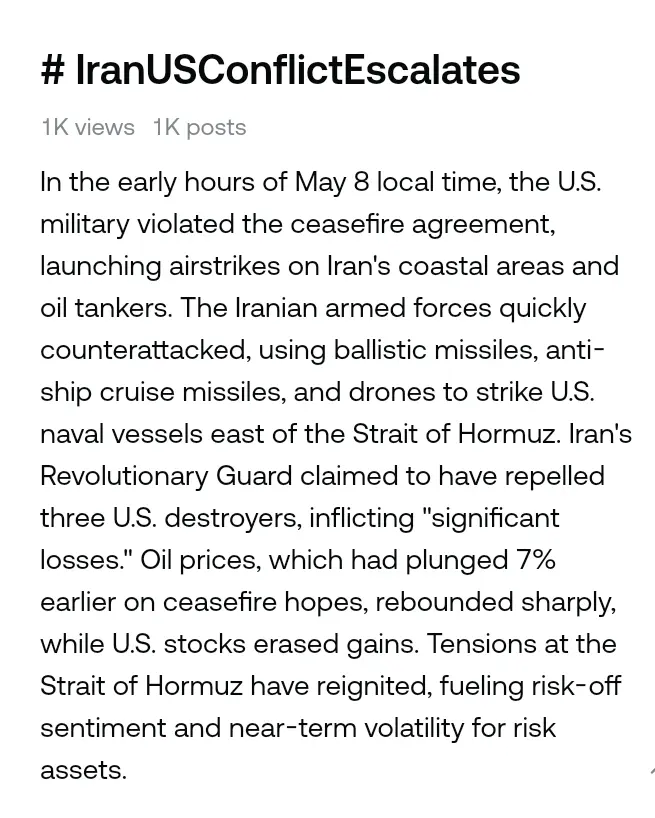
The escalation between Iran and the United States is acting as the catalyst, but the deeper story is how global financial systems respond when uncertainty suddenly becomes difficult to price.
Markets are forward-looking systems.
They do not wait for confirmed outcomes.
They begin repricing risk the moment probabilities shift.
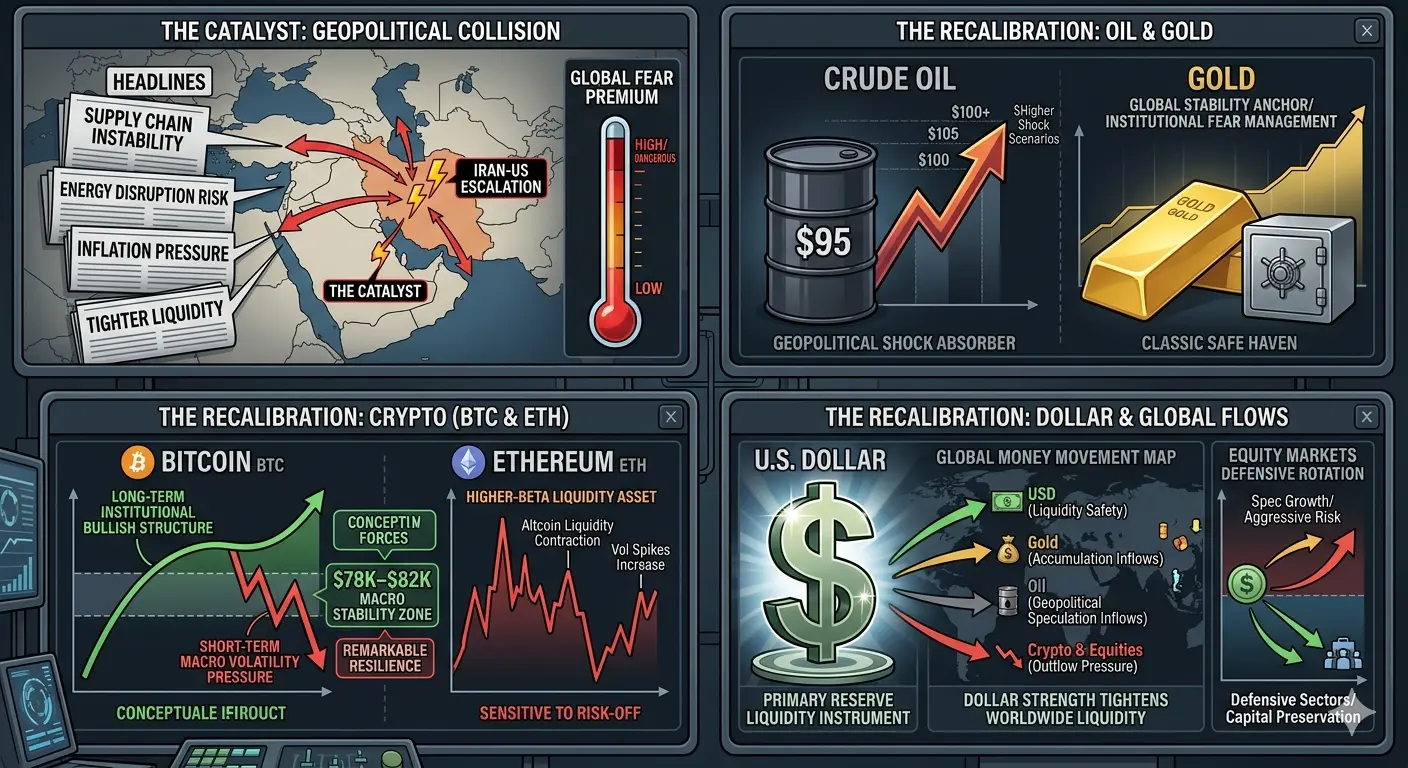
And right now, probability models across global markets are rapidly adjusting for: ⚠️ supply chain instability
⚠️ energy disruption risk
⚠️ inflation pressure
⚠️ tighter liquidity conditions
⚠️ increased volatility across risk assets
That is why almost every major asset class is now reacting simultaneously rather than independently.
This is no longer just a crypto story.
It is a global macro story.
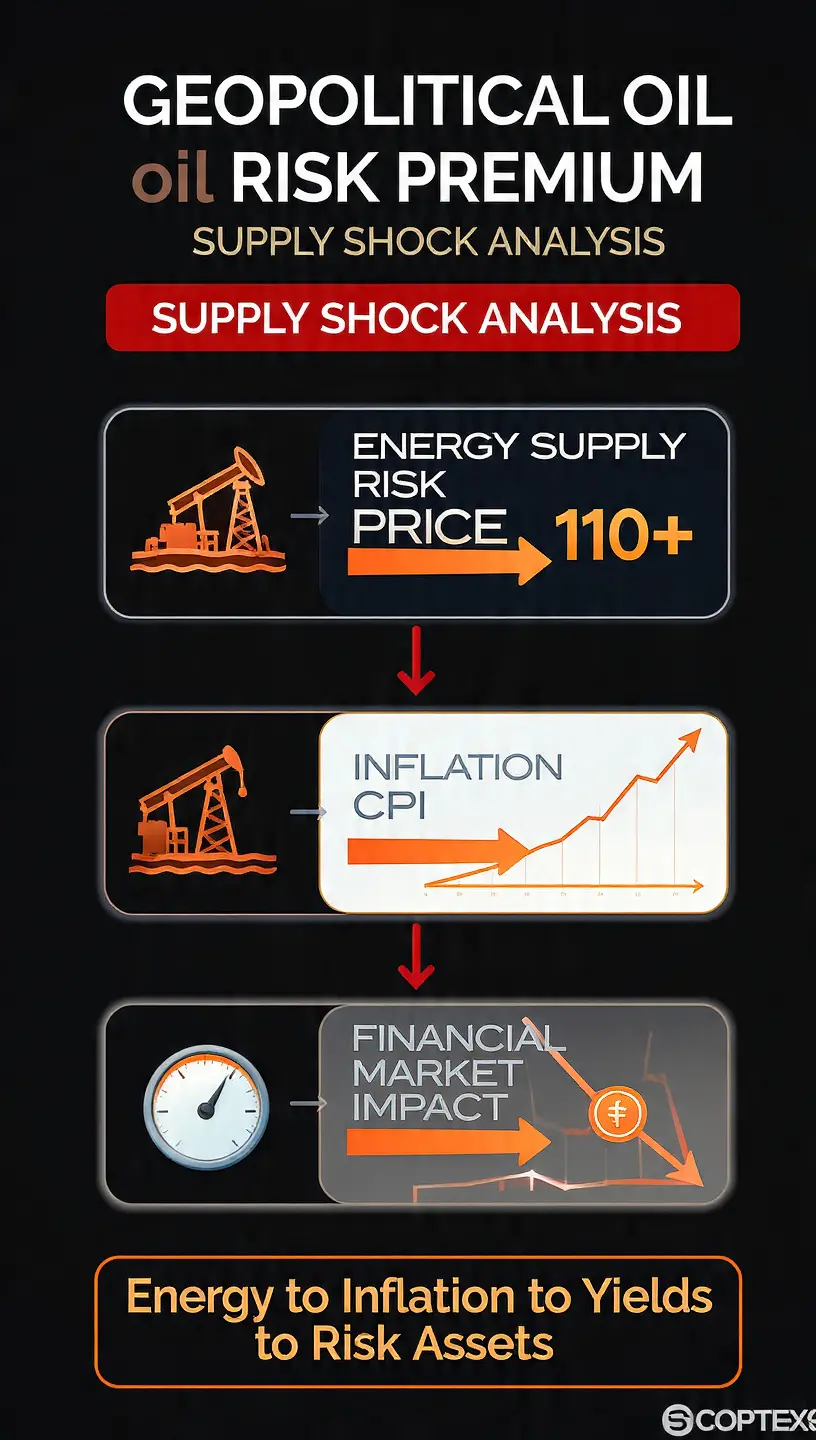
At the center of the current environment sits oil.
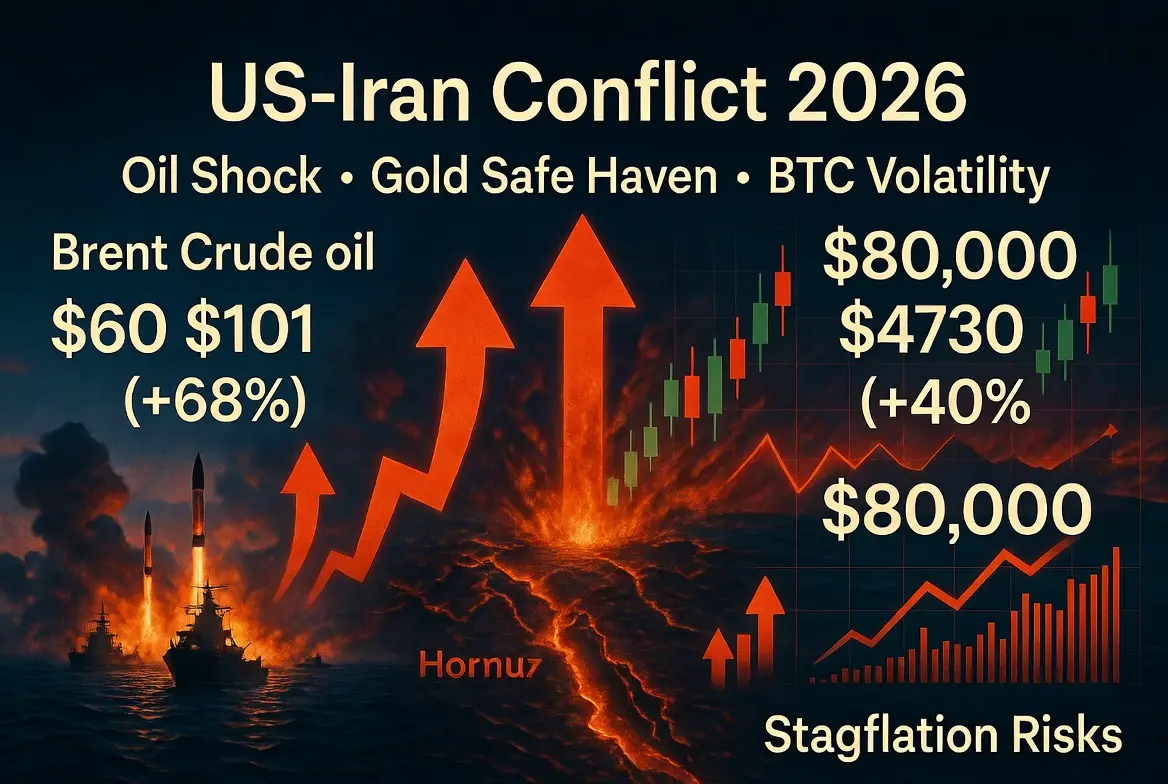
Crude oil around the $95 region is not simply reflecting normal supply-demand pricing anymore. It is trading with a geopolitical fear premium embedded directly into its structure.
And historically, oil becomes the first major asset to react aggressively during geopolitical escalation cycles because energy sits at the foundation of the global economic system.
When markets fear instability in the Middle East: • shipping risk increases
• insurance costs rise
• inflation expectations accelerate
• institutional hedging expands
• speculative futures positioning intensifies
That’s why oil can move violently once geopolitical pricing begins accelerating.
If tensions continue escalating, markets will immediately start discussing: 📈 $100 oil
📈 $105 oil
📈 potentially even higher shock scenarios
And that creates a chain reaction across every major financial market because higher energy costs tighten liquidity globally.
At the same time, gold is behaving exactly like a classic macro safe haven.
Gold’s current strength is not speculative excitement.
It is institutional fear management.
When uncertainty rises faster than confidence, capital naturally rotates toward assets perceived as long-term stores of value and stability anchors.
That’s exactly what gold is currently becoming inside the global system.
What makes the current environment especially fascinating is how Bitcoin is responding.
Bitcoin is no longer behaving like a pure speculative asset.
It now reacts as a hybrid macro instrument influenced by: • liquidity conditions
• institutional positioning
• macro headlines
• risk appetite
• and monetary expectations
This is a major structural evolution from earlier crypto cycles.
Right now, Bitcoin still holds its broader bullish structure, but short-term momentum is clearly being suppressed by macro fear and liquidity instability.
That’s why BTC currently feels trapped between two opposing forces: 📈 long-term institutional bullish structure
⚠️ short-term macro-driven volatility pressure
The key region around: 🎯 $78K–$82K
has effectively become Bitcoin’s macro stability zone.
If BTC holds above this region despite geopolitical stress, it signals remarkable structural resilience.
But if liquidity conditions deteriorate further and fear accelerates, deeper volatility expansions become increasingly likely before stabilization occurs.
Ethereum, meanwhile, is reacting with even greater sensitivity.
This is normal.
ETH historically behaves as a higher-beta liquidity asset, meaning it amplifies both bullish and bearish market conditions faster than Bitcoin.
That’s why Ethereum currently looks weaker structurally despite still maintaining long-term recovery potential.
In risk-off environments: • speculative inflows slow first
• altcoin liquidity contracts faster
• leverage participation declines
• volatility spikes increase
And Ethereum sits directly in the middle of those liquidity dynamics.
Another critically important factor many retail traders are underestimating right now is U.S. dollar strength.
During global uncertainty, capital almost always rotates toward the dollar because it remains the world’s primary reserve liquidity instrument.
That creates indirect pressure on virtually every risk-sensitive market: 📉 crypto
📉 equities
📉 growth sectors
📉 emerging markets
Because stronger dollar conditions effectively tighten financial liquidity worldwide.
This is one of the hidden macro forces suppressing crypto momentum right now even while long-term adoption narratives remain strong.
At the same time, equity markets are beginning to show classic defensive rotation behavior.
Capital is quietly moving away from: • speculative growth
• high-beta technology
• aggressive risk positioning
…and toward: • defensive sectors
• lower-volatility assets
• capital preservation structures
The same fear psychology affecting crypto is now spreading across traditional financial markets as well.
And psychologically, this is where markets become most unstable.
Not because fundamentals instantly collapse.
But because confidence weakens faster than liquidity can stabilize.
That creates: ⚠️ emotional price swings
⚠️ news-driven volatility
⚠️ fake breakouts
⚠️ panic liquidations
⚠️ unstable support/resistance behavior
Traditional technical analysis becomes less reliable during these periods because markets temporarily prioritize fear over structure.
And this is exactly why current capital flow behavior matters so much.
Right now, global money movement is becoming very clear:
💰 Gold → accumulation inflows
🛢 Oil → geopolitical speculation inflows
💵 U.S. Dollar → liquidity safety flows
📉 Crypto & equities → temporary outflow pressure
This rotation map explains the current macro environment more accurately than individual charts alone.
But there is one important historical reality traders should remember:
The most powerful long-term opportunities often begin during maximum uncertainty.
Markets tend to bottom emotionally before they bottom structurally.
And historically, the periods where fear dominates headlines, liquidity contracts, and volatility expands are often the same periods where institutional accumulation quietly begins underneath the surface before the next expansion cycle emerges.
Right now, global markets are not collapsing.
They are recalibrating.
Bitcoin and Ethereum are moving through a macro adjustment phase.
Gold is acting as the global stability anchor.
Oil is functioning as the geopolitical shock absorber.
And liquidity itself has become the single most important force driving market behavior.
Until geopolitical clarity improves and liquidity conditions stabilize, markets will likely remain: • highly volatile
• emotionally reactive
• macro-sensitive
• and heavily headline-driven
But historically, these are also the exact environments where the foundations of the next major cycle quietly begin forming.
#IranUSConflictEscalates
#WCTCTradingKingPK
The Global Market Is Entering A Dangerous Macro Repricing Phase — And Most Traders Still Think This Is “Normal Volatility”
What we are witnessing right now across global markets is no longer a simple headline reaction or short-term speculative panic.
This is becoming a full-scale macro repricing environment where geopolitical tension, liquidity instability, inflation expectations, and institutional capital rotation are all colliding at the same time.
The escalation between Iran and the United States is acting as the catalyst, but the deeper story is how global financial systems respond when uncertainty suddenly becomes difficult to price.
Markets are forward-looking systems.
They do not wait for confirmed outcomes.
They begin repricing risk the moment probabilities shift.
And right now, probability models across global markets are rapidly adjusting for: ⚠️ supply chain instability
⚠️ energy disruption risk
⚠️ inflation pressure
⚠️ tighter liquidity conditions
⚠️ increased volatility across risk assets
That is why almost every major asset class is now reacting simultaneously rather than independently.
This is no longer just a crypto story.
It is a global macro story.
At the center of the current environment sits oil.
Crude oil around the $95 region is not simply reflecting normal supply-demand pricing anymore. It is trading with a geopolitical fear premium embedded directly into its structure.
And historically, oil becomes the first major asset to react aggressively during geopolitical escalation cycles because energy sits at the foundation of the global economic system.
When markets fear instability in the Middle East: • shipping risk increases
• insurance costs rise
• inflation expectations accelerate
• institutional hedging expands
• speculative futures positioning intensifies
That’s why oil can move violently once geopolitical pricing begins accelerating.
If tensions continue escalating, markets will immediately start discussing: 📈 $100 oil
📈 $105 oil
📈 potentially even higher shock scenarios
And that creates a chain reaction across every major financial market because higher energy costs tighten liquidity globally.
At the same time, gold is behaving exactly like a classic macro safe haven.
Gold’s current strength is not speculative excitement.
It is institutional fear management.
When uncertainty rises faster than confidence, capital naturally rotates toward assets perceived as long-term stores of value and stability anchors.
That’s exactly what gold is currently becoming inside the global system.
What makes the current environment especially fascinating is how Bitcoin is responding.
Bitcoin is no longer behaving like a pure speculative asset.
It now reacts as a hybrid macro instrument influenced by: • liquidity conditions
• institutional positioning
• macro headlines
• risk appetite
• and monetary expectations
This is a major structural evolution from earlier crypto cycles.
Right now, Bitcoin still holds its broader bullish structure, but short-term momentum is clearly being suppressed by macro fear and liquidity instability.
That’s why BTC currently feels trapped between two opposing forces: 📈 long-term institutional bullish structure
⚠️ short-term macro-driven volatility pressure
The key region around: 🎯 $78K–$82K
has effectively become Bitcoin’s macro stability zone.
If BTC holds above this region despite geopolitical stress, it signals remarkable structural resilience.
But if liquidity conditions deteriorate further and fear accelerates, deeper volatility expansions become increasingly likely before stabilization occurs.
Ethereum, meanwhile, is reacting with even greater sensitivity.
This is normal.
ETH historically behaves as a higher-beta liquidity asset, meaning it amplifies both bullish and bearish market conditions faster than Bitcoin.
That’s why Ethereum currently looks weaker structurally despite still maintaining long-term recovery potential.
In risk-off environments: • speculative inflows slow first
• altcoin liquidity contracts faster
• leverage participation declines
• volatility spikes increase
And Ethereum sits directly in the middle of those liquidity dynamics.
Another critically important factor many retail traders are underestimating right now is U.S. dollar strength.
During global uncertainty, capital almost always rotates toward the dollar because it remains the world’s primary reserve liquidity instrument.
That creates indirect pressure on virtually every risk-sensitive market: 📉 crypto
📉 equities
📉 growth sectors
📉 emerging markets
Because stronger dollar conditions effectively tighten financial liquidity worldwide.
This is one of the hidden macro forces suppressing crypto momentum right now even while long-term adoption narratives remain strong.
At the same time, equity markets are beginning to show classic defensive rotation behavior.
Capital is quietly moving away from: • speculative growth
• high-beta technology
• aggressive risk positioning
…and toward: • defensive sectors
• lower-volatility assets
• capital preservation structures
The same fear psychology affecting crypto is now spreading across traditional financial markets as well.
And psychologically, this is where markets become most unstable.
Not because fundamentals instantly collapse.
But because confidence weakens faster than liquidity can stabilize.
That creates: ⚠️ emotional price swings
⚠️ news-driven volatility
⚠️ fake breakouts
⚠️ panic liquidations
⚠️ unstable support/resistance behavior
Traditional technical analysis becomes less reliable during these periods because markets temporarily prioritize fear over structure.
And this is exactly why current capital flow behavior matters so much.
Right now, global money movement is becoming very clear:
💰 Gold → accumulation inflows
🛢 Oil → geopolitical speculation inflows
💵 U.S. Dollar → liquidity safety flows
📉 Crypto & equities → temporary outflow pressure
This rotation map explains the current macro environment more accurately than individual charts alone.
But there is one important historical reality traders should remember:
The most powerful long-term opportunities often begin during maximum uncertainty.
Markets tend to bottom emotionally before they bottom structurally.
And historically, the periods where fear dominates headlines, liquidity contracts, and volatility expands are often the same periods where institutional accumulation quietly begins underneath the surface before the next expansion cycle emerges.
Right now, global markets are not collapsing.
They are recalibrating.
Bitcoin and Ethereum are moving through a macro adjustment phase.
Gold is acting as the global stability anchor.
Oil is functioning as the geopolitical shock absorber.
And liquidity itself has become the single most important force driving market behavior.
Until geopolitical clarity improves and liquidity conditions stabilize, markets will likely remain: • highly volatile
• emotionally reactive
• macro-sensitive
• and heavily headline-driven
But historically, these are also the exact environments where the foundations of the next major cycle quietly begin forming.
#IranUSConflictEscalates
#WCTCTradingKingPK