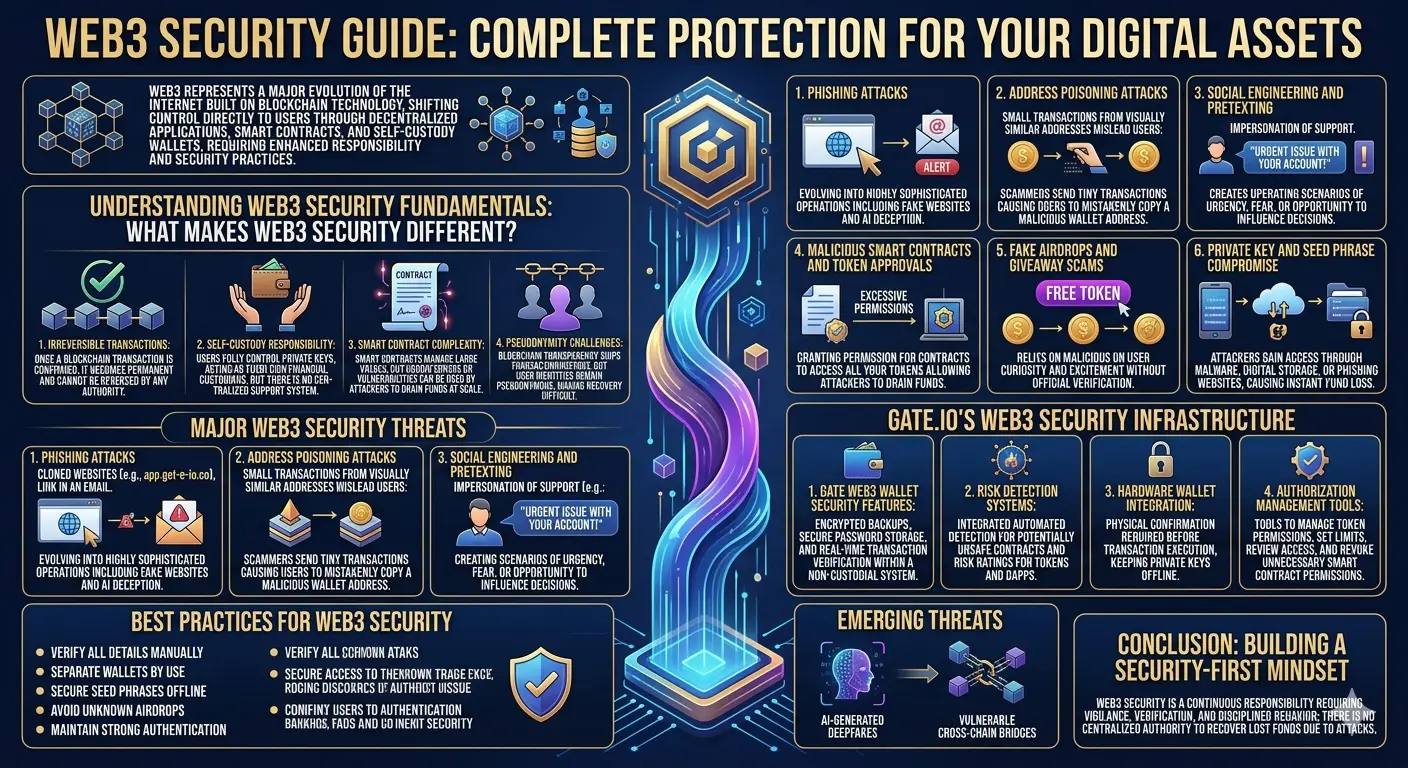
#Web3SecurityGuide | Security Is Not a Feature — It Is Market Survival
In Web3, risk is not outsourced.
It is self-custodied.
The largest hidden market variable in crypto is not volatility — it is operational security. Capital can survive drawdowns. It rarely survives compromised execution.
Most traders spend hours studying entries, leverage, and narratives while underpricing the single factor capable of permanently removing liquidity from their portfolio: security failure.
MACRO RESET
Web3 security is no longer a technical issue.
It is a liquidity issue.
Every exploit, phishing wave, wallet compromise, bridge failure, or smart-contract vulnerability indirectly affects market confidence, user participation, and risk appetite.
Security failures create behavioral contagion.
Confidence weakens.
Capital becomes defensive.
Liquidity fragments.
Participation slows.
The implication is structural: stronger security environments improve trader retention and deepen ecosystem resilience.
Weak security increases friction and silently taxes growth.
MARKET REPRICING
Markets price trust.
When security deteriorates, traders reprice risk faster than narratives.
Short term:
Major exploits often trigger liquidity withdrawal, defensive positioning, and elevated volatility around exposed ecosystems.
Sentiment weakens before fundamentals fully react.
Mid-term:
Projects, chains, and platforms with stronger operational trust tend to absorb liquidity because capital seeks survivability.
Security becomes an invisible premium.
The strongest ecosystems are not simply innovative.
They are resilient.
VOLATILITY MAP
Short term:
Expect sharp volatility around exploit headlines, wallet compromises, phishing campaigns, and protocol vulnerabilities.
Liquidity exits faster than it enters during trust shocks.
Mid-term:
Markets increasingly reward robust infrastructure, audited systems, better custody practices, and transparent risk management.
The future premium may belong to security-adjusted adoption.
POSITIONING EDGE
Smart traders think defensively before thinking aggressively.
Watch:
• Wallet approval exposure and contract permissions
• Protocol counterparty risk before yield chasing
• Liquidity migration after security incidents
• Whether ecosystem confidence stabilizes or deteriorates
Risk management is not bearish.
It is survival logic.
Many experienced traders now balance opportunity with operational discipline while monitoring execution and market conditions through platforms like Gate.io.
WHAT ACTUALLY MATTERS
Wallet hygiene and approval management
Smart-contract and bridge exposure risk
Ecosystem trust after exploit events
Liquidity behavior during confidence shocks
Whether adoption outpaces operational security
In crypto, volatility is temporary.
Security failure is often permanent.
#Gate #Crypto #Web3
In Web3, risk is not outsourced.
It is self-custodied.
The largest hidden market variable in crypto is not volatility — it is operational security. Capital can survive drawdowns. It rarely survives compromised execution.
Most traders spend hours studying entries, leverage, and narratives while underpricing the single factor capable of permanently removing liquidity from their portfolio: security failure.
MACRO RESET
Web3 security is no longer a technical issue.
It is a liquidity issue.
Every exploit, phishing wave, wallet compromise, bridge failure, or smart-contract vulnerability indirectly affects market confidence, user participation, and risk appetite.
Security failures create behavioral contagion.
Confidence weakens.
Capital becomes defensive.
Liquidity fragments.
Participation slows.
The implication is structural: stronger security environments improve trader retention and deepen ecosystem resilience.
Weak security increases friction and silently taxes growth.
MARKET REPRICING
Markets price trust.
When security deteriorates, traders reprice risk faster than narratives.
Short term:
Major exploits often trigger liquidity withdrawal, defensive positioning, and elevated volatility around exposed ecosystems.
Sentiment weakens before fundamentals fully react.
Mid-term:
Projects, chains, and platforms with stronger operational trust tend to absorb liquidity because capital seeks survivability.
Security becomes an invisible premium.
The strongest ecosystems are not simply innovative.
They are resilient.
VOLATILITY MAP
Short term:
Expect sharp volatility around exploit headlines, wallet compromises, phishing campaigns, and protocol vulnerabilities.
Liquidity exits faster than it enters during trust shocks.
Mid-term:
Markets increasingly reward robust infrastructure, audited systems, better custody practices, and transparent risk management.
The future premium may belong to security-adjusted adoption.
POSITIONING EDGE
Smart traders think defensively before thinking aggressively.
Watch:
• Wallet approval exposure and contract permissions
• Protocol counterparty risk before yield chasing
• Liquidity migration after security incidents
• Whether ecosystem confidence stabilizes or deteriorates
Risk management is not bearish.
It is survival logic.
Many experienced traders now balance opportunity with operational discipline while monitoring execution and market conditions through platforms like Gate.io.
WHAT ACTUALLY MATTERS
Wallet hygiene and approval management
Smart-contract and bridge exposure risk
Ecosystem trust after exploit events
Liquidity behavior during confidence shocks
Whether adoption outpaces operational security
In crypto, volatility is temporary.
Security failure is often permanent.
#Gate #Crypto #Web3