One of the most calamitous events in the crypto world last year – the demise of FTX – negatively impacted the entire industry. It undermined the trust in centralized exchanges, causing numerous investors to back off them and shift towards self-custody or to sell their stash
The collapse also ed some platforms to take additional measures and up their game on the security field. According to data provided by the blockchain analytics firm – Nansen – exchanges like Bybit, Kraken, and Bitget have overcome the FTX shock and boosted their trading volumes during the first half of 2023.
The Winners From the FTX Meltdown
In-depth Nansen analysis estimated that the FTX crash in November 2022 changed the CEX landscape, with many exchanges experiencing record outflows and diminished interest from investors towards the end of 2022 and the start of 2023.
Some of the biggest losers seem to be Bitfinex, Kucoin, Gate.io, and OKX. The average monthly spot trading volume of Bitfinex six months before the fallout was over $12 billion, compared to $5 billion half a year later
On the other hand, Kraken boosted its spot trading volume by approximately 14%, whereas Bybit recorded a 7% increase
“Most exchanges took a hit on their spot trading volumes, with Bybit and Kraken notable exceptions, who managed to increase their volume,” the report reads.
Although Binance was initially rumored to have a hand in the FTX implosion, the world’s largest cryptocurrency platform remained relatively unfazed. Its average monthly spot trading volume shifted from nearly $445 billion to approximately $444 billion
Derivatives trading volume in the sector has gone through a minor decline, with a significant spike observed in November last year (by the time of the collapse).
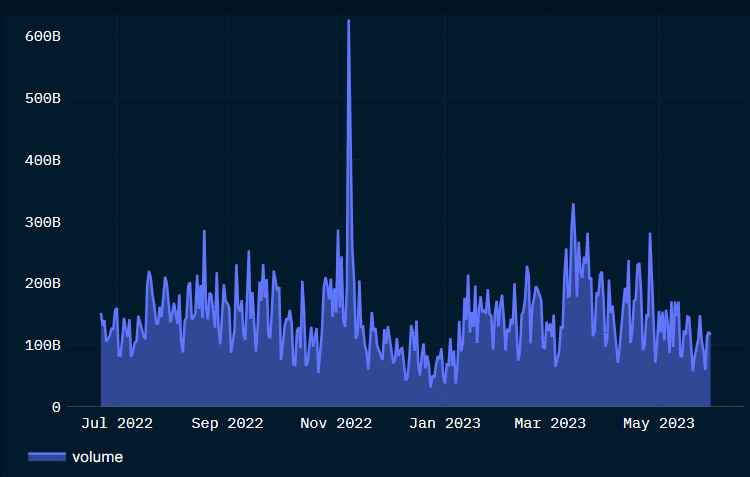 CEX Spot Trading Volume, Source: NansenThe only winner here seems to be Bitget, whose average numbers in that field six months before the catastrophe were $194 billion, compared to $204 billion in the aftermath. Bitfinex and Kucoin were once again on the losing side, marking reduced levels of respectively 40% and 41%.
Upgrading Security Policies
While sending shock waves through the entire crypto industry, the demise of FTX caused some exchanges to advance their investor protection programs
Binanceincreased its Secure Asset Fund for Users (SAFU) to $1 billion, asserting the assets will be only used in case of an adverse event. Bitget raised its protection fund from $200 million to $300 million. Coinbase, Huobi, and OKX were among the others to take similar measures.
Multiple marketplaces have also released proof-of-reserves to show they have sufficient funds to back customer deposits, including Binance, Crypto.com, Kraken, Bybit, andOKX.
According to Nansen, such moves are vital and should become “the minimum standard in the exchange industry.”
Tuyên bố miễn trừ trách nhiệm: Thông tin trên trang này có thể đến từ bên thứ ba và không đại diện cho quan điểm hoặc ý kiến của Gate. Nội dung hiển thị trên trang này chỉ mang tính chất tham khảo và không cấu thành bất kỳ lời khuyên tài chính, đầu tư hoặc pháp lý nào. Gate không đảm bảo tính chính xác hoặc đầy đủ của thông tin và sẽ không chịu trách nhiệm cho bất kỳ tổn thất nào phát sinh từ việc sử dụng thông tin này. Đầu tư vào tài sản ảo tiềm ẩn rủi ro cao và chịu biến động giá đáng kể. Bạn có thể mất toàn bộ vốn đầu tư. Vui lòng hiểu rõ các rủi ro liên quan và đưa ra quyết định thận trọng dựa trên tình hình tài chính và khả năng chấp nhận rủi ro của riêng bạn. Để biết thêm chi tiết, vui lòng tham khảo
Tuyên bố miễn trừ trách nhiệm.


