Оцените инвестиционную привлекательность Threshold (T) на основе детального анализа токеномики, рыночных результатов и потенциала блокчейн-инфраструктуры. Изучите происхождение проекта, используемые криптографические инструменты, динамику цены, риски и прогнозы. Проверьте, как решения Threshold в области приватности и межсетевого взаимодействия могут усилить ваш инвестиционный портфель. Получайте актуальные данные и профессиональную аналитику на платформе Gate.
Введение: инвестиционная позиция Threshold (T) и рыночные перспективы
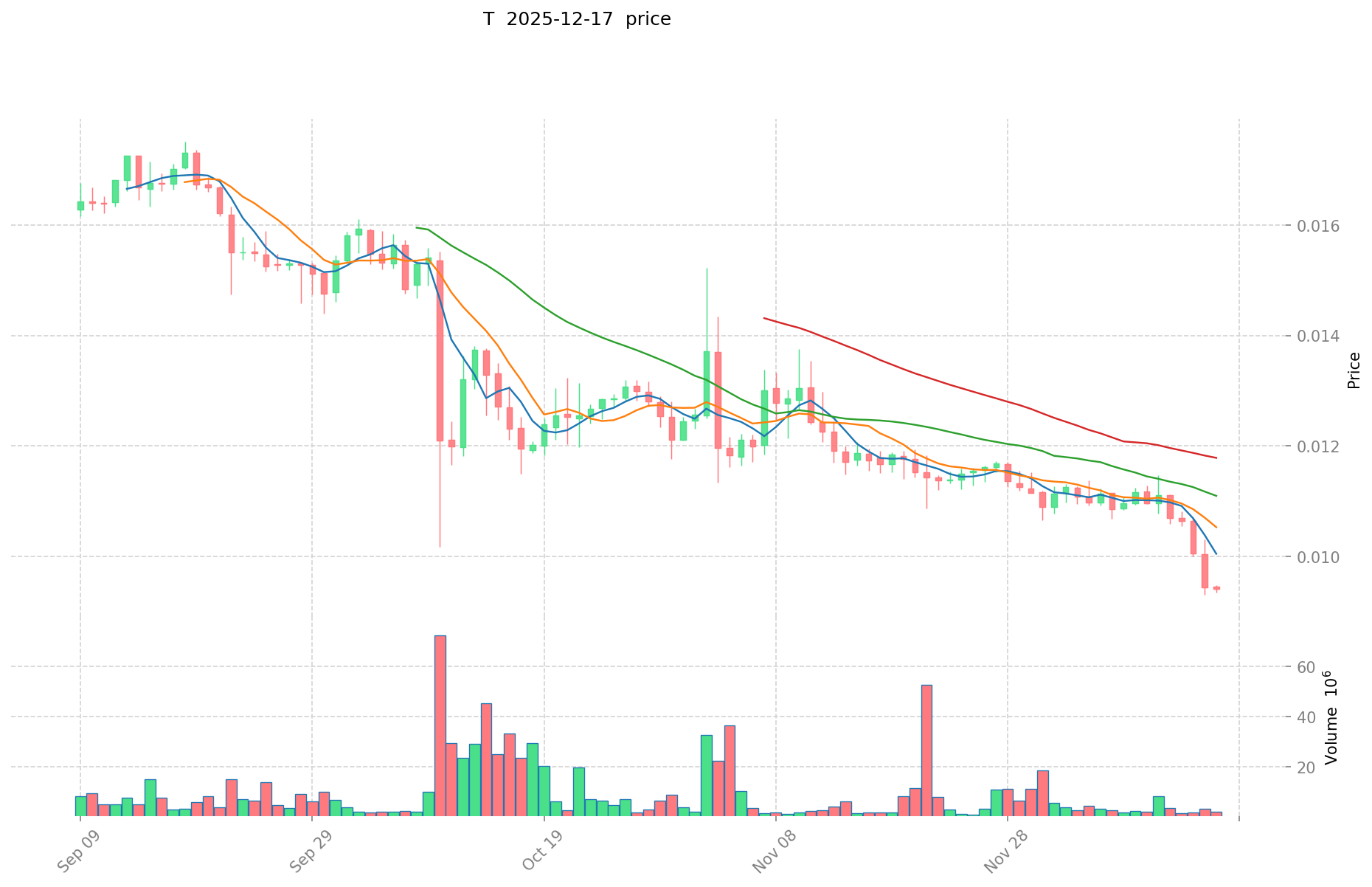
Threshold — значимый актив в криптовалютной сфере, ориентированный на обеспечение приватности, контроля доступа и кросс-чейн-бриджей с помощью криптографических примитивов: proxy re-encryption (PRE), threshold signature (TSS), distributed key generation (DKG) и random beacon (RB). Токен T был создан после слияния NuCypher (NU) и Keep Network (KEEP), коэффициенты обмена — 1 NU = 3,26 T, 1 KEEP = 4,78 T. На 17 декабря 2025 года рыночная капитализация Threshold — около $105,2 млн, в обращении — 11 155 000 000 T, цена — $0,009431. Как инфраструктурное решение для приватности и криптографии Threshold становится все более актуальной темой для инвесторов. В статье дан комплексный обзор инвестиционной ценности Threshold: история цены, прогнозы, риски, — для принятия решений инвесторами.
Комплексный отчет по Threshold (T)
I. История цены T и текущая инвестиционная ценность
Исторический максимум (ATH):
- 2 марта 2022 года
- $0,226934
- Снижение от максимума: 95,85%
Исторический минимум (ATL):
- 16 декабря 2025 года
- $0,00932661
Изменения цены на разных периодах (на 17 декабря 2025):
- 1 час: +0,24%
- 24 часа: +0,29%
- 7 дней: -15,65%
- 30 дней: -20,10%
- 1 год: -71,20%
Текущее состояние рынка Threshold (T) (17 декабря 2025)
Текущие ценовые показатели:
- Цена: $0,009431
- 24-часовой максимум: $0,009478
- 24-часовой минимум: $0,009354
- Изменение за 24 часа: +$0,000027 (+0,29%)
Рыночная капитализация и предложение:
- Капитализация: $105 202 805,00
- FDV: $105 202 805,00
- Соотношение капитализации к FDV: 100%
- В обращении: 11 155 000 000 T
- Общее предложение: 11 155 000 000 T
- Максимальное предложение: 11 155 000 000 T
- Доля рынка: 0,0033%
Торговая активность:
- Объем торгов (24ч): $16 884,23
- Биржи: 29
- Держатели токенов: 8 894
Индикатор рыночных настроений: 1 (нейтральное настроение)
Актуальные цены T — Threshold Market Data
II. Обзор проекта и техническая архитектура
Описание проекта
Threshold — инфраструктурный протокол для приватности, позволяющий пользователям сохранять конфиденциальность информации и цифровых активов при работе с публичными блокчейнами. Проект создан путем объединения Keep Network и NuCypher, объединяя их инфраструктурные возможности и средства приватности.
Происхождение токена и обмен
Токен Threshold Network (T) — результат слияния двух токенов:
- NuCypher (NU): обмен 1 NU = 3,26 T
- Keep Network (KEEP): обмен 1 KEEP = 4,78 T
Криптографические компоненты
Threshold предоставляет криптографические примитивы для приватности, контроля доступа и кросс-чейн-бриджинга:
I. Proxy Re-Encryption (PRE): преобразование шифрования для делегирования доступа без раскрытия ключа
II. Threshold Signature Scheme (TSS): распределение подписи между участниками, требуется кворум
III. Distributed Key Generation (DKG): генерация ключей без централизованного хранителя
IV. Random Beacon (RB): проверяемая случайность для консенсуса и безопасности
Развертывание смарт-контракта
Сеть Ethereum:
- Контракт: 0xcdf7028ceab81fa0c6971208e83fa7872994bee5
- Сеть: Ethereum (ETH)
- Обозреватель: Etherscan
III. Позиция на рынке и конкуренты
Рейтинг и доля рынка
- CoinGecko/Глобальный рейтинг: #331
- Доля рынка: 0,0033%
- Микрокап-инфраструктурный протокол приватности
Каналы распространения
Официальные ресурсы:
IV. Риски и особенности рынка
Волатильность
- Падение на 95,85% от исторического максимума
- Годовой тренд — снижение на 71,20%
- Низкая ликвидность: $16 884,23 при капитализации $105,2 млн
- Ограниченная база держателей (8 894)
Показатели зрелости рынка
- Торги на 29 биржах
- Падение капитализации — снижение интереса инвесторов
- Снижение на 20,10% за 30 дней
V. Отказ от ответственности
В отчете представлены фактические данные на 17 декабря 2025 года. Анализ не является инвестиционным советом, финансовой рекомендацией или призывом к покупке/продаже. Инвестиции в криптовалюту связаны с рисками вплоть до полной потери капитала. Перед принятием решений проводите самостоятельный анализ и консультируйтесь с финансовыми специалистами. Прошлые результаты не гарантируют будущие. Параметры рынка и токена меняются быстро.
Аналитический отчет по Threshold (T)
Краткое резюме
Threshold (T) — криптопротокол с фокусом на приватность, объединяющий инфраструктуру Keep Network и средства приватности NuCypher. На 17 декабря 2025 года T торгуется по $0,009431, капитализация — $105,2 млн, 331 место среди криптовалют. Токен демонстрирует высокую волатильность: на 71,2% ниже исторического максимума $0,226934 (март 2022).
I. Обзор проекта
Технологии и применение
Threshold — полный набор криптографических примитивов для приватности и безопасности в публичных блокчейнах:
- Proxy Re-Encryption (PRE): передача приватных данных без посредников
- Threshold Signature Scheme (TSS): распределение подписей между участниками
- Distributed Key Generation (DKG): децентрализованное создание ключей
- Random Beacon (RB): проверяемая случайность для блокчейн-приложений
Примитивы поддерживают приватность, контроль доступа и кросс-чейн-бриджи.
Генезис токена и предложение
Токен T — результат объединения двух протоколов:
- Обмен: 1 NU (NuCypher) = 3,26 T; 1 KEEP (Keep Network) = 4,78 T
- Общее предложение: 11 155 000 000 (фиксировано)
- В обращении: 11 155 000 000 (100% эмиссии)
- Капитализация: FDV = $105,2 млн
II. Ключевые инвестиционные факторы для Threshold (T)
Механизм предложения и токеномика
Фиксированное предложение — 11,155 млрд токенов, вся эмиссия распределена. Нет инфляции, дефицит — основа долгосрочной ценности. Нет будущего размывания доли, но ограничены стимулы для новых участников.
Позиция и распространение
- Держатели: 8 894 адреса
- Листинг: 29 бирж
- Объем торгов (24ч): $16 884,23
- Доля рынка: 0,0033% от крипторынка
База держателей ограничена, объем торгов небольшой. Тем не менее, наличие на многих биржах обеспечивает доступную ликвидность.
Технологии и практическое применение
Протокол интегрирован с tBTC — децентрализованным биткоин-мостом для использования BTC в DeFi. Это реальный сценарий, выходящий за рамки теоретической инфраструктуры приватности.
Техническое развитие и экосистема
Развитие подтверждается наличием документации и активностью на GitHub. Фокус на криптографических примитивах — основа для приватных приложений в DeFi.
Исторические показатели
| Показатель |
Значение |
| Исторический максимум |
$0,226934 (2 марта 2022) |
| Исторический минимум |
$0,00932661 (16 декабря 2025) |
| Текущая цена |
$0,009431 |
| Падение от ATH |
-95,85% |
Краткосрочные тренды
- 1 час: +0,24%
- 24 часа: +0,29%
- 7 дней: -15,65%
- 30 дней: -20,10%
- 1 год: -71,20%
Токен продолжает снижаться в средне- и долгосрочной перспективе. Краткосрочные колебания не компенсируют общий отрицательный тренд.
IV. Динамика рынка и настроения
Текущие настроения
Индикаторы настроений нейтральные или немного положительные, но требуется сопоставление с общим состоянием рынка.
Прогнозы аналитиков
Прогнозы на 2025 год:
- Оптимистичный: до $1,09
- Консервативный: $0,00641304 — $0,01769524
- Средний: ~$0,01092
Прогнозы существенно различаются — от умеренного роста до дальнейшего снижения.
V. Риски
Ликвидность и влияние на цену
Низкий объем торгов ($16 884) увеличивает риск резких ценовых движений по крупным заявкам.
Технологические и рыночные риски
- Ограниченное внедрение, кроме tBTC
- Концентрация у небольшой группы держателей — дополнительная волатильность
- Протоколы приватности требуют адаптации к регуляторным изменениям
Вопросы оценки
Снижение на 95,85% от максимума вызывает вопросы к исходной рыночной оценке и признанию ценности протокола.
Заключение
Threshold (T) — узкоспециализированный протокол для приватности и кросс-чейн-функций в децентрализованных системах. Техническая база и интеграция с tBTC обеспечивают реальную полезность, но глубокое падение цены, концентрация держателей, ограниченная ликвидность и противоречивые прогнозы отражают неопределенность перспектив долгосрочного внедрения и экономической устойчивости. Перед инвестированием необходимо учитывать риски и стратегию, разделяя технологические достоинства протокола и инвестиционный потенциал токена.
III. Прогнозы инвестиций и динамика цены Threshold (T)
Краткосрочные прогнозы (2025)
- Консервативно: $0,0056 — $0,0093
- Нейтрально: $0,0093 — $0,0123
- Оптимистично: $0,0123 — $0,0155
Среднесрочные прогнозы (2026–2027)
Долгосрочные прогнозы (2028–2030)
-
Базовый сценарий: $0,0129 — $0,0186 (при стабильном внедрении и умеренном росте)
-
Оптимистичный сценарий: $0,0187 — $0,0239 (при масштабном корпоративном внедрении и интеграции threshold cryptography в DeFi и институциональные проекты)
-
Риск-сценарий: $0,0056 — $0,0094 (при ужесточении регулирования, конкуренции либо сокращении рынка)
Детальные долгосрочные прогнозы — Price Prediction
Долгосрочные перспективы: 2025–2030
-
Базовый сценарий: $0,0129 — $0,0228 (при стабильном росте протокола и институциональном внедрении инфраструктуры)
-
Оптимистичный сценарий: $0,0239 — $0,0329 (масштабное корпоративное внедрение и благоприятное регулирование)
-
Трансформационный сценарий: $0,0329 и выше (прорывные события и массовая интеграция threshold cryptography в Web3)
-
Ожидаемый максимум к концу 2030 года: $0,0239
Отказ от ответственности: Прогнозы основаны на исторических данных и трендах рынка. Фактические результаты могут существенно отличаться из-за технологических изменений, регулирования, рыночных условий и темпов внедрения. Инвестиции в криптовалюту связаны с риском полной потери средств. Прогнозы не являются инвестиционным советом.
| Год |
Прогнозируемый максимум |
Средняя цена |
Прогнозируемый минимум |
Прирост (%) |
| 2025 |
0,01233234 |
0,009414 |
0,0056484 |
0 |
| 2026 |
0,0155486331 |
0,01087317 |
0,0082636092 |
15 |
| 2027 |
0,0183631531545 |
0,01321090155 |
0,011361375333 |
40 |
| 2028 |
0,018628692275655 |
0,01578702735225 |
0,012945362428845 |
67 |
| 2029 |
0,023918925141393 |
0,017207859813952 |
0,016003309626975 |
82 |
| 2030 |
0,022825365650217 |
0,020563392477673 |
0,018712687154682 |
118 |
Отчет по инвестициям в Threshold (T)
I. Обзор проекта и ключевые технологии
Описание проекта
Threshold — инфраструктурный протокол приватности для работы с публичными блокчейнами, создан путем слияния Keep Network и NuCypher.
Механизм обмена токенов:
- 1 NU (NuCypher) = 3,26 T
- 1 KEEP (Keep Network) = 4,78 T
Криптографические компоненты
Threshold — набор примитивов:
- Proxy Re-encryption (PRE): совместное использование зашифрованных данных без раскрытия ключей
- Threshold Signature Scheme (TSS): распределение подписей среди участников
- Distributed Key Generation (DKG): децентрализованная генерация ключей
- Random Beacon (RB): проверяемая случайность для протоколирования
Компоненты обеспечивают приватность, контроль доступа и кросс-чейн-бриджи.
Текущие показатели (на 17 декабря 2025)
| Показатель |
Значение |
| Цена |
$0,009431 |
| Рейтинг |
#331 |
| Капитализация |
$105 202 805 |
| В обращении |
11 155 000 000 T |
| Доля рынка |
0,0033% |
| Объем торгов (24ч) |
$16 884,23 |
| Держатели |
8 894 |
История цены:
- ATH: $0,226934 (2 марта 2022)
- ATL: $0,00932661 (16 декабря 2025)
- Падение от ATH: -95,85%
Последние тренды:
| Период |
Изменение (%) |
Абсолютное изменение |
| 1 час |
+0,24% |
+$0,000022580 |
| 24 часа |
+0,29% |
+$0,000027271 |
| 7 дней |
-15,65% |
-$0,001749794 |
| 30 дней |
-20,10% |
-$0,002372504 |
| 1 год |
-71,20% |
-$0,023315528 |
Рыночные характеристики
- Капитализация/FDV: 100%
- Диапазон цены (24ч): $0,009354 — $0,009478
- Биржи: 29
- Сеть: Ethereum (ERC-20)
III. Блокчейн-инфраструктура и сеть
- Сеть: Ethereum (ETH)
- Адрес: 0xcdf7028ceab81fa0c6971208e83fa7872994bee5
- Обозреватель: Etherscan
Структура предложения
- В обращении: 11 155 000 000 T
- Общее предложение: 11 155 000 000 T
- Максимальное предложение: 11 155 000 000 T
- Доля обращения: 100%
Ресурсы проекта
IV. Стратегии и управление рисками
Инвестиционные стратегии для Threshold (T)
Долгосрочные вложения (HODL):
- Подходит консервативным инвесторам, ориентированным на развитие инфраструктуры приватности
- Рекомендовано для долгосрочных владельцев (2+ года)
- Соответствует роли протокола
Активная торговля:
- Технический анализ для входа/выхода при волатильности
- Использовать нисходящие тренды для поиска поддержки
- Требует контроля настроений и объемов
Стратегии управления рисками
Рекомендации по портфелю:
- Консервативные: 1–3% криптопортфеля
- Умеренные: 3–7%
- Агрессивные: 7–15%
Снижение рисков:
- Диверсификация по криптоинфраструктуре
- Стейблкоины для сохранения капитала
- Усреднение (DCA)
Безопасность хранения:
- Горячие кошельки: MetaMask, Ledger Live Web, биржевые кошельки
- Холодные кошельки: Ledger Nano S/X, Trezor для крупных сумм и долгосрочного хранения
- Мультиподпись и аппаратные устройства для сумм свыше $10 000
V. Риски и вызовы инвестиций
Рыночные риски
- Волатильность: годовое снижение 71,2%
- Ликвидность: $16 884 — низкая ликвидность для стабильности
- Концентрация: 8 894 держателя
Регуляторные риски
- Юрисдикция: протоколы приватности под надзором
- Регулирование приватности: законы о защите данных могут ограничить возможности
- Требования соответствия: изменения правил — риск для биржевых листингов
Технологические риски
- Уязвимости криптографии: threshold-схемы требуют надежной реализации
- Риски смарт-контрактов: возможные уязвимости даже после аудита
- Риски интеграции: кросс-чейн-бриджи увеличивают поверхность атак
- Сложности внедрения: техническая сложность ограничивает массовое использование
Риски проекта
- Зависимость интеграции: успех зависит от объединения Keep Network и NuCypher
- Конкуренция: Monero, Zcash, Tornado Cash — альтернативные решения
- Активность разработчиков: развитие протокола зависит от команды
VI. Итог: стоит ли инвестировать в Threshold (T)?
Сводка инвестиционной привлекательности
Threshold — нишевой инфраструктурный проект приватности в крипторынке, решающий реальные задачи приватности и доступа. Основные плюсы — зрелая техническая база, комплекс криптографических инструментов, растущий спрос на решения приватности. Минусы — глубокое падение цены, низкая ликвидность, регуляторные риски.
Рекомендации инвесторам
Для начинающих:
- ✅ Малые вложения (до 2% портфеля)
- ✅ Аппаратные кошельки для сумм от $1 000
- ✅ Усреднение для долгосрочного входа
Для опытных:
- ✅ Использовать уровни $0,0093—$0,0095 как точки входа
- ✅ Диверсификация по инфраструктуре приватности
- ✅ Мониторинг регулирования и активности команды
Для институциональных:
- ✅ Аудит интеграции Keep Network и NuCypher
- ✅ Оценка метрик внедрения приватности
- ✅ Размер позиции по долгосрочной стратегии криптоинфраструктуры
Отказ от ответственности
⚠️ Важно: Инвестиции в криптовалюту сопряжены с риском полной потери капитала. Длительный медвежий тренд Threshold и нишевая позиция — высокая волатильность. Анализ для информации, не инвестиционный совет. Консультируйтесь с финансовыми экспертами. Прошлый опыт не гарантирует будущих результатов.
Threshold (T): FAQ по инвестиционному анализу
VII. FAQ
Q1: Что такое Threshold (T) и как он создан?
Threshold — протокол приватности, создан в результате слияния Keep Network и NuCypher. Токен T — результат обмена: 1 NU = 3,26 T, 1 KEEP = 4,78 T. Протокол включает PRE, TSS, DKG, RB для приватности, контроля доступа и кросс-чейн-бриджей на публичных блокчейнах.
Q2: Какая текущая позиция Threshold (T) и его цена?
На 17 декабря 2025 года Threshold — $0,009431, капитализация — $105,2 млн, 331 место среди криптовалют. В обращении — 11,155 млрд T, вся эмиссия распределена. Торги за 24 часа — $16 884,23 на 29 биржах, держателей — 8 894. Цена на 95,85% ниже ATH ($0,226934).
Q3: Основные риски инвестиций в Threshold (T)?
Риски: волатильность (–71,2% за год), низкая ликвидность, концентрация держателей, регуляторные ограничения, технологические риски и конкуренция, а также ограниченное распространение и вопросы к оценке после глубокого падения.
Q4: Каков прогноз цены Threshold (T) до 2030 года?
Аналитики прогнозируют: консервативно — $0,0056–$0,0093 (2025); нейтрально — $0,0093–$0,0123; среднесрочно — $0,0083–$0,0155 (2026), $0,0114–$0,0184 (2027); долгосрочно — $0,0129–$0,0186 (базово), до $0,0239 (оптимистично), выше $0,0329 (трансформационно). Прогнозы не гарантируют доход.
Q5: Ключевые применения и преимущества Threshold?
Threshold — инфраструктура для приватности (PRE), контроля доступа (TSS) и кросс-чейн-бриджа (tBTC), комплекс криптографических инструментов для приватных приложений. Массовое внедрение ограничено.
Q6: Как инвестировать в Threshold (T) разным категориям инвесторов?
Консерваторы: 1–3% портфеля, усреднение, аппаратные кошельки. Умеренные: 3–7%, технические уровни. Агрессивные: 7–15%, активная торговля. Всем — мультиподпись для сумм от $10 000, мониторинг регулирования. Долгосрочные держатели — HODL на 2+ года.
Q7: В чем отличие Threshold от других криптовалют приватности?
Threshold отличается модульными криптографическими примитивами, а не монолитной монетой приватности. В отличие от Monero, Zcash (валюты), Threshold — инфраструктурные компоненты для приватности и контроля доступа в разных приложениях. Интеграция с tBTC — практическая полезность. Нишевое позиционирование и ограниченное массовое внедрение — как плюс, так и риск.
Q8: Какие регуляторные и технические вызовы для Threshold?
Регуляторные риски: контроль над приватностью, вопросы листинга, ограничения применения. Технические — уязвимости, риски смарт-контрактов, сложности интеграции Keep Network и NuCypher, трудности массового внедрения. Успех зависит от адаптации к регулированию и корпоративного спроса на инфраструктуру приватности.
Отказ от ответственности: FAQ — анализ на основе данных на 17 декабря 2025 года. Не инвестиционный совет, не рекомендация. Инвестиции в криптовалюту несут риск полной потери средств. Прошлые результаты не гарантируют будущие. Рекомендуется самостоятельный анализ и консультация с экспертами.
* Информация не предназначена и не является финансовым советом или любой другой рекомендацией любого рода, предложенной или одобренной Gate.