The article "ROCK vs BTC: Which Cryptocurrency Offers Better Investment Potential in 2024?" provides an in-depth investment comparison between ROCK and BTC, analyzing historical price trends, supply mechanisms, and technological ecosystems. Investors will learn about the key factors affecting ROCK and BTC, including institutional adoption, macroeconomic conditions, and risks. The content is designed for both beginner and experienced investors, offering strategic insights for long-term and short-term investment approaches. Emphasis is placed on understanding the advantages and disadvantages of each asset, facilitating informed decision-making for cryptocurrency investments.
Introduction: ROCK vs BTC Investment Comparison
In the cryptocurrency market, the comparison between ROCK and BTC has always been a topic that investors cannot avoid. The two not only have significant differences in market capitalization ranking, application scenarios, and price performance, but also represent different positioning of crypto assets.
ROCK (ROCK): As the foundation of zenBTC, Zenrock has gained market recognition by bringing Bitcoin's substantial market value into the growing DeFi ecosystem through its advanced distributed Multi-Party Computation (dMPC) technology.
BTC (BTC): Since its inception in 2008 as proposed by Satoshi Nakamoto, Bitcoin has been recognized as "digital gold" and remains the cryptocurrency with the highest global trading volume and market capitalization.
This article will conduct a comprehensive analysis of the investment value comparison between ROCK and BTC from multiple perspectives including historical price trends, supply mechanisms, market positioning, and technological ecosystem, attempting to answer the most pressing question for investors:
"Which is the better buy right now?"
I. Historical Price Comparison and Current Market Status
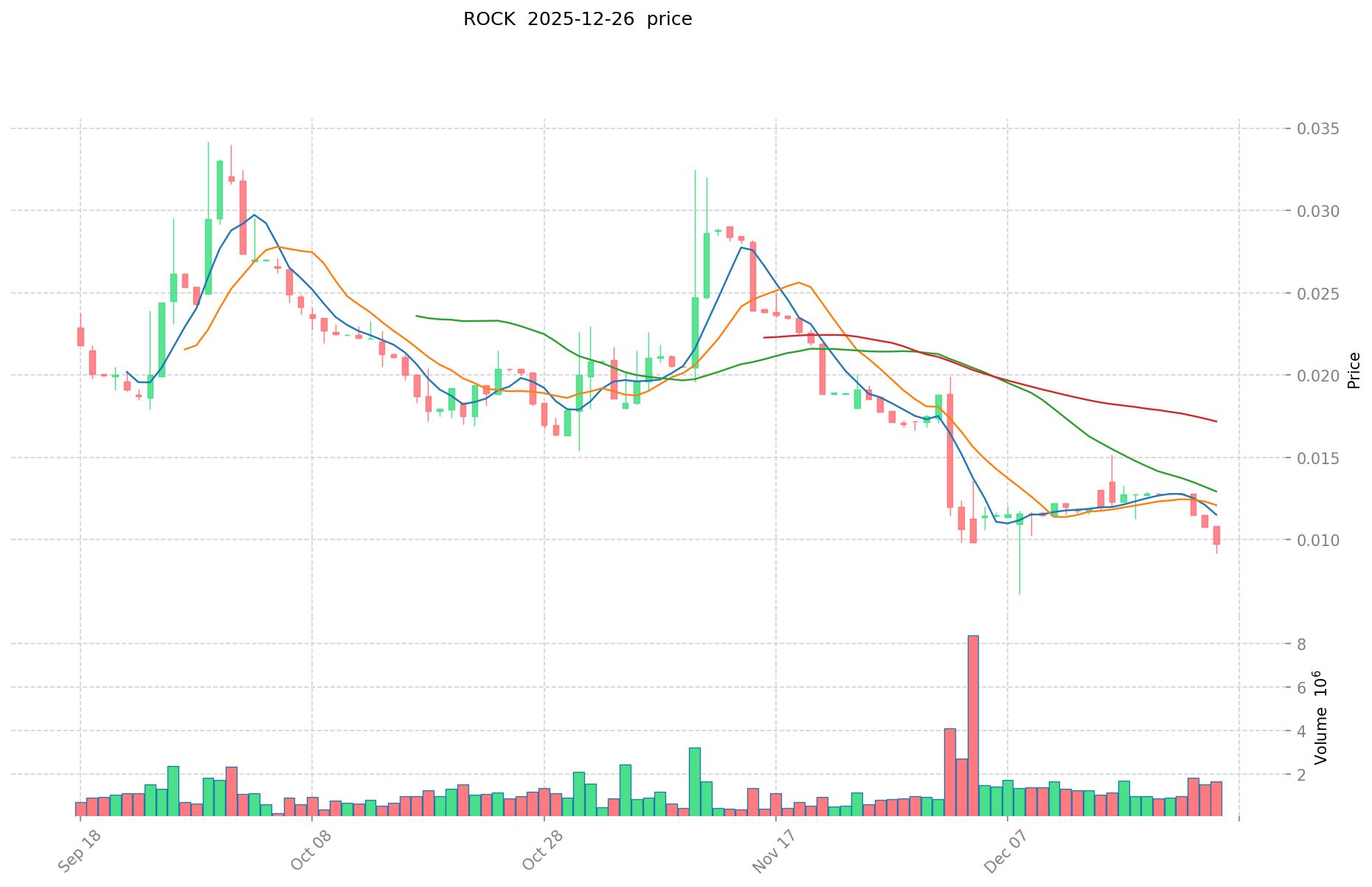
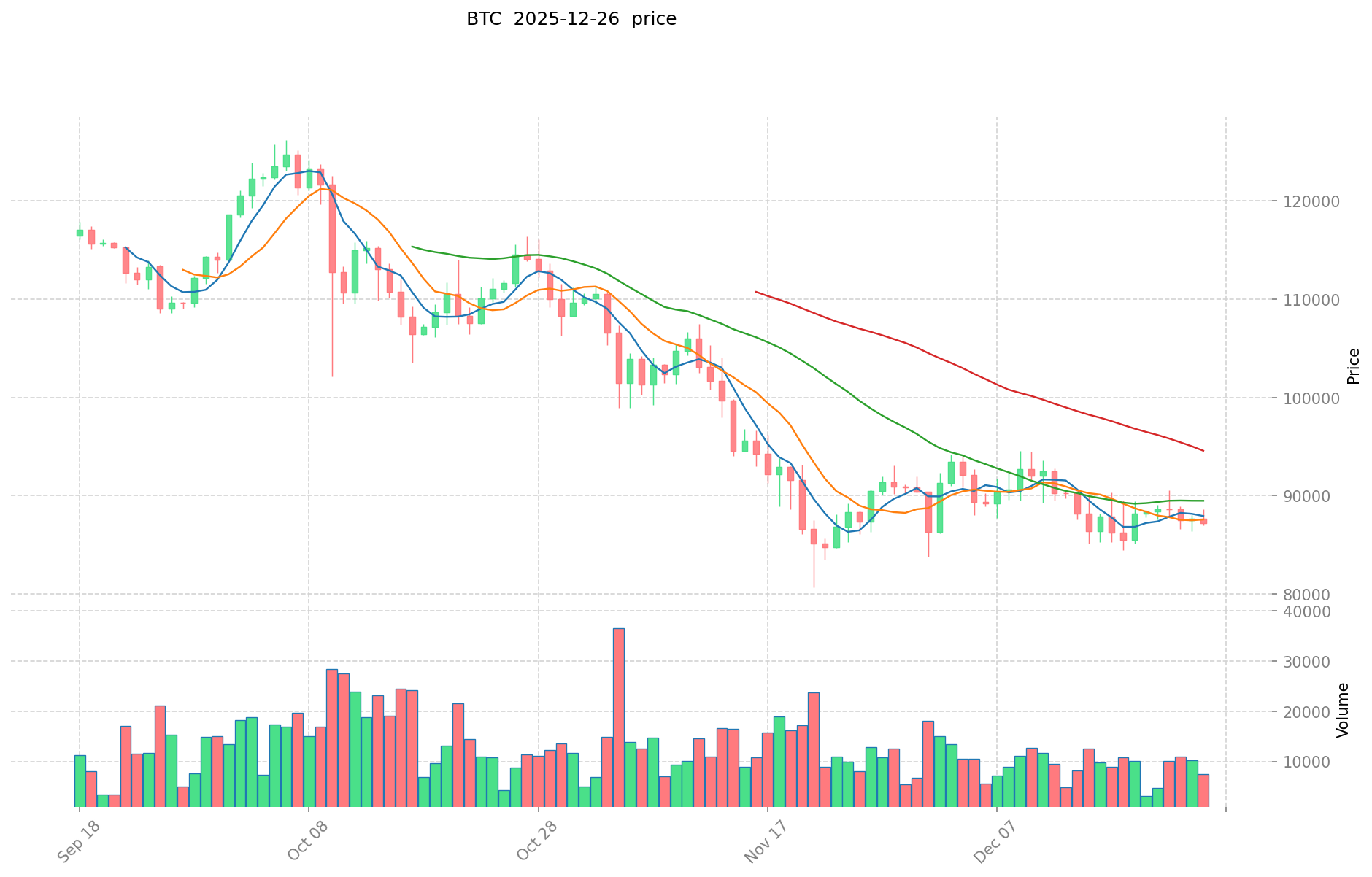
ROCK (Zenrock) and BTC (Bitcoin) Historical Price Trends
- November 2024: ROCK reached its all-time high of $0.176 on November 29, 2024, driven by the launch of zenBTC and increased DeFi ecosystem adoption.
- October 2025: Bitcoin achieved its all-time high of $126,080 on October 7, 2025, reflecting sustained institutional interest and growing adoption as "digital gold."
- Comparative analysis: Within the 2025 market cycle, ROCK declined from its peak of $0.176 to a low of $0.00668 (December 8, 2025), representing a decline of approximately 96.2%, while Bitcoin experienced less volatility, trading in the $86,894.9 to $89,420 range during the same period.
Current Market Status (December 26, 2025)
- ROCK current price: $0.00975
- BTC current price: $88,995.3
- 24-hour trading volume: ROCK $15,861.08 vs BTC $819,264,483.39
- Market Sentiment Index (Fear & Greed Index): 20 (Extreme Fear)
Click to view real-time prices:
Zenrock (ROCK) vs Bitcoin (BTC): Investment Value Analysis
II. Core Factors Affecting ROCK vs BTC Investment Value
Supply Mechanism Comparison (Tokenomics)
-
ROCK: Zenrock operates as a yield-bearing Bitcoin wrapper solution with supply dynamics tied to the DeFi ecosystem. The token is minted when users wrap Bitcoin, creating an elastic supply model dependent on DeFi adoption and user participation in yield generation strategies.
-
BTC: Fixed maximum supply of 21 million bitcoins with scheduled halving events occurring every 210,000 blocks (approximately every four years). This deflationary mechanism progressively reduces mining rewards, with the next halving expected to further constrain supply.
-
📌 Historical Pattern: Bitcoin's supply schedule has historically driven price cycles aligned with halving events, creating predictable scarcity dynamics. ROCK's supply mechanism, by contrast, responds to DeFi participation rates and user demand for yield optimization, making it more volatile but potentially responsive to adoption acceleration.
Institutional Adoption and Market Application
-
Institutional Holdings: Bitcoin commands significantly larger institutional positions through spot ETFs, corporate treasuries, and sovereign wealth funds. ROCK remains an emerging asset with limited institutional infrastructure, though growing DeFi protocol participation indicates emerging institutional interest in yield-generating Bitcoin derivatives.
-
Enterprise Adoption: Bitcoin functions as a reserve asset and long-term store of value in corporate balance sheets (MicroStrategy, Tesla) and national reserves. ROCK operates within decentralized finance ecosystems, enabling yield generation through collateral provision, liquidity mining, and DeFi protocol integration—serving different use cases than Bitcoin.
-
National Policy: Bitcoin faces varied regulatory treatment globally, with some nations adopting it as legal tender while others restrict mining or trading. ROCK operates within the broader DeFi regulatory framework, facing heightened scrutiny regarding securities classification and compliance with emerging digital asset regulations.
Technology Development and Ecosystem Construction
-
ROCK Technology Evolution: Zenrock implements distributed multi-party computation (dMPC) technology to enhance network security and custodial safety for wrapped Bitcoin. This technological stack differentiates ROCK as a secured bridge between Bitcoin liquidity and high-performance blockchains, supporting DeFi protocol integration.
-
BTC Technology Development: Bitcoin maintains a conservative approach to protocol upgrades, focusing on security and decentralization. Recent developments include Layer 2 solutions (Lightning Network), segmentation implementations, and ordinal/inscription technologies expanding use cases beyond basic transactions.
-
Ecosystem Comparison: Bitcoin dominates as a base layer settlement asset with extensive exchange infrastructure, custodial services, and payment rails. ROCK operates primarily within DeFi ecosystems on high-performance blockchains, supporting yield generation, collateral markets, and liquidity provision. Bitcoin's ecosystem is mature and broadly distributed; ROCK's is concentrated within DeFi protocols and specialized platforms.
Macroeconomic Conditions and Market Cycles
-
Performance in Inflationary Environments: Bitcoin demonstrates established anti-inflationary attributes, with historical price movements correlating to real interest rates and inflation expectations. ROCK's yield-bearing structure may provide additional cushioning through protocol-generated returns during inflationary periods, though this benefit depends on DeFi protocol sustainability.
-
Monetary Policy Impact: Rising interest rates typically pressured both assets through increased opportunity costs, though Bitcoin has shown relative stability during recent rate cycles. ROCK's value responds both to Bitcoin price dynamics and DeFi yield availability—creating sensitivity to both macroeconomic conditions and protocol-specific risks including smart contract vulnerabilities.
-
Geopolitical Factors: Bitcoin benefits from cross-border transaction demand during geopolitical tensions and capital control scenarios. ROCK's geopolitical relevance remains limited to regions with active DeFi participation, concentrating its demand drivers within developed digital economy participants rather than broader cross-border settlement demands.
III. 2025-2030 Price Prediction: ROCK vs BTC
Short-term Prediction (2025)
- ROCK: Conservative $0.008148-$0.0097 | Optimistic $0.010379
- BTC: Conservative $50,757-$89,048 | Optimistic $121,995
Mid-term Prediction (2026-2028)
- ROCK may enter consolidation phase, expected price range $0.007128-$0.016183
- BTC may enter growth phase, expected price range $58,037-$212,441
- Key drivers: institutional capital inflow, ETF adoption, ecosystem development
Long-term Prediction (2029-2030)
- ROCK: Base case $0.012103-$0.014778 | Optimistic case $0.016256-$0.020948
- BTC: Base case $135,852-$191,340 | Optimistic case $204,690-$214,301
View ROCK and BTC Detailed Price Predictions
ROCK:
| 年份 |
预测最高价 |
预测平均价格 |
预测最低价 |
涨跌幅 |
| 2025 |
0.010379 |
0.0097 |
0.008148 |
0 |
| 2026 |
0.014958855 |
0.0100395 |
0.007128045 |
2 |
| 2027 |
0.01424906235 |
0.0124991775 |
0.010874284425 |
28 |
| 2028 |
0.01618268510925 |
0.013374119925 |
0.00735576595875 |
37 |
| 2029 |
0.016256242768837 |
0.014778402517125 |
0.012857210189898 |
51 |
| 2030 |
0.020948385568024 |
0.015517322642981 |
0.012103511661525 |
59 |
BTC:
| 年份 |
预测最高价 |
预测平均价格 |
预测最低价 |
涨跌幅 |
| 2025 |
121995.486 |
89047.8 |
50757.246 |
0 |
| 2026 |
129791.62089 |
105521.643 |
58036.90365 |
18 |
| 2027 |
169425.5500008 |
117656.631945 |
78829.94340315 |
32 |
| 2028 |
212440.814639892 |
143541.0909729 |
76076.778215637 |
61 |
| 2029 |
204689.5957273554 |
177990.952806396 |
147732.49082930868 |
100 |
| 2030 |
214301.107178900784 |
191340.2742668757 |
135851.594729481747 |
115 |
IV. Investment Strategy Comparison: ROCK vs BTC
Long-term vs Short-term Investment Strategy
-
ROCK: Suitable for investors focusing on DeFi ecosystem growth, yield generation optimization, and emerging protocol adoption. Short-term traders can capitalize on volatility, while long-term holders should assess DeFi sustainability and smart contract security developments.
-
BTC: Suitable for investors seeking stable store-of-value characteristics, inflation hedging, and institutional-grade asset exposure. Long-term holders benefit from predictable supply dynamics and halving cycles, while short-term traders can leverage established liquidity and technical analysis patterns.
Risk Management and Asset Allocation
-
Conservative Investor: ROCK 5-10% vs BTC 90-95%. Bitcoin's established market infrastructure and institutional adoption provide stability, while ROCK allocation serves as exposure to DeFi innovation with controlled downside risk.
-
Aggressive Investor: ROCK 25-35% vs BTC 65-75%. Increased ROCK allocation captures higher growth potential from yield-bearing mechanisms and DeFi ecosystem expansion, while maintaining Bitcoin exposure for portfolio stability and market correlation diversification.
-
Hedging Tools: Stablecoin positioning for liquidity management, put options for downside protection on concentrated positions, cross-asset correlation strategies using both ROCK and BTC with inverse positions on correlated DeFi tokens.
V. Potential Risk Comparison
Market Risk
-
ROCK: Concentrated liquidity in DeFi protocols creates slippage risks during high-volume exits. Yield sustainability depends on protocol-specific token economics; declining DeFi activity reduces demand for wrapped Bitcoin and undermines ROCK's value proposition. The 96.2% price decline from peak indicates extreme volatility and speculative market behavior.
-
BTC: Macroeconomic sensitivity to interest rate cycles and inflation expectations creates cyclical pressure. However, established institutional demand and corporate treasury adoption provide downside support. Regulatory restrictions in key markets could constrain upside, though global adoption trends suggest diminishing regulatory risk over time.
Technology Risk
-
ROCK: Distributed multi-party computation (dMPC) technology introduces operational complexity and potential vulnerabilities in custodial mechanisms. Smart contract risks in underlying DeFi protocols create cascading failure scenarios. Wrapped Bitcoin bridge security depends on third-party protocol validation and sidechain consensus mechanisms.
-
BTC: Mining pool concentration presents theoretical 51% attack vectors, though economic incentives and distributed global hash power make such attacks impractical. Protocol update coordination risks exist, but Bitcoin's conservative upgrade approach prioritizes security over feature expansion, reducing implementation risk.
Regulatory Risk
-
ROCK: DeFi tokens face heightened regulatory scrutiny regarding securities classification, particularly as yield-bearing mechanisms may trigger classification as investment contracts. Emerging regulations on custody solutions and bridge protocols create compliance uncertainty. Geographic restrictions on DeFi protocol access could reduce ROCK's addressable market.
-
BTC: Regulatory treatment varies globally but has stabilized toward acceptance as commodity or digital asset rather than security. Spot ETF approval in major markets (US, EU) reduced regulatory uncertainty. However, potential future regulations on mining energy consumption or cross-border capital controls present emerging risks.
VI. Conclusion: Which Is the Better Buy?
📌 Investment Value Summary
-
ROCK Advantages: Yield-bearing mechanism provides protocol-level returns beyond price appreciation; exposure to growing DeFi ecosystem; potential for higher returns during bullish DeFi cycles; emerging institutional interest in yield-generating Bitcoin derivatives; dMPC technology differentiates risk management approach.
-
BTC Advantages: Established store-of-value status with 16+ years of market validation; predictable supply mechanism through halving events; institutional infrastructure development (spot ETFs, corporate treasuries); global recognition as "digital gold"; demonstrable inflation-hedging attributes; significantly higher liquidity and trading volume ($819.3 million vs $15.9 thousand daily volume).
✅ Investment Recommendations
-
Beginner Investors: Prioritize BTC for foundational cryptocurrency exposure. Bitcoin's mature ecosystem, established custody solutions, and regulatory clarity provide lower execution risk. Consider ROCK allocation only after achieving comfortable Bitcoin position, ideally starting with 2-5% exposure through diversified DeFi platforms.
-
Experienced Investors: Construct core-satellite portfolios with BTC as foundation (70-80%) and ROCK as tactical allocation (10-20%). Utilize yield-bearing ROCK strategies within DeFi protocols for enhanced returns, while maintaining Bitcoin exposure for portfolio stability and macroeconomic hedge positioning.
-
Institutional Investors: Focus on Bitcoin for treasury diversification and regulatory compliance; institutional-grade custody infrastructure and spot ETF products provide operational efficiency. Evaluate ROCK exposure through dedicated DeFi hedge fund allocations only after comprehensive smart contract audit and protocol sustainability analysis. Utilize both assets for cross-protocol arbitrage and market-neutral strategies.
⚠️ Risk Disclaimer: The cryptocurrency market exhibits extreme volatility. ROCK experienced a 96.2% decline from peak while Bitcoin maintained relative stability. This analysis does not constitute investment advice. Conduct independent research, assess personal risk tolerance, and consult financial advisors before making investment decisions. Smart contract vulnerabilities, regulatory changes, and market sentiment shifts can significantly impact asset valuations.
FAQ
ROCK是什么?与BTC有什么区别?
ROCK是一种加密货币资产。与BTC相比,ROCK的交易额相对较小,BTC作为全球最大加密货币,具有更强的市场流动性和更广泛的应用生态。
ROCK和BTC在技术架构上有什么不同?
ROCK采用权益证明(PoS)共识机制,BTC采用工作量证明(PoW)。PoS能耗更低,确认速度更快。ROCK支持智能合约和DApp生态,而BTC主要用于价值转移。两者网络架构均基于P2P分布式网络。
ROCK相比BTC有什么优势和劣势?
ROCK优势:安全性更高,降低黑客和欺诈风险。劣势:市场流动性和知名度相对较低,市场规模小于BTC。
ROCK和BTC的挖矿机制有什么区别?
比特币采用工作量证明(PoW)机制,通过算力竞争产生新区块。ROCK采用权益证明(PoS)机制,依靠持币量和锁定时间获得挖矿收益,能耗更低,更环保高效。
ROCK和BTC哪个更适合投资?
BTC作为市场领导者,具有更强的稳定性和广泛认可度。ROCK作为新兴项目,成长潜力较大。BTC适合稳健投资者,ROCK适合看好其生态发展的投资者。选择需基于个人风险承受能力。
ROCK的总供应量与BTC相比如何?
ROCK总供应量为1000亿枚,而BTC总供应量仅为2100万枚。相比之下,ROCK的供应量远大于BTC,这意味着BTC在供应稀缺性上具有更明显的优势。
* The information is not intended to be and does not constitute financial advice or any other recommendation of any sort offered or endorsed by Gate.