

Trade
Basic
Futures
Futures
Hundreds of contracts settled in USDT or BTC
TradFi
Gold
Trade global traditional assets with USDT in one place
Options
Hot
Trade European-style vanilla options
Unified Account
Maximize your capital efficiency
Demo Trading
Futures Kickoff
Get prepared for your futures trading
Futures Events
Participate in events to win generous rewards
Demo Trading
Use virtual funds to experience risk-free trading
Earn
Launch
CandyDrop
Collect candies to earn airdrops
Launchpool
Quick staking, earn potential new tokens
HODLer Airdrop
Hold GT and get massive airdrops for free
Launchpad
Be early to the next big token project
Alpha Points
Trade on-chain assets and enjoy airdrop rewards!
Futures Points
Earn futures points and claim airdrop rewards
Investment
Simple Earn
Earn interests with idle tokens
Auto-Invest
Auto-invest on a regular basis
Dual Investment
Buy low and sell high to take profits from price fluctuations
Soft Staking
Earn rewards with flexible staking
Crypto Loan
0 Fees
Pledge one crypto to borrow another
Lending Center
One-stop lending hub
VIP Wealth Hub
Customized wealth management empowers your assets growth
Private Wealth Management
Customized asset management to grow your digital assets
Quant Fund
Top asset management team helps you profit without hassle
Staking
Stake cryptos to earn in PoS products
Smart Leverage
New
No forced liquidation before maturity, worry-free leveraged gains
GUSD Minting
Use USDT/USDC to mint GUSD for treasury-level yields

More


Trending Topics
View More74.63K Popularity
3.83K Popularity
1.46K Popularity
1.92K Popularity
5.89K Popularity




Pin
Gate Square | 2/5 Today's Hot Topic: #BuyTheDipOrWaitNow?
🎁 [Community Perk] Post with the topic or #BTC, 10 lucky users * $100 position Voucher.
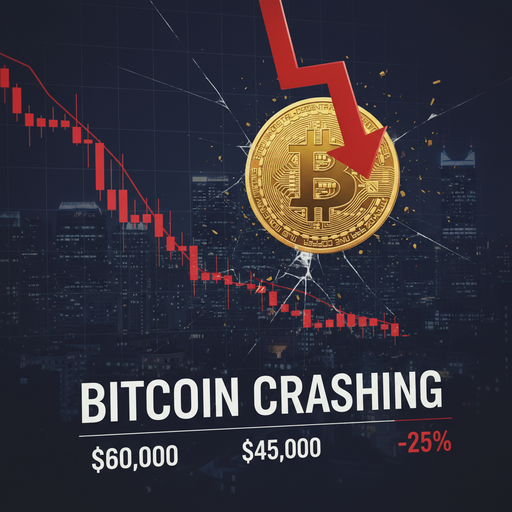
Market volatility continues as BTC breaks below the $74,000 key support level, with altcoins pulling back in sync. Are you buying the dip in batches or waiting for a better entry point?
💬 Today’s Discussion:
1️⃣ Bottom Signals: Where do you see BTC’s bottom — $70,000 or lower?
2️⃣ Market Drivers: Which recent macroeconomic news or rumors are influencing the market?
3️⃣ Dark Horses: Are there any resilient or outperforming tokens worth watching?
ShTap to Trade in Gate Square, Win up to 50 GT & Merch!
Click the trading widget in Gate Square content, complete a transaction, and take home 50 GT, Position Experience Vouchers, or exclusive Spring Festival merchandise.
Click the registration link to join
https://www.gate.com/questionnaire/7401
Enter Gate Square daily and click any trading pair or trading card within the content to complete a transaction. The top 10 users by trading volume will win GT, Gate merchandise boxes, position experience vouchers, and more.
The top prize: 50 GT.
, but rather stores the private and public keys that prove ownership and unlock access to your funds. Keeping these keys in a cold wallet ensures that the weakest link in the security chain—the networked device—never has contact with your most sensitive data.
Cold vs. Hot Wallets: Understanding the Security Trade-offs
The distinction between cold and hot storage reflects a fundamental security decision: convenience versus vulnerability protection.
Hot wallets (mobile apps, web interfaces, exchange-provided wallets) prioritize accessibility. They require only an internet connection and take seconds to execute transactions. This makes them ideal for frequent traders and daily spending, but they operate with inherent risks—every transaction signing and key access happens on networked infrastructure vulnerable to compromise.
Cold wallets sacrifice convenience for security. Hardware devices, paper wallets, and specialized offline solutions require additional steps: connecting via USB, confirming transactions on the device itself, and managing backup recovery phrases. This friction is intentional—it makes casual theft impossible and requires deliberate, verified actions to access funds.
The trade-off becomes clearer when examining threat models. Hot wallet vulnerabilities include exchange hacks, device malware, phishing attacks, and network interception. Cold wallets reduce these to essentially zero through physical isolation. For this reason, security-conscious investors reserve hot wallets for trading capital and operational funds while moving long-term holdings to cold storage.
Exploring Cold Storage Solutions: From Paper to Hardware
Cold storage exists across a spectrum of implementations, each with distinct advantages for different use cases.
Paper Wallets represent the simplest approach—a physical document containing your public key, private key, and QR code for transactions. Paper wallets operate without any digital infrastructure, making them completely immune to online attacks. However, they sacrifice convenience and introduce new vulnerabilities (physical loss, damage, degradation). Paper wallets remain viable but are increasingly replaced by more practical hardware alternatives.
Sound Wallets occupy a niche position for users seeking creative isolation methods. Your BIP38-encrypted private key transforms into an audio file burned onto a CD or vinyl record. Playing the encrypted file produces only static noise—meaningless without proper decryption tools. While unconventional, this approach provides physical isolation comparable to paper wallets. The barrier is practical: vinyl pressing requires specialized equipment and significant cost, limiting adoption to enthusiasts rather than mainstream users.
Hardware Wallets have become the dominant cold storage standard because they balance security with usability. Devices like dedicated crypto hardware isolate private key generation and signing to an offline chip that never connects directly to any computer. When you need to execute a transaction, the process requires multiple steps: the hardware connects (typically via USB), displays the transaction details for your verification, signs it with a PIN-protected mechanism, and then disconnects. Private keys remain locked inside the device, inaccessible to external software or networks.
Modern hardware wallets back up keys using a 12 or 24-word mnemonic phrase (seed phrase). This recovery mechanism is critical—if you lose the physical device, the seed phrase regenerates your keys on a replacement device. Critically, never purchase hardware wallets from secondary markets; compromised supplies can contain pre-installed malware that broadcasts your keys to attackers.
Air-Gapped Wallets represent an advanced hardware variant with no wireless connectivity whatsoever—no Bluetooth, WiFi, or USB bridges. Even if malware infects your computer, it cannot establish a communication channel to extract keys because the physical isolation is absolute. This architecture makes air-gapped hardware wallets the gold standard for large holdings.
Deep Cold Storage serves investors with long-term, access-infrequent holdings. This might involve storing a hardware wallet in a secure vault requiring multiple access steps, burying encrypted backups in physically secure locations, or utilizing third-party custodians who implement multi-step verification for key retrieval. Deep cold storage is deliberately inconvenient—the cost and effort of accessing funds serves as a friction mechanism preventing panic selling and reducing spontaneous security mistakes.
How Cold Wallets Prevent Theft: The Offline Security Architecture
The security advantage of cold wallets flows directly from their operational design. In hot wallets, every critical security operation occurs on networked devices: transaction signing happens on an internet-connected computer, keys are stored in network-accessible memory, and broadcast occurs across public networks. Each step presents an attack surface.
Cold wallets invert this model. Private keys are generated offline—never touching any networked hardware. When you need to spend Bitcoin, the transaction signing process happens within the cold device, disconnected from the internet. The device then displays the transaction for your verification (ensuring you’re not signing unexpected transfers), you confirm it with your PIN, and only then does a pre-signed transaction broadcast to the network through an intermediary online device. Critically, the intermediate device never receives your private key—only the already-signed transaction, which contains no sensitive data.
This architectural separation means even if an attacker compromises your main computer with sophisticated malware, they cannot extract private keys because no such keys exist on that compromised device. The malware can potentially capture a signed transaction before broadcast, but a signed Bitcoin transaction is cryptographically bound to its specific inputs and outputs—an attacker cannot redirect a transaction to their wallet or modify its details without invalidating the signature.
Additionally, most hardware wallets employ PIN protection on the device itself. A compromised computer cannot access the PIN, cannot communicate directly with the signing hardware, and cannot force the hardware to sign unauthorized transactions. The human—not the software—remains the final authorization point.
Building Layered Security: Advanced Protection Strategies
Single-signature wallets (requiring only one private key for access) represent a single point of failure. If that key is compromised, lost, or forgotten, your funds become inaccessible or stolen.
Multisignature (multisig) technology distributes this vulnerability. A 2-of-3 multisig wallet requires any two of three separate keys to authorize a transaction. An attacker must compromise two different keys across potentially different devices and locations—exponentially more difficult than capturing a single key. If you lose one key, the remaining two still allow fund recovery. This redundancy transforms multisig from a convenience feature to a security architecture.
Combining multisig wallets with cold storage creates layers of protection: your three keys live on three separate hardware devices stored in different physical locations, each protected by unique PINs, each requiring in-person access to use. An attacker would need to breach multiple physical locations, compromise multiple devices, and obtain multiple PINs—a scenario so complex it becomes impractical for most attack scenarios.
For substantial Bitcoin holdings, consider implementing multisig architecture alongside deep cold storage practices. This combination raises the cost and complexity of theft to levels that make your account an economically unattractive target compared to easier victims.
Summary: Making Cold Wallets Part of Your Strategy
Cold wallets represent the most reliable technology currently available for securing Bitcoin over extended periods. The offline architecture addresses the fundamental vulnerability of networked devices—if your keys never touch the internet, internet-based attackers cannot steal them.
Yet security remains a holistic practice extending beyond technology choice. Your responsibilities include:
The trend toward cold wallet adoption reflects genuine security improvements—not fearmongering. As cryptocurrency values increase and attacker sophistication rises, offline storage transitions from optional best practice to essential infrastructure. Start with educational resources (including comprehensive guides from established Bitcoin publications), understand the mechanisms behind your chosen cold storage solution, and select tools matching your specific security requirements and transaction frequency.
The ultimate goal isn’t achieving perfect security (an impossible standard) but rather making theft expensive and time-consuming enough that attackers target easier marks. Cold wallets accomplish exactly that.