
Futures
Access hundreds of perpetual contracts
TradFi
Gold
One platform for global traditional assets
Options
Hot
Trade European-style vanilla options
Unified Account
Maximize your capital efficiency
Demo Trading
Introduction to Futures Trading
Learn the basics of futures trading
Futures Events
Join events to earn rewards
Demo Trading
Use virtual funds to practice risk-free trading
Launch
CandyDrop
Collect candies to earn airdrops
Launchpool
Quick staking, earn potential new tokens
HODLer Airdrop
Hold GT and get massive airdrops for free
Pre-IPOs
Unlock full access to global stock IPOs
Alpha Points
Trade on-chain assets and earn airdrops
Futures Points
Earn futures points and claim airdrop rewards


More




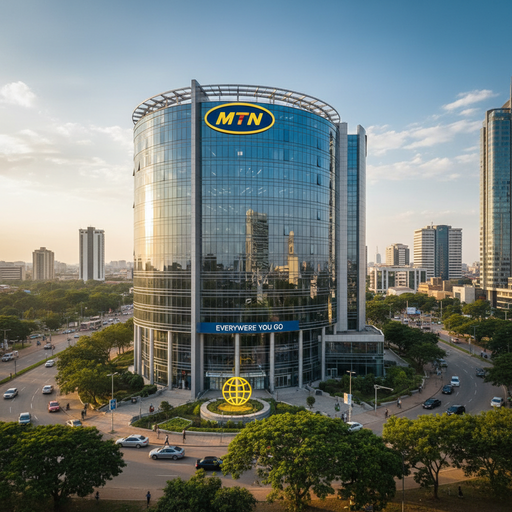

China Life: Net profit exceeds 150 billion yuan, earning over 420 million yuan daily
Written by / Dong Xuan
The insurance industry in 2025 faces both opportunities and challenges.
On one hand, emerging from the cyclical trough, the industry is experiencing a comprehensive recovery.
According to data disclosed by the China Banking and Insurance Regulatory Commission, the total premium income of the industry in 2025 reached 6.12 trillion yuan, a year-on-year increase of 7.43%. Among them, the growth rate of life insurance business continued to maintain double digits, with segments such as health insurance and new energy vehicle insurance also leading the way.
On the other hand, the “reporting and operation integration” policy has promoted the industry from extensive expansion to refined and compliant management, which in the short term causes adjustments in channel income and fluctuations in premium growth, testing the survival resilience of companies, especially small and medium players.
Against this backdrop, the industry “leading goose”—China Life—demonstrates what it means to be “the big always stays big, the steady always remains strong” through a substantial financial report.
Trillion-dollar giant, both stable and profitable
Attention, key point: China Life’s performance is truly impressive:
Total premiums first exceeded 700 billion yuan, reaching 61.2k yuan, an increase of 8.7% year-on-year; calculated over 365 days, this is roughly 729.89B yuan in premiums per day. Globally, such a scale ranks among the top in the life insurance industry.
Total assets rose to 7.59 trillion yuan, with investment assets of 7.42 trillion yuan, crossing three trillion-yuan thresholds consecutively during the “14th Five-Year Plan” period.
Key indicators such as first-year premium, new business value growth, total investment return, and net profit attributable to the parent company all set new records.
Behind this scale is an optimized business structure. In 2025, China Life’s first-year premiums for policies with a ten-year term or longer reached 2B yuan, maintaining the industry’s top position; first-year premiums for policies with a ten-year or longer term accounted for 44.92% of total first-year premiums.
Among these, the proportion of first-year premiums for individual insurance channels with a ten-year or longer term further increased to 58.48%, with total premiums of 75.9k yuan, accounting for 44.92%.
These figures roughly outline China Life’s “solid foundation”: not built on short-term surges, but on long-term deep cultivation; not relying on a single channel, but on diversified and balanced sources.
Profitability performance is even more remarkable. In 2025, China Life’s net profit attributable to the parent company reached 74.2k yuan, a 44.1% increase from 116.21B yuan the previous year. This indicates that, even on a high base in 2024, the company maintained strong growth, earning over 52.2B yuan daily.
Source: China Life Financial Report
Analysis by Node Finance suggests that the core driver of this profit surge is investment performance. In 2025, China Life achieved a total investment income of 52.2B yuan, an increase of 154.08B yuan or 25.8% year-on-year; the total investment yield reached 6.09%, up 59 basis points from the same period last year, setting a recent record for investment results.
In the context of low bond market interest rates and structural differentiation in the stock market, this figure is highly valuable.
It’s worth noting that, according to CICC’s estimates, China Life’s net investment yield in 2025 may be around 3.04%, about 45 basis points lower than in 2024, mainly due to the gradual maturity of existing high-quality fixed income assets and the decline in yields of new assets. However, the significant increase in total investment income successfully offset the downward pressure on net investment returns.
Looking at the core indicator of growth potential for life insurance companies—new business value—China Life also performs excellently.
In 2025, China Life’s annual new business value reached 106.93B yuan, a 35.7% increase, the highest growth rate since 2017. Among them, contributions from individual insurance channels and bancassurance and other channels were 39.3 billion yuan and 6.45 billion yuan, respectively, with growth rates of 25.5% and 169.3%.
Source: China Life Financial Report
It can be seen that although the “reporting and operation integration” policy has impacted the industry, China Life has not been affected; instead, bancassurance channels have grown into a new “growth engine.”
In terms of profitability, in 2025, the company’s NBV Margin (New Business Value Rate) rose sharply to 23.8%, significantly improving from 17.3% in 2024.
With a large existing scale, China Life can also quickly climb higher, ensuring ample solvency levels. As of the end of 2025, the company’s comprehensive solvency adequacy ratio reached 174.01%, and the core solvency adequacy ratio was 128.77%.
Elephant turns, challenges remain
Although overall performance is commendable, closer inspection reveals some shortcomings.
First, the market’s hot topic is the company’s performance in the fourth quarter. In the first three quarters of 2025, China Life’s net profit attributable to the parent was 420M yuan, meaning the fourth quarter alone recorded a loss of about 13.7 billion yuan.
In response, China Life’s President Li Mingguang stated at the earnings conference that the core reason was structural adjustments in the capital markets during that period, which caused some stocks and funds held to decline. He emphasized that such fluctuations are mostly temporary, reflecting short-term market changes and not indicative of the company’s long-term trend.
Huatai Securities analyzed that this may be related to investment fluctuations in the fourth quarter and increased asset impairments. CICC’s estimates also confirmed that in Q4 2025, the company’s investment spread for the quarter was -387.69B yuan, mainly due to increased volatility in the equity and bond markets, with significant narrowing of fair value gains and losses.
This volatility exposes a structural issue: as the company’s allocation of equity assets (stocks and funds) continues to rise from 12.18% to 16.89%, its profit structure has become more sensitive to capital market fluctuations, reaching a historic high. In a bullish market, such allocations can generate impressive returns; once the market corrects, profit retracements become more severe.
Second, growth in traditional guaranteed business faces pressure.
Node Finance notes that, alongside product restructuring, China Life’s traditional business is under growth pressure. In 2025, premiums for policies with a ten-year or longer term declined by 7.78% to 79.44B yuan.
Source: China Life Financial Report
This indicates that, although variable return products (dividend insurance) account for nearly 50% of first-year premiums, the contraction of traditional guaranteed business is creating a hedge.
With interest rates continuing to decline, shifting toward dividend insurance is the trend. But this transition also tests the company’s ability to realize investment returns. When nearly 60% of new customers are attracted by dividend demonstrations, fluctuations in dividend realization rates will directly impact customer satisfaction and may even trigger surrenders.
Industry experience shows that during 2024’s volatile stock and bond markets, some insurers experienced frequent surrender events for dividend insurance, with one leading insurer’s popular dividend product experiencing surrender rates as high as 20%.
Third, the downward trend of net investment yield cannot be ignored.
In the context of short-term difficulty reversing the low interest rate environment, the yield of fixed income assets will continue to be under pressure. Although the company has increased equity allocations to hedge some of this, the high volatility of equity assets introduces new uncertainties. Balancing returns and risks remains a continuous challenge on the investment side.
Fourth, growth in embedded value has slowed.
Source: China Life Financial Report
Compared to previous years, the growth rate has slowed. CICC’s analysis indicates that, although positive contribution from investment return deviations exists, fair value losses in the bond market have dragged down the overall market value adjustment of embedded value.
On the liability side, the company still holds 327 million effective long-term policies, containing a large amount of traditional guaranteed products sold during high-interest periods. Even though the asset-liability duration gap of new business has shortened to about 1.5 years, the overall cost rigidity still requires a long cycle to amortize.
All these concerns have amplified market negative sentiment. On March 26, the day after the financial report was released, China Life’s A-share stock price fell by 4.43%, and H-shares dropped over 8%, with a nearly 9.5% intraday decline.
Looking back from the start of 2026, the challenges reflected in China Life’s annual report, as the management team stated at the earnings conference, are characteristic of the long and cross-cycle nature of asset-liability management in the life insurance industry. While short-term financial indicators are bright, the real test lies in whether the company can continue to optimize liability costs in a low-interest-rate environment, stabilize investment returns amid equity market volatility, and achieve substantive improvements in team quality during channel transformation.
Cover image generated by AI
☞ Please contact Director Lizi
Email: lizi@jdcaijing.com
☞ Article content authorized for reprint