
Futures
Access hundreds of perpetual contracts
TradFi
Gold
One platform for global traditional assets
Options
Hot
Trade European-style vanilla options
Unified Account
Maximize your capital efficiency
Demo Trading
Introduction to Futures Trading
Learn the basics of futures trading
Futures Events
Join events to earn rewards
Demo Trading
Use virtual funds to practice risk-free trading
Launch
CandyDrop
Collect candies to earn airdrops
Launchpool
Quick staking, earn potential new tokens
HODLer Airdrop
Hold GT and get massive airdrops for free
Pre-IPOs
Unlock full access to global stock IPOs
Alpha Points
Trade on-chain assets and earn airdrops
Futures Points
Earn futures points and claim airdrop rewards


More




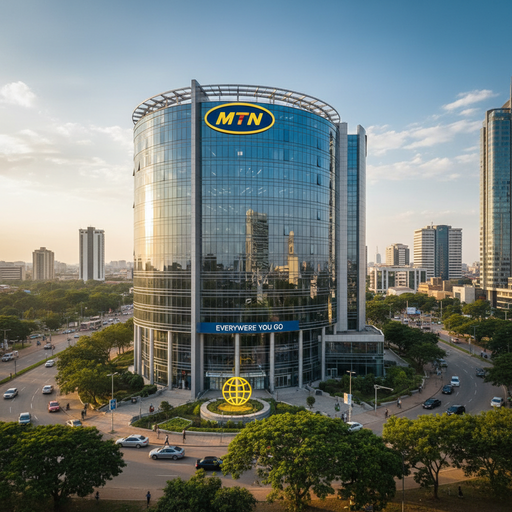

A commercial advantage in Tokyo is becoming increasingly apparent. Glassnode's latest research shows how important geography is, even on decentralized platforms like Hyperliquid. Traders operating in or near Tokyo gain an approximate 200-millisecond latency advantage compared to competitors in the US and Europe. This seemingly small difference actually makes a huge impact in the world of high-frequency trading.
Hyperliquid's 24 validators are located in the Tokyo region of Amazon Web Services at (ap-northeast-1). This means that transactions from Tokyo-based users reach validators in just 2-3 milliseconds. Meanwhile, users in Europe face delays of over 200 milliseconds. Orders sent from Virginia have a total round-trip time of 1.079 seconds. From Tokyo, the average is 884 milliseconds. This margin grows exponentially when considering a daily trading volume of $4 billion.
This situation is not unique to Hyperliquid. Other major crypto platforms have also concentrated their infrastructure in the AWS Tokyo region. A AWS outage last year demonstrated how service quality drops across multiple platforms and highlighted how much of the crypto infrastructure depends on a single cloud region. Nearly 36% of Ethereum nodes are supported by AWS.
This presents an interesting paradox. Hyperliquid is a decentralized platform based on open access and transparency. Theoretically, everyone can trade under equal conditions. But in practice, traders closer to the infrastructure have a significant speed advantage. In a time-sequenced system, a 200-millisecond difference means tighter spreads, better positions, and higher fill probabilities.
Traditional finance has addressed this issue. NYSE, for example, equalizes optical cable lengths in the Mahwah data center down to nanoseconds. Deutsche Börse standardizes cross-connections to 2.5 nanoseconds. IEX routes each order with a speed bump of 350 microseconds. Regulations like MiFID II require clock synchronization and cable equalization. These mechanisms, developed over decades, inherently neutralize geographic advantages.
In decentralized finance, there is no equivalent protective mechanism. For now, crypto traders seem comfortable with this asymmetry. Despite Hyperliquid's decentralized nature, it has experienced steady growth. But as trading speeds shorten and institutional capital enters DeFi, the dynamics will become clearer. Speed will determine position, and position will determine liquidity.
Tokyo has become the true hub of crypto infrastructure. Some trading desks, once based in Ireland, now openly say they have moved to Tokyo. Proximity to Asian trading flows, Japan’s regulatory framework built after Mt. Gox, and AWS’s regional concentration have made Tokyo an inevitable choice. The latency race that shaped Wall Street is now coming to decentralized finance. And it’s passing through Tokyo.