
Futures
Access hundreds of perpetual contracts
TradFi
Gold
One platform for global traditional assets
Options
Hot
Trade European-style vanilla options
Unified Account
Maximize your capital efficiency
Demo Trading
Introduction to Futures Trading
Learn the basics of futures trading
Futures Events
Join events to earn rewards
Demo Trading
Use virtual funds to practice risk-free trading
Launch
CandyDrop
Collect candies to earn airdrops
Launchpool
Quick staking, earn potential new tokens
HODLer Airdrop
Hold GT and get massive airdrops for free
Pre-IPOs
Unlock full access to global stock IPOs
Alpha Points
Trade on-chain assets and earn airdrops
Futures Points
Earn futures points and claim airdrop rewards


More




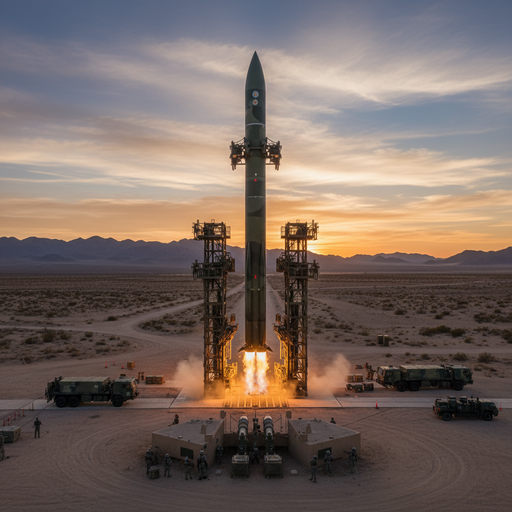

Trump issues a "shocking" warning to Iran, warning of greater market volatility! What do analysts think?
Hot Topics
Selected Stocks Data Center Market Center Capital Flows Simulated Trading
Client
Source: 24K99
After U.S. President Donald Trump(Donald Trump) warned that the U.S. will carry out “extremely strong” strikes on Iran within two to three weeks, market sentiment remained tense on Thursday(April 2), with stocks falling and the dollar strengthening. This statement disappointed traders who had been expecting clearer signals that the war might end.
Analysts say that Trump’s repeated warnings to Iran could trigger greater market volatility.
(Image source: Bloomberg)
Shortly after Trump’s speech, U.S. stock index futures declined, and Asia-Pacific stock indices fell by as much as 1.7%. Among the region, South Korea and Japan led the declines.
Meanwhile, the Bloomberg Dollar Index rose by 0.3% at one point. Traders previously indicated that hedge funds bought dollar put options ahead of Trump’s Wednesday speech. If risk sentiment improves and the dollar weakens, these options would benefit. Thursday’s movements suggest the market is shifting back to “safe-haven” positioning.
(Image source: Bloomberg)
Here are some analyst opinions:
Jumpei Tanaka, Head of Investment Strategy at Pictet Asset Management Japan Ltd.:
Trump’s speech did not, as the market expected, signal that the conflict is nearing an end. Instead, he hinted that the situation could escalate, stating that the U.S. might implement very severe strikes on Iran within the next two to three weeks, and warned that if no deal is reached, targets could include Iran’s power generation facilities. Therefore, this rhetoric was interpreted by the market as a negative factor for stocks.
Ken Wong, Asia Equity Portfolio Specialist at Eastspring Investments Hong Kong Ltd.:
Although everyone hopes to put this matter behind them, there are still many issues to sort out from the events in the Middle East over the past month. The current question is how these developments will influence the global economy over the next few quarters. Against the backdrop of oil price shocks, the likelihood of the Federal Reserve cutting interest rates has further diminished.
Tomo Kinoshita, Global Market Strategist at Invesco Asset Management Japan:
As it becomes increasingly clear that this war will not be resolved, the market is once again turning: stocks are falling, bond prices are dropping, and the dollar is strengthening. People are increasingly aware that conflicts related to Iran could have widespread spillover effects on many countries and regions’ economies.
Carol Kong, Economist and Forex Strategist at Commonwealth Bank of Australia:
It seems Trump has failed to convince the market that the situation will cool down from now on, nor has he assured that the U.S. will help secure the passage through the Strait of Hormuz. The reality is that U.S. military forces are still gathering in the region, keeping the possibility of ground military action alive. This means the dollar will likely remain in strong demand in the short term.
Tareck Horchani, Head of Brokerage Sales at Maybank Securities:
Trump’s speech was a typical “mixed message,” and the market’s reaction was as expected—initially shifting to risk aversion. The market is clearly re-pricing geopolitical risk premiums, especially regarding energy supplies.
Interestingly, before this speech, the market had rebounded somewhat on expectations that the conflict might be close to resolution. So, this is more like a repositioning rather than a full-blown panic—investors, who were somewhat optimistic, are now forced to adopt a more defensive stance.
Wee Khoon Chong, Senior Asia-Pacific Market Strategist at BNY Mellon:
Asia-Pacific currencies, especially those of net oil-importing economies, may continue to face pressure from high oil prices and a strong dollar. Additionally, foreign capital outflows are intensifying. In March, South Korea and India experienced record net foreign sales.
Rising inflation pressures could further delay the Fed’s potential rate cuts. Coupled with the demand for safe-haven capital inflows, this could support the dollar in the short term.
If the Middle East situation cools down and risk appetite recovers, the rally might mainly be reflected in the stock markets, while the forex market will still need to contend with ongoing trade condition pressures, which will depend on oil price developments.
Sean Callow, Senior Forex Analyst at ITC Markets:
If Trump, besides passing the buck and holding an optimistic view that the Strait of Hormuz will naturally reopen, has not proposed any concrete plans, it’s not surprising that the Bloomberg Dollar Index rose back to 1222.
Dilin Wu, Research Strategist at Pepperstone Group:
Trump’s speech was indeed disappointing. On one hand, he declared “victory,” but on the other hand, threatened to strike Iran’s energy and power facilities, and indicated that major strikes could occur within two to three weeks—essentially business as usual. The earlier talk of withdrawing from the Middle East now seems more like an attempt to soothe markets while keeping pressure options open. He clearly remains more inclined toward a “pressure first” strategy rather than de-escalating the situation altogether.
Massive information, precise analysis, all on Sina Finance APP
Editor: Zhu Hena