
Futures
Access hundreds of perpetual contracts
TradFi
Gold
One platform for global traditional assets
Options
Hot
Trade European-style vanilla options
Unified Account
Maximize your capital efficiency
Demo Trading
Introduction to Futures Trading
Learn the basics of futures trading
Futures Events
Join events to earn rewards
Demo Trading
Use virtual funds to practice risk-free trading
Launch
CandyDrop
Collect candies to earn airdrops
Launchpool
Quick staking, earn potential new tokens
HODLer Airdrop
Hold GT and get massive airdrops for free
Pre-IPOs
Unlock full access to global stock IPOs
Alpha Points
Trade on-chain assets and earn airdrops
Futures Points
Earn futures points and claim airdrop rewards


More




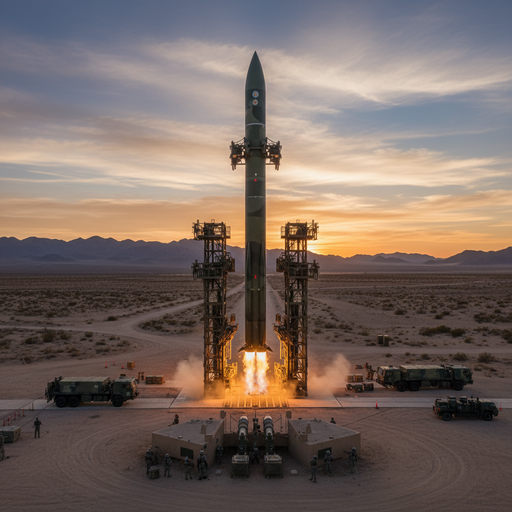

348 trillion in debt looming! This round of the oil crisis hits at a fragile moment globally, and the U.S. can't escape unscathed?
Hot Topics
Ruchir Sharma, Chairman of Rockefeller International, the global investment strategy division of Rockefeller Capital Management, stated that the world is plunging into an unprecedented crisis, and the current global debt level has reached a historic peak, making even the United States, the world’s largest oil producer, appear particularly vulnerable.
In a column for The Financial Times on Sunday, he warned that the extreme lack of fiscal space leaves heavily indebted governments with little room to respond to the energy shocks triggered by Trump’s Iran war.
Sharma pointed out that historical experience shows that such crises often lead to fiscal budget collapses. The oil crisis of the 1970s was a turning point, after which governments shifted from occasional deficits to long-term persistent deficits.
Today, the average government debt ratio of the G7 has soared from just 20% of GDP back then to over 100%. Meanwhile, global debt hit a record $348 trillion last year, growing at the fastest pace since the pandemic began, more than tripling global GDP.
With one-fifth of the world’s oil and liquefied natural gas supplies trapped in the Persian Gulf, governments are rushing to implement price controls, rationing, and subsidy policies. But many governments are already financially strained, and bond investors are ready to punish any excessive spending behaviors.
“Long-term inflation expectations seem stable, but markets worry that the Iran oil shock will further drive up government spending amid rapidly expanding deficits and debt, leading to higher bond term premiums,” Sharma wrote.
This trend has already manifested in the U.S.: recent demand for U.S. Treasury auctions has been weak, forcing yields higher than expected, highlighting investor concerns over escalating deficits and debt due to the Iran war.
Meanwhile, central banks around the world are also constrained, making it difficult to effectively curb inflation. The Federal Reserve has failed to bring U.S. inflation back to the 2% target for five consecutive years, weakening its ability to hedge against economic slowdown caused by oil shocks through rate cuts.
“The most vulnerable countries are those with high government debt and deficits, and central banks unable to meet inflation targets. Among developed economies, the U.S. and the UK are most at risk; among emerging markets, Brazil, Egypt, and Indonesia are most exposed,” Sharma said.
He added that although the U.S. is the world’s largest oil producer, its nearly 6% annual budget deficit last year was the highest among developed countries, and the U.S. cannot remain insulated in a prolonged war.
Trump plans to increase annual defense spending by 50% to $1.5 trillion, which could further worsen the U.S. debt outlook—currently, U.S. debt interest payments exceed $1 trillion annually. Sharma estimates that, combined with recent tax cuts, the deficit-to-GDP ratio could rise to 7% this year.
Trump initially expected the Iran war to last 4 to 6 weeks. Now, entering the sixth week, there are almost no signs that the conflict will end quickly.
In fact, all signals point to escalation and long-termization: thousands of U.S. troops are being deployed to the Middle East; the third aircraft carrier is en route; the Pentagon has almost fully deployed its inventory of JASSM-ER stealth cruise missiles to the Middle East battlefield.
All of this comes at a high cost. Reports indicate that after heavy expenditure on expensive munitions, and after U.S. military aircraft, radar systems, and bases were damaged by Iranian attacks, the Pentagon is seeking Congress to allocate $200 billion for the war.
Joseph Brusuelas, Chief Economist at RSM, pointed out in a report at the end of last month: “Additional war spending will exacerbate U.S. debt, triggering bond market sell-offs as investors demand higher premiums to compensate for potential losses. Long-term rates like the 30-year mortgage rate are partly based on the yield of the 10-year U.S. Treasury. Most importantly: the bond market has never lost.”
Massive information, precise analysis, all on Sina Finance APP
Editor: Zhu Hennan