
Futures
Access hundreds of perpetual contracts
TradFi
Gold
One platform for global traditional assets
Options
Hot
Trade European-style vanilla options
Unified Account
Maximize your capital efficiency
Demo Trading
Introduction to Futures Trading
Learn the basics of futures trading
Futures Events
Join events to earn rewards
Demo Trading
Use virtual funds to practice risk-free trading
Launch
CandyDrop
Collect candies to earn airdrops
Launchpool
Quick staking, earn potential new tokens
HODLer Airdrop
Hold GT and get massive airdrops for free
Pre-IPOs
Unlock full access to global stock IPOs
Alpha Points
Trade on-chain assets and earn airdrops
Futures Points
Earn futures points and claim airdrop rewards


More




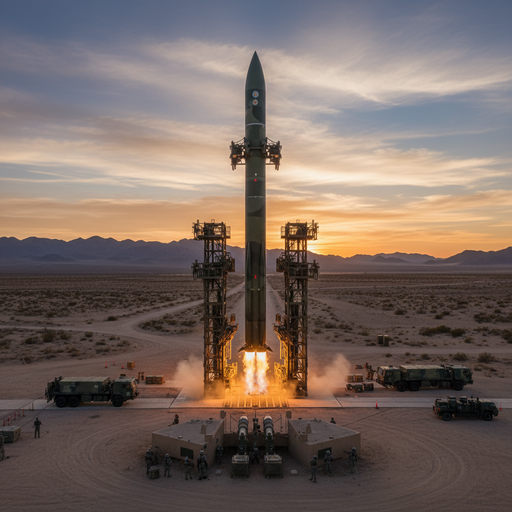

I have been paying close attention to the Middle East situation recently and just noticed a significant development. The Israeli military launched a large-scale airstrike on Tehran in the early morning, and the immediacy and scale of this operation truly broke previous conventions. It’s not a proxy conflict, not a remote strike, but a direct military action within the territory of Iran’s capital.
According to satellite imagery and defense analysis, the airstrike targeted research facilities related to nuclear programs, the Islamic Revolutionary Guard Corps command centers, drone manufacturing bases, and weapons warehouses in the suburbs of the capital. Achieving this level of precision requires complex intelligence support—combining signals monitoring, human resources, and satellite surveillance. Military analysts point out that this operation also successfully penetrated Iran’s upgraded air defense systems over the years, including equipment supplied by Russia and China.
Why now? There is actually a clear timeline behind it. In March last year, Iran’s drone attack on commercial ships; in June, the IAEA report on Iran’s accelerated uranium enrichment; in October, Hezbollah rocket attacks in northern Israel. By January this year, Israeli intelligence issued warnings of imminent threats. All these became operational justifications for this preemptive strike.
The international reactions are quite interesting. The United States used cautious language, expressing concern while acknowledging the right to self-defense. The European Union called for de-escalation. But Turkey directly condemned the attack and demanded an emergency UN Security Council meeting. Russia warned that this sets a “dangerous precedent.” Saudi Arabia and the UAE remained silent publicly but engaged in behind-the-scenes diplomatic activities. This reflects the awkward position of Gulf countries—over the years, they have quietly developed security relations with Israel mainly to counterbalance Iran, but now they face enormous public opinion pressure.
The most noteworthy aspect is the potential follow-up. Iran will definitely respond, though the scale and timing are uncertain. It could be missile attacks launched through proxies, cyberattacks, or disturbances in the Persian Gulf. Some analysts even believe Iran might accelerate its nuclear program activities. This airstrike fundamentally changes the rules of confrontation between Israel and Iran.
Energy markets have already begun to fluctuate, reflecting concerns over disruptions in the Persian Gulf shipping lanes. The United Nations Security Council has scheduled an emergency meeting, but given the divisions among permanent members, a diplomatic deadlock is expected. Tehran’s airstrike is likely to become a watershed moment in Middle Eastern geopolitics, and the diplomatic developments in the coming days will be crucial.