
Futures
Access hundreds of perpetual contracts
TradFi
Gold
One platform for global traditional assets
Options
Hot
Trade European-style vanilla options
Unified Account
Maximize your capital efficiency
Demo Trading
Introduction to Futures Trading
Learn the basics of futures trading
Futures Events
Join events to earn rewards
Demo Trading
Use virtual funds to practice risk-free trading
Launch
CandyDrop
Collect candies to earn airdrops
Launchpool
Quick staking, earn potential new tokens
HODLer Airdrop
Hold GT and get massive airdrops for free
Pre-IPOs
Unlock full access to global stock IPOs
Alpha Points
Trade on-chain assets and earn airdrops
Futures Points
Earn futures points and claim airdrop rewards


More




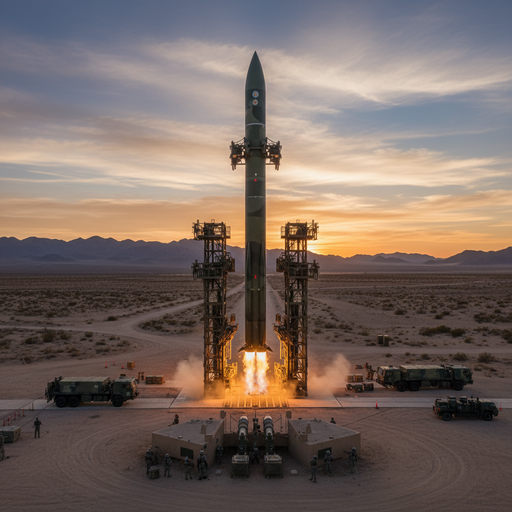

Trump's "chaotic" speech triggers a massive shake in global stock markets! The Shanghai Composite Index narrowly holds above 3,900 points—what's the next move?
Reporter from Daily Economic News | Zhao Yun Editor from Daily Economic News | Ye Feng
On April 2nd, the market experienced a full-day fluctuation and adjustment, with the ChiNext Index and STAR 50 Index both falling over 2%, and the Shenzhen Component Index dropping over 1%. By the close, the Shanghai Composite fell 0.74%, the Shenzhen Composite declined 1.6%, and the ChiNext Index dropped 2.31%.
Looking at sectors, the pharmaceutical sector rose against the trend, oil and gas stocks performed actively, and fiber optic concepts repeatedly strengthened. On the downside, the computing power leasing concept collectively adjusted.
Over 4,300 stocks across the market declined. The combined trading volume of the Shanghai and Shenzhen markets was 1.84 trillion yuan, shrinking by 169.5 billion yuan compared to the previous trading day.
Longtime readers should know that our daily trading review articles are generally titled “Discussing the Market Based on Market Conditions”; only before weekends do we briefly summarize some news factors.
But today, there’s really no way around it.
The reason for the market decline is plainly laid out.
Trump’s speech shocks the market
On Wednesday evening local time, which is Thursday morning Beijing time at 9 a.m., as U.S. President Trump delivered a nationwide speech, global financial markets trembled in unison:
Asian-Pacific stocks declined, U.S. stock index futures fell, gold and silver plummeted, and only oil prices surged.
Like yesterday’s “upward circuit breaker” in the Korean stock market, today in the afternoon, it experienced a “downward circuit breaker.”
According to reports from Xinhua News Agency, CCTV News, and other media, Trump’s statements had three main points:
First, he claimed a “quick, decisive, overwhelming victory” in the Iran conflict. Trump said Iran’s missile and drone capabilities have been “greatly weakened,” weapons factories and rocket launch sites are “almost gone,” and U.S. strikes on Iran’s nuclear facilities have achieved “great success,” significantly reducing nuclear threats for the U.S. and other countries.
Second, Trump stated that the U.S. is “close to completing” its core strategic objectives in the Iran conflict; the U.S. no longer needs the Strait of Hormuz.
Third, Trump announced that in the coming weeks, the U.S. will carry out more intense strikes on Iran. If no agreement is reached, the U.S. will launch fierce attacks on all Iranian power plants. Moreover, the U.S. is monitoring these facilities closely via satellites. If any movement is detected, the U.S. will immediately launch missiles and deliver “destructive” strikes.
But for the market, the biggest effect of these remarks is to dampen investors’ optimism about a quick end to the war.
Just the day before (March 31), Trump had stated at the White House that the U.S. would end its conflict with Iran “within two to three weeks,” possibly reaching an agreement beforehand.
According to CCTV News, Senate Democratic leader Chuck Schumer wrote on social media: “Is there a more chaotic, illogical, and very sad presidential war speech than this?”
Iran’s response was also relatively tough. Xinhua News Agency quoted the Islamic Republic News Agency 2, reporting that Iran’s Foreign Ministry spokesperson Bagheri said that the entire nation is united in resisting the “unjust, aggressive war.” As long as this “illegal war” continues and enemies keep attacking Iran’s people and cities, Iran will keep fighting back.
What’s the next response plan?
By the close, the Shanghai Composite once again hovered near the 3,900-point mark, touching a low of 3,900.12 points.
Notably, among the three major indices, the Shenzhen Component and ChiNext Index both retreated below the 120-day moving average today, which is also the recent bottom of the oscillating range. Meanwhile, the Shanghai Composite surprisingly showed a “5-day moving average crossing above the 10-day,” which is somewhat positive.
We still believe that although we can’t say “everyone is losing money = no one is losing money,” excessive pessimism is not advisable.
On one hand, today’s decline is partly due to the upcoming three-day holiday, which increases the demand for funds to hold cash and wait.
On the other hand, the scene of the market being “disrupted” by Trump’s speech actually aligns with some institutional pre-judgments.
For example, Huaxi Securities’ research report pointed out that the low-volume pattern in A-shares has not changed recently, and funds remain cautious about easing expectations. The trading volume still hovers around 20 trillion yuan, and market activity has not increased due to positive news.
It also noted that, from the perspective of positive news itself, Trump’s statements are often unpredictable, and the market remains doubtful about whether he can deliver on them. From a capital perspective, floating chips are relatively few, with most holdings held by medium- and long-term strategic funds. These funds are less sensitive to short-term event-driven fluctuations and tend to trade more cautiously. Therefore, even positive signals tend to elicit limited market response.
Thus, future trading remains challenging. Since March, the market has continued to operate with shrinking volume, and investors face difficulties: left-side funds tend to position during declines, while right-side funds face rapid sector rotation, making chasing rallies risky and prone to adjustments.
In this context, position management remains crucial, and caution should be exercised with previously high-valued targets, focusing on undervalued stocks with solid fundamentals, such as power equipment, media, agriculture and animal husbandry, and large financials.
Debon Securities also believes that, in the absence of significant easing of external conflicts and with no clear signals of incremental funds, the short-term A-share market is likely to be dominated by risk aversion and range-bound oscillation.
From today’s market, aside from the “logic-following” surge in oil and gas sectors, the pharmaceutical sector, which has been active recently, still shows some bright spots.
On the news front, Eli Lilly announced on Wednesday that the U.S. Food and Drug Administration (FDA) has approved its oral GLP-1 drug for market release. Additionally, the 37th International Alzheimer’s Disease Conference will be held in Lyon, France, from April 14-16, 2026.
Market analysis suggests that China’s innovative drug industry is shifting from scale expansion to value deepening, with the industry’s competitive logic moving from “speed” to “depth.” In this deep transformation, only companies with original innovation capabilities, independent commercialization systems, and a global perspective can truly navigate cycles and establish growth certainty.
The banking sector also played a stabilizing role. Agricultural Bank of China closed up 3.44%, contributing the most to the overall market gains.
Cover image source: Daily Economic News