As the new energy industry continues to expand, Tesla has become one of the most closely watched companies in global capital markets. Its stock ticker, TSLA, is not only a popular asset in the U.S. stock market, but also widely regarded as a key barometer for the new energy sector. Both long-term investors and short-term traders closely monitor TSLA’s business growth and stock performance.
Tesla’s widespread attention stems not only from the rapid growth of its electric vehicle business, but also from its strong potential in energy storage, battery technology, and autonomous driving. Compared with traditional automakers, Tesla has a stronger technology focus, which is why TSLA is often viewed as a high-growth yet volatile investment asset.
What Is TSLA? The Relationship Between TSLA and Tesla
TSLA is the stock ticker under which Tesla is listed on the Nasdaq Stock Exchange. Buying TSLA shares means owning a portion of the company and potentially benefiting from its future growth.
Founded in 2003, Tesla initially focused on electric vehicle manufacturing. Over time, it expanded into energy storage systems, solar solutions, and autonomous driving software. Today, Tesla is no longer just an automaker, but a diversified company spanning both clean energy and advanced technology.
This “vehicles + energy + software” model gives Tesla strong visibility in capital markets and makes TSLA a key growth stock for many investors.
Tesla’s Core Business and Revenue Streams
Tesla’s revenue primarily comes from three segments: vehicle sales, energy business, and software services. Among these, vehicle sales remain the largest contributor, with models such as Model 3 and Model Y accounting for a significant share of total revenue. As global demand for electric vehicles rises, this segment provides a stable foundation for Tesla’s income.
Beyond vehicles, Tesla has expanded into energy through storage systems and solar products. Although this segment currently contributes less revenue than automotive sales, it is widely seen as a key driver of future growth given the global shift toward renewable energy.
Meanwhile, autonomous driving software and related services are another crucial part of Tesla’s business model. Software typically carries higher margins, and many believe this segment will play a major role in boosting long-term profitability. This diversified revenue structure strengthens Tesla’s growth potential and enhances TSLA’s appeal in the market.
Why Does TSLA Attract So Much Market Attention?
TSLA draws significant attention largely because of Tesla’s leadership in the electric vehicle industry and its long-term growth potential. As one of the most iconic EV companies globally, Tesla has clear advantages in brand influence, technological innovation, and market expansion.
In addition, Tesla’s valuation is not based solely on current vehicle sales. It also reflects market expectations for its energy business and autonomous driving technology. Because of its tech-driven growth profile, TSLA is often seen as a hybrid between a manufacturing and technology stock, which further boosts its appeal.
At the same time, Tesla’s popularity and high trading volume attract a wide range of investors, making TSLA one of the most actively traded stocks worldwide.
What Factors Influence TSLA’s Stock Price?
TSLA’s stock price is influenced by several factors, with Tesla’s financial performance being the most critical. Quarterly revenue, vehicle deliveries, and profit margins directly shape market expectations. When results exceed expectations, TSLA often reacts positively.
Industry competition is another key factor. As companies like BYD rapidly expand in the EV space, Tesla faces increasing competitive pressure. If competition impacts margins, the market may reassess TSLA’s valuation.
Technological progress and macroeconomic conditions also play important roles. Updates to autonomous driving systems, new model launches, and changes in interest rates can all shift investor expectations. As a growth stock, TSLA tends to be highly sensitive to such changes, resulting in relatively high volatility.
How to Buy TSLA Stock
Investors can typically purchase TSLA shares through platforms that support U.S. stock trading. The basic steps include:
-
Opening an account that supports U.S. equities
-
Depositing funds
-
Searching for the ticker TSLA
-
Selecting the number of shares and placing an order
Buying TSLA directly allows investors to participate in Tesla’s long-term growth, while also exposing them to stock price fluctuations. Understanding Tesla’s business model and market environment is essential before investing.
What Is the TSLA3L Leveraged Token?
In addition to buying TSLA shares, some platforms such as Gate offer TSLA3L leveraged tokens, which allow investors to amplify returns without directly using margin.
TSLA3L is typically a leveraged product that tracks TSLA’s price movements and provides three times long exposure. When TSLA rises, TSLA3L may generate higher gains; however, if TSLA falls, losses are also magnified. While such products can enhance short-term opportunities, they carry significantly higher risk than holding the stock directly.
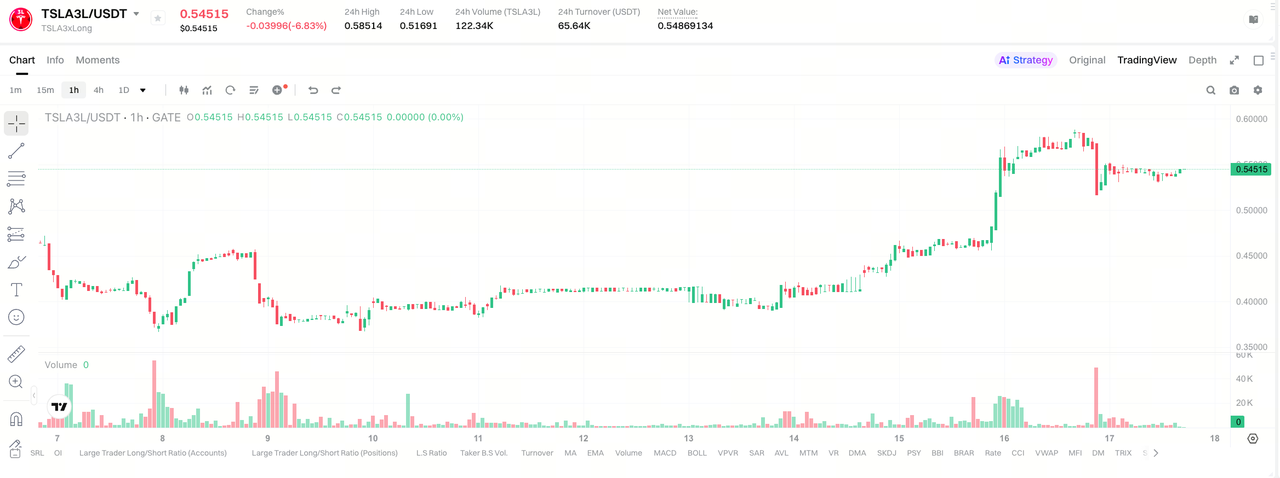
Due to their high volatility, leveraged products are more suitable for investors with higher risk tolerance and a clear understanding of how they work.
TSLA Investment Opportunities and Potential Risks
Over the long term, Tesla has strong growth potential in electric vehicles, energy storage, and autonomous driving. This gives TSLA considerable investment appeal. As the global new energy industry continues to grow, Tesla’s market opportunity may expand further.
Key investment opportunities for TSLA include:
-
Continued growth in the electric vehicle market
-
Long-term potential of autonomous driving
-
New revenue streams from energy storage
However, TSLA also carries certain risks, such as intensifying competition, high valuation levels, and macroeconomic uncertainty, all of which can lead to stock price volatility.
Investors should pay close attention to:
-
Competitive pressure within the industry
-
Volatility driven by high valuation
-
Uncertainty in technology deployment
In short, while TSLA offers strong growth potential, it also comes with significant volatility, making it more suitable for investors with a higher risk tolerance.
Conclusion
TSLA is the stock ticker for Tesla, and its investment value is driven by growth in electric vehicles, expansion in energy, and the potential of software services. As a major player in the new energy sector, Tesla maintains strong competitiveness and continues to attract attention from global capital markets.
However, high growth expectations also mean higher volatility. Investors should carefully evaluate competition, valuation levels, and broader market conditions while considering TSLA’s long-term potential. A clear understanding of its business model and risk structure is essential for making rational investment decisions.
FAQs
Why does TSLA attract so much market attention?
Because Tesla has strong growth potential in electric vehicles, energy storage, and autonomous driving, TSLA has remained a long-term focus for investors.
What is the difference between TSLA3L and TSLA?
TSLA is Tesla’s stock, while TSLA3L is a leveraged trading product that tracks TSLA’s price movements and provides amplified exposure, with higher risk.
What are the risks of investing in TSLA?
Key risks include increasing industry competition, valuation-driven volatility, and broader macroeconomic uncertainties.