

Trade
Basic
Futures
Futures
Hundreds of contracts settled in USDT or BTC
TradFi
Gold
Trade global traditional assets with USDT in one place
Options
Hot
Trade European-style vanilla options
Unified Account
Maximize your capital efficiency
Demo Trading
Futures Kickoff
Get prepared for your futures trading
Futures Events
Participate in events to win generous rewards
Demo Trading
Use virtual funds to experience risk-free trading
Earn
Launch
CandyDrop
Collect candies to earn airdrops
Launchpool
Quick staking, earn potential new tokens
HODLer Airdrop
Hold GT and get massive airdrops for free
Launchpad
Be early to the next big token project
Alpha Points
Trade on-chain assets and enjoy airdrop rewards!
Futures Points
Earn futures points and claim airdrop rewards
Investment
Simple Earn
Earn interests with idle tokens
Auto-Invest
Auto-invest on a regular basis
Dual Investment
Buy low and sell high to take profits from price fluctuations
Soft Staking
Earn rewards with flexible staking
Crypto Loan
0 Fees
Pledge one crypto to borrow another
Lending Center
One-stop lending hub
VIP Wealth Hub
Customized wealth management empowers your assets growth
Private Wealth Management
Customized asset management to grow your digital assets
Quant Fund
Top asset management team helps you profit without hassle
Staking
Stake cryptos to earn in PoS products
Smart Leverage
New
No forced liquidation before maturity, worry-free leveraged gains
GUSD Minting
Use USDT/USDC to mint GUSD for treasury-level yields

More





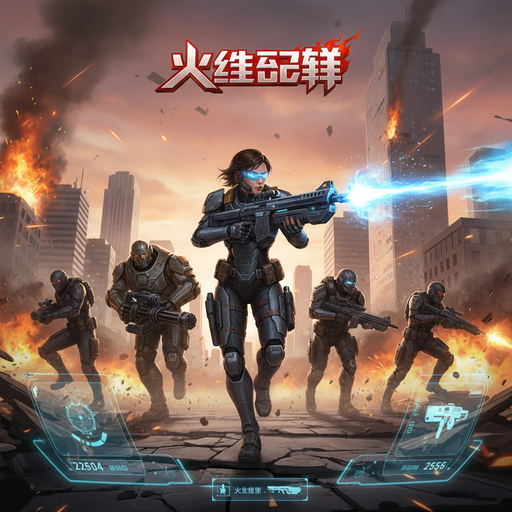
What is blockchain gaming: A comprehensive understanding from race analysis to investment guidance
Since the beginning of 2024, blockchain games have continued to heat up in the crypto ecosystem. What are blockchain games? Simply put, they are a new type of game that combines traditional gaming with blockchain technology, allowing players to earn real assets and profits. Looking at the popularity of projects like Sleepless AI, XAI, Pixels, and Portal launched on Binance Launchpool, more and more investors realize that blockchain games are not just an upgraded gaming experience but also a promising investment field full of opportunities. So, what are the ways to participate in the blockchain gaming ecosystem? How do different investment strategies compare? Today, we provide a comprehensive analysis.
Unveiling the True Face of Blockchain Games: Ecosystem Structure and Core Components
What are blockchain games? They are not just games but a multi-layered ecosystem. This ecosystem mainly consists of four major parts, each playing a different role.
Game Public Chain Layer is the infrastructure foundation of the entire ecosystem. Game-specific public chains like IMX, Ronin, and Gala provide efficient, low-cost transaction environments for various blockchain games. Their mission is to solve performance bottlenecks on mainstream chains like Ethereum, enabling players and developers to experience game content more quickly.
Community Organization Layer includes guilds such as YGG, GF, and Ancient8. These organizations initially were just discussion groups for players, but with the rise of Play-to-Earn models, they have evolved into profit-oriented organizations offering NFT asset leasing, skill training, boosting services, and more. Many leading guilds have grown into investment entities, implementing tokenized operations through DAO governance.
Game Content Layer is the most colorful part of the blockchain gaming ecosystem. Currently, blockchain games cover a variety of genres, including RPG, FPS, strategy, sandbox, simulation, and card games. Among these, RPG and FPS are mainstream due to fierce competition, often featuring teams with strong backgrounds, AAA quality, and substantial funding. Projects like Seraph, Bigtime, and Lumiterra have demonstrated strong market potential. In contrast, strategy and sandbox games have smaller audiences, while simulation and card games have limited potential.
Asset Trading Layer includes various exchanges and NFT platforms. This is the main channel for monetizing game assets.
Three Investment Paths in Blockchain Games: Risk and Return Comparison
For investors wanting to participate in blockchain games, the core strategies can be summarized into three approaches, each with distinct risk and reward profiles.
First: Buying Tokens (Secondary Market Investment) is the simplest way to participate and offers moderate risk. Investors just need to wait for the project’s tokens to be listed on exchanges and purchase directly. However, note that in most blockchain game projects, over half of the tokens are generated through in-game mining, meaning secondary market buyers are essentially absorbing the selling pressure from players. The advantage of this approach is high liquidity and low entry barriers, but the downside is limited profit potential and the risk of pitfalls.
Second: Collecting and Trading NFTs offers the lowest cost-effectiveness. Although NFTs as primary assets have theoretically higher appreciation potential than tokens, the reality is different. First, NFT liquidity is limited; if the project fails, investors risk losing their assets entirely. Second, NFT quantities are limited, and capital capacity is constrained, making the investment threshold much higher than buying tokens. Considering risk and reward, pure NFT investment is generally not cost-effective.
Third: Participating in Game Farming (Deep Involvement in Primary Market) has the highest profit potential but also the highest difficulty. Typically, the most profitable period for blockchain projects is during testing, when early players, due to fewer participants, can earn dozens or even hundreds of times returns. These profits come from token mining, initial NFT outputs, airdrops from the project team, and asset appreciation. However, this approach requires strong research capabilities, ample time, and excellent gaming skills. The entry barrier is high, which is why early blockchain game projects often have only a few thousand participants rather than hundreds of thousands.
How to Identify Promising Blockchain Game Projects: Three Essential Factors
If you decide to invest in blockchain games, learning how to evaluate project quality is crucial. Successful projects usually meet at least two of the following three criteria:
Funding Scale is the most straightforward indicator. Generally, projects with funding exceeding $10 million have a relatively solid foundation, as sufficient capital ensures quality game development. The larger the funding, the higher the cost of project failure, and the more motivation there is for long-term operation.
Founding Team Background determines the project’s credibility. Ideally, the team should have at least five years of game development experience or have participated in the development of popular Web2 games. Projects like Seraph, which continue classic IPs like Diablo, are highly regarded because they retain the original team. Since such projects are rare, examining team resumes and past achievements is especially important.
Game Quality is the core competitive advantage. If a project lacks a strong background, the game itself must reach AAA standards. AAA games are difficult and costly to develop, making it less likely for the project team to give up easily, which in turn protects players and investors’ interests.
When a game meets any two of these three factors, combined with high playability and community enthusiasm, it is worth considering deeper involvement.
Starting from Zero: Practical Steps and Risk Tips for Participating in Blockchain Games
If you want to maximize profits through game farming, follow these steps:
First, conduct multi-dimensional project evaluation. Ask yourself: Does this project have real prospects? Can I make money from it? What are the expected returns?
Second, develop a specific game farming strategy. Determine daily playtime, target earnings, stop-loss points, and ensure the strategy is executable.
Third, assess your own investment capacity. Consider whether you have enough time, gaming skills, and research ability. If not, the first approach (buying tokens) may be more realistic.
Important Reminder: The blockchain gaming market is still in early exploration, and project failures are possible. High returns are usually reserved for early participants; later entrants face higher risks. Over-investing time and funds into game farming may lead to lower-than-expected profits. Beginners should start with small token investments, gradually gaining industry knowledge before considering higher-risk strategies.
In summary, the answer to “What is blockchain gaming?” depends on your role. For developers, it’s a new application platform; for gamers, it’s an opportunity to earn while playing; for investors, it’s a multi-dimensional asset allocation option. Regardless of your approach, thorough research, rational evaluation, and proper risk management are key to steady gains in the blockchain gaming space.