

Trade
Basic
Futures
Futures
Hundreds of contracts settled in USDT or BTC
TradFi
Gold
Trade global traditional assets with USDT in one place
Options
Hot
Trade European-style vanilla options
Unified Account
Maximize your capital efficiency
Demo Trading
Futures Kickoff
Get prepared for your futures trading
Futures Events
Participate in events to win generous rewards
Demo Trading
Use virtual funds to experience risk-free trading
Earn
Launch
CandyDrop
Collect candies to earn airdrops
Launchpool
Quick staking, earn potential new tokens
HODLer Airdrop
Hold GT and get massive airdrops for free
Launchpad
Be early to the next big token project
Alpha Points
Trade on-chain assets and enjoy airdrop rewards!
Futures Points
Earn futures points and claim airdrop rewards
Investment
Simple Earn
Earn interests with idle tokens
Auto-Invest
Auto-invest on a regular basis
Dual Investment
Buy low and sell high to take profits from price fluctuations
Soft Staking
Earn rewards with flexible staking
Crypto Loan
0 Fees
Pledge one crypto to borrow another
Lending Center
One-stop lending hub
VIP Wealth Hub
Customized wealth management empowers your assets growth
Private Wealth Management
Customized asset management to grow your digital assets
Quant Fund
Top asset management team helps you profit without hassle
Staking
Stake cryptos to earn in PoS products
Smart Leverage
New
No forced liquidation before maturity, worry-free leveraged gains
GUSD Minting
Use USDT/USDC to mint GUSD for treasury-level yields

More





15 Brokerage Firms Provide Urgent Analysis of US-Iran Conflict! Limited Short-term Disruption to A-shares; Focus on Two Main Investment Themes
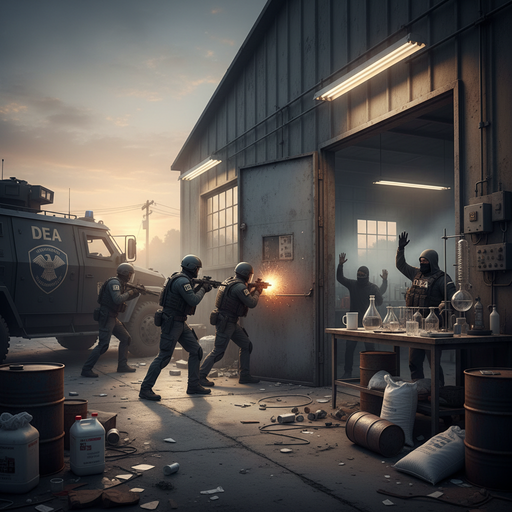
On February 28th local time, the United States and Israel launched a large-scale joint military air and sea strike against Iran, codenamed “Roaring Lion,” targeting Tehran’s presidential palace, military bases, and nuclear facilities. Iran’s Supreme Leader Khamenei was confirmed to have been attacked and killed. Iran immediately announced the closure of the Strait of Hormuz and launched counterattacks against U.S. military bases.
This sudden geopolitical event quickly swept through global capital markets: international gold prices broke through $5,200 per ounce, hitting a record high; Brent crude oil surged above $72; tanker freight rates reached a new high for the same period; global stock markets, forex, and bond markets began a structural reassessment.
As of press time, 15 brokerage firms including CITIC Securities, CITIC Construction Investment, China International Capital Corporation, and China Galaxy Securities have issued analysis reports.
Most institutions believe this conflict marks a substantive realization of Middle East geopolitical risks, which will dominate global asset pricing logic in the short term. However, the impact on Chinese assets is more reflected in risk appetite. The medium-term slow bull trend of A-shares remains unchanged, with resource commodities and domestic AI computing power chains becoming the two main focus areas for institutions.
Macroeconomic Perspective: Geopolitical Risks Reshape Pricing Logic, Strategic Assets Enter Long-term Revaluation
CITIC Construction Investment Securities macro team leader Zhou Junzhi believes that the Iran situation first impacts oil price expectations, followed by inflation expectations and Federal Reserve monetary policy orientation. The Strait of Hormuz accounts for about 30% of global maritime oil trade and 20% of liquefied natural gas transport; its closure means a risk of disruption to the global energy supply chain.
CITIC Construction Investment strategy team members Xia Fanjie and Li Jiajun further pointed out that reviewing the Russia-Ukraine conflict, energy prices surged, safe-haven assets modestly strengthened, and equity performance diverged. Currently, core disagreements between the US and Iran still focus on nuclear programs and sanctions removal. Short-term geopolitical risks are unlikely to ease, and international oil and precious metal prices may remain strong, intensifying global inflation pressures. Long-term, energy supply chain vulnerabilities will normalize, security architecture in the Middle East will accelerate restructuring, and with increasing uncertainty in the global order, strategic assets such as resources, gold, and military industries are entering a period of revaluation.
Open Source Securities macro team members He Ning and Pan Weizhen analyzed the deep impact of the Iran situation. Although Iran’s oil production accounts for only 4.5% of the global total, its actual control over the Strait of Hormuz gives it influence far beyond its production scale—about 20 million barrels of oil traded daily through the strait in 2024, over a quarter of global maritime oil trade, with 84% flowing to Asian markets. China imports about 4.78 million barrels daily through this strait, accounting for 43.5% of total imports.
He Ning mentioned that historical experience shows that after geopolitical conflicts erupt, gold and oil prices tend to rise with high certainty, and medium- to long-term gold prices will show significant increases.
China Galaxy Securities chief strategist Yang Chao further emphasized that the structural logic for gold to rise remains: the Federal Reserve’s policy rate center is moving downward, global central banks continue to allocate gold, solidifying the price floor; combined with U.S. debt constraints and the marginal weakening of dollar credit, this continues to elevate gold’s asset allocation value.
Industrial Securities chief economist Wang Han viewed this conflict from a strategic game perspective, suggesting it is a tactical gamble by the U.S. to break out of strategic deadlock, marking the substantive realization of Middle East risks among the six potential “black swans” in 2026. The market should pay close attention to key signals in U.S. bonds, precious metals, and forex markets: when gold prices accelerate upward, while the dollar and U.S. bond prices turn from rising to falling, and the RMB begins to appreciate, it indicates market confidence that Iran can withstand the first wave of attacks, potentially triggering a systemic reversal in global asset pricing.
CICC warns that if oil and gas prices continue to rise and supply risks cannot be alleviated, it will be unfavorable for energy-importing countries like the EU, and the U.S. dollar index may strengthen in the short term. However, if the conflict persists long-term, increasing U.S. fiscal burdens could undermine the dollar’s reserve asset status, leading to a deeper long-term decline.
Huatai Securities macro research points out that since the beginning of the year, global geopolitical tensions have accelerated. The U.S. has taken military actions against Venezuela and claimed sovereignty over Greenland. The recent joint attack by Israel on Iran will further erode the credibility of the dollar system, potentially accelerating de-dollarization trends worldwide. Attention should also be paid to the broad disturbance to global commodities: Iran is a major exporter of methanol, urea, and propane, accounting for about 9%, 5%, and 6-7% of global capacities respectively. Attacks on industrial facilities could significantly push up prices of related chemicals.
Chinese Assets: Limited Short-term Sentiment Disruption, Resource Commodities and Domestic AI Chains as Dual Mainlines
Regarding A-shares, Bank of China Securities strategy team believes that in the short term, A-shares may be affected by geopolitical volatility and risk aversion, but external shocks are limited. With the upcoming Two Sessions, the market will refocus on domestic fundamentals and policy expectations, making resource commodities a timely opportunity. Rising external uncertainties may catalyze a new round of resource commodity cycles, with a favorable environment for cyclical resource allocation in Q1 driven by both domestic and international factors.
Hua Jin Securities also believes that the Iran-U.S. conflict could further boost prices of non-ferrous metals, chemicals, and other commodities, with cyclical sectors’ outlook potentially improving in the short term.
CITIC Construction Investment strategy team notes that the escalation of US-Iran geopolitical tensions will further focus capital on safe-haven and resource themes, with oil, gas, and gold likely becoming core sectors. Market risk appetite may marginally decline, and some high-flying themes could face capital outflows.
CITIC Securities’ quantitative analysis shows that the current signals driven by rising prices and AI narratives remain in the safe zone—AI narrative score is 29.3 (out of 100, below 40 is safe), and the rising prices narrative score is 36.1, both within safe ranges. The outbreak of Iran’s geopolitical risk and the rising policy expectations around internal competition before and after the Two Sessions may further strengthen the rising prices theme. It is expected that the upward-driven market in March will continue, with focus on electronics (electronic chemicals, copper-clad laminates, power devices, electronic components), machinery (gas turbines, diesel engines), and chemicals (phosphates, dyes, pesticides), as well as non-ferrous metals (tantalum, tungsten, chromium) and petrochemicals (crude oil, refining, shipping).
Bank of China Securities highlights that the recent historic turning point in domestic large-model tokens call volume—during the week of February 16-22, China’s weekly model call volume reached 5.16 trillion tokens, surpassing the U.S. models’ 2.94 trillion tokens for the first time, with four of the top five models from Chinese vendors. The dual drivers of “performance going overseas” and “price going overseas” are expected to sustain growth of domestic large models. Under the constrained overseas computing chip supply, cloud service providers may prefer deploying cost-effective domestic computing clusters. While the short-term sentiment in tech sectors may be impacted by the Iran-U.S. conflict, the long-term logic remains unchanged, and domestic computing power chains still offer cost-effective allocation opportunities.
Guojin Securities notes that Iran is the third-largest OPEC oil producer, with a daily output of about 3.3–3.5 million barrels, and has abundant natural gas reserves, with extensive downstream capacity for methanol, urea, ethylene glycol, and polyethylene. If the war continues, exports of related products will decline significantly. Coupled with transportation risks in the Strait of Hormuz, global prices of related products will rise. Although China’s imports of methanol, polyethylene, and sulfur from Iran are not highly dependent, global price increases will still transmit to domestic markets.
Global Assets: U.S. Stocks Under Pressure, Hong Kong Stocks Favor Value Style, Safe-haven Assets in Demand
On the global front, China Galaxy Securities data shows that after the Spring Festival week, U.S. major stock indices all declined, with potential impacts from AI on earnings and employment structures raising caution. Combined with rising tariffs and strong inflation, technology and financial sectors faced pressure. Looking ahead, U.S. stocks remain highly volatile, with the core being a tug-of-war between earnings realization and valuation constraints. Inflation, tariffs, and geopolitical uncertainties increase the risk of a correction, with style likely shifting from a few tech giants to cyclicals, financials, and defensive sectors.
CITIC Securities predicts that in the coming week, geopolitical risk aversion and inflation expectations will be the main influences. U.S. stocks may fluctuate under pressure, with energy and safe-haven sectors outperforming, while tech growth stocks remain under pressure. Historical review shows that after geopolitical conflicts, safe-haven assets like gold outperform the dollar. U.S. military involvement level correlates with stock performance; if the U.S. engages in combat, market recovery may wait until the situation clarifies. Currently, U.S. military deployment around Iran is comparable to the scale during the 1998 “Desert Fox” operation, supporting limited air strikes but not large-scale ground operations.
For Hong Kong stocks, CITIC Construction Investment notes that the first week after the Spring Festival saw divergence: the Hang Seng Index rose 0.82%, while the Hang Seng Tech Index fell 1.41%. Value style outperformed growth, with materials rising 4.81% driven by commodity prices. In the short term, loose liquidity expectations boost RMB asset attractiveness, but external geopolitical risks warrant caution. In the medium to long term, Hong Kong stocks benefit from the Fed’s rate cut cycle, with continued inflows from southbound funds, supporting valuations and industry fundamentals.
招商证券 warns that if international oil prices surge above $100/barrel, the U.S. economy could face significant downside risks within the year. The U.S. is likely to control the escalation, but the current situation is more severe than in June last year, with WTI potentially reaching $75–80.
Guotai Haitong Securities believes that as the “K-shaped” economy shows signs of convergence, the current decline in U.S. Treasury yields may actually build more momentum for the next round of inflation, with “re-inflation” becoming a key pricing variable in global liquidity.
Allocation Recommendations: Focus on “Re-inflation” Mainline, Strategic Resources and Domestic Computing Power
In response to the current situation, several brokerages offer clear allocation strategies.
CITIC Construction Investment suggests focusing on the “HALO” trade—shifting market funds from easily AI-replaceable light assets to entities with high barriers to replication and resilience in the tech cycle.
Two main areas are recommended: first, high-barrier physical assets such as power, non-ferrous metals, and industrial infrastructure, which typically have long construction cycles, individual projects exceeding hundreds of millions, and stable cash flows; second, AI infrastructure incremental segments like power equipment and semiconductor materials, which are expected to benefit from long-term capital expenditure driven by AI computing demand expansion.
CITIC Securities recommends building a portfolio around “China resources + traditional manufacturing pricing power revaluation,” emphasizing China’s market share advantage, high costs of overseas capacity reconfiguration, and domestic policy influence on supply elasticity. Allocation should include chemicals, non-ferrous metals, power equipment, and new energy, with increased holdings in insurance and securities. From March, the main market theme may still be driven by rising prices, with upstream supply-demand imbalance, price hikes, and profit margin recovery as clear signals.
Industrial Securities believes that while the short-term market may face shocks, the medium-term remains unchanged—China’s large industrial system is a core strategic advantage. If Iran successfully withstands the first wave of U.S.-Israeli attacks, the market’s view on great power competition could shift systematically, leading to significant changes in U.S. debt, dollar, and gold prices.
Huachuang Securities also believes that market declines caused by external shocks in a bull market are often quick and relatively small, not warranting excessive worry. The market will eventually revert to a real-world, EPS-driven re-inflation mainline.
Pacific Securities recommends focusing on three investment themes: first, Middle East geopolitical conflicts increasing oil and gas risk premiums, benefiting domestic oil and gas companies; second, Iran’s large capacity for olefins, methanol, and urea, with war-induced supply disruptions favoring domestic high-quality companies; third, frequent geopolitical conflicts highlighting the importance of domestic resources, such as phosphate, potash, and fluorite industries.
Zhongtai Securities believes that resource and utility sector allocations may strengthen in the coming week. The escalation in Middle East tensions boosts safe-haven narratives for precious metals, while RMB appreciation continues, supporting valuation uplift in blue-chip equities. If the government work report at the Two Sessions emphasizes expanding domestic demand and stabilizing growth more than expected, cyclical resource sectors like non-ferrous metals, chemicals, and steel could see further confirmation of rising prices.